Thymic peptide hormone analogue / immune modulator (slug: immune-other; pleiotropic TLR2/TLR9-mediated effect rather than a classical single-receptor agonist)

Thymosin Alpha-1

Also Known As: Thymalfasin, Tα1, TA1, Ta1, Zadaxin, ZADAXIN, Thymosin α1, Thymosin Alpha 1

Thymosin alpha-1 (Tα1, INN thymalfasin) is a synthetic 28-amino-acid peptide that reproduces the N-terminally acetylated sequence of the natural pro-thymosin-α fragment — a polypeptide secreted by thymic epithelial cells and detectable in human serum. Pharmacologically, Tα1 is a pleiotropic immune modulator: it engages the innate-immune sensors Toll-like receptor 2 (TLR2) and Toll-like receptor 9 (TLR9) on dendritic cells and monocytes, drives DC maturation, polarises Th1 responses, activates natural killer (NK) cells, and supports thymopoiesis and peripheral T-cell differentiation — rather than acting as a single classical hormone-receptor agonist. Marketed as Zadaxin (originator SciClone Pharmaceuticals; Italian partner Sigma-Tau / Alfasigma), Tα1 is approved in more than 35 countries (Italy, China, Vietnam, Singapore, Mexico, Argentina and others) for chronic hepatitis B, as an adjuvant in chronic hepatitis C, and as an immunoadjuvant for influenza/H1N1 vaccination in immunocompromised populations such as haemodialysis patients. The U.S. FDA has not granted marketing approval for Tα1 — it has issued only orphan-drug designations for chronic hepatitis B (1996), non-small-cell lung cancer (2007) and Stage IIB–IV malignant melanoma (2010); orphan-drug designation is regulatorily distinct from marketing approval and confers only sponsor-side incentives (tax credits, market exclusivity if subsequently approved) for the development of drugs targeting rare diseases.

Identity & Chemistry

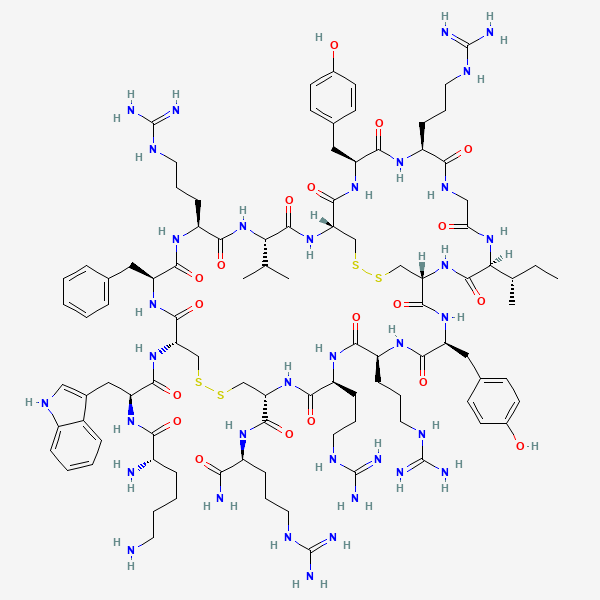
Two-dimensional chemical structure of thymosin alpha-1 (thymalfasin), a 28-amino-acid N-terminally acetylated peptide derived from the N-terminus of pro-thymosin-α, showing the linear peptide backbone with the characteristic N-acetyl modification and C-terminal asparagine free acid.
Image credit: Structure data from PubChem CID 16129721, U.S. National Library of Medicine. · Public Domain (U.S. Government work — NCBI/PubChem)
Amino Acid Sequence
Ac-S-D-A-A-V-D-T-S-S-E-I-T-T-K-D-L-K-E-K-K-E-V-V-E-E-A-E-N-OH (28 residues; N-terminus acetylated [Ac-]; C-terminus free carboxylic acid; full-length sequence Ac-Ser-Asp-Ala-Ala-Val-Asp-Thr-Ser-Ser-Glu-Ile-Thr-Thr-Lys-Asp-Leu-Lys-Glu-Lys-Lys-Glu-Val-Val-Glu-Glu-Ala-Glu-Asn-OH; the N-acetylation is required for full biological activity and reproduces the natural post-translational modification of pro-thymosin-α)
Molecular Formula
C₁₂₉H₂₁₅N₃₃O₅₅
Molecular Weight
3108.27 g·mol⁻¹ (monoisotopic ≈ 3106.50 Da; acetylated free-acid form)
CAS Number
62304-98-7
PubChem CID
16129721
DrugBank ID
DB04900
IUPAC Name
N-acetyl-L-seryl-L-α-aspartyl-L-alanyl-L-alanyl-L-valyl-L-α-aspartyl-L-threonyl-L-seryl-L-seryl-L-α-glutamyl-L-isoleucyl-L-threonyl-L-threonyl-L-lysyl-L-α-aspartyl-L-leucyl-L-lysyl-L-α-glutamyl-L-lysyl-L-lysyl-L-α-glutamyl-L-valyl-L-valyl-L-α-glutamyl-L-α-glutamyl-L-alanyl-L-α-glutamyl-L-asparagine
Solubility
Water-soluble; lyophilised peptide is typically reconstituted with bacteriostatic or sterile water for injection (1–2 mg/mL) for subcutaneous administration. Poorly soluble in non-polar organic solvents.
Storage
Lyophilised pharmaceutical preparation (Zadaxin) is stored at 2–8 °C per labelling. Research-grade lyophilised peptide is commonly stored at −20 °C protected from light; reconstituted solutions show limited working stability at 2–8 °C per certificate of analysis.

Mechanism of Action

Thymosin α1 is a pleiotropic immune modulator: it engages the innate-immune sensors TLR2 and TLR9 on dendritic cells and monocytes, drives DC maturation, polarises a Th1 response, activates NK cells and supports thymopoiesis — not a classical single-receptor hormone agonist.

Thymosin alpha-1 is a genuinely pleiotropic immune modulator. The receptor-level work that clarified its mechanism appeared in a series of Romani-group Blood papers (2004 → 2006 → 2007), which showed that Tα1 functions as an endogenous regulator of dendritic-cell function via Toll-like receptor 9 (and to a lesser extent TLR2), mobilising MyD88-dependent NF-κB and IRF7 pathways to mature dendritic cells, induce IL-12 and type-I interferons, and prime Th1-polarised T-cell responses. Camerini and Garaci (2010, Annals NYAS) consolidate these findings and add that Tα1 supports thymopoiesis and peripheral T-cell differentiation, boosts NK-cell cytotoxicity, restores regulatory-T-cell balance in chronic viral infection and oncology, and modifies the cytokine milieu (↑ IL-2, ↑ IL-12, ↑ IFN-γ; ↓ IL-10) in a context-dependent manner. Because Tα1 acts on innate sensors expressed by antigen-presenting cells rather than on a single classical hormone receptor, its effects depend on the immunological state of the host: it is most active when basal immune function is impaired (chronic hepatitis, sepsis, cancer chemotherapy, vaccination of the immunocompromised) and produces only modest changes in healthy adults. This pleiotropy is why Tα1 has been investigated across an unusually broad set of indications, but it is also why mechanism-to-clinical-outcome translation is complex and why high-quality endpoint-driven trials are essential before any therapeutic conclusion is drawn.

Molecular Targets

  • Toll-like receptor 9 (TLR9) on plasmacytoid dendritic cells — engagement promotes IRF7-dependent type-I interferon production and DC maturation (Romani 2007 Blood)
  • Toll-like receptor 2 (TLR2) on conventional dendritic cells / monocytes — MyD88-dependent NF-κB activation and pro-inflammatory cytokine release
  • Indirect support of thymopoiesis and peripheral T-cell differentiation — restoration of CD4⁺ and CD8⁺ T-cell counts in lymphopenic states
  • NK-cell activation — restoration of NK cytotoxicity in immunocompromised settings

Signaling Pathways

  • TLR2 / TLR9 → MyD88 adaptor → IRAK / TRAF6 → NF-κB activation → upregulation of IL-12, IL-2, IFN-α/β, TNF-α
  • TLR9 → MyD88 → IRF7 → transcription of type-I interferons
  • Net cytokine shift: ↑ IL-2, ↑ IL-12, ↑ IFN-γ (Th1 polarisation); ↓ IL-10 in some chronic-viral and oncology settings; restoration of regulatory T-cell balance
  • Functional outcome: enhanced antigen-presenting-cell function and improved Th1-dependent antiviral / antitumour immunity

Research Applications

The evidence base for thymosin α1 spans the Goldstein 1977 isolation paper, multiple randomised chronic hepatitis B trials (Andreone 2001; Wu 2015 systematic meta-analysis), the Sherman 1998 hepatitis C combination RCT, the Wu 2013 multicentre Phase III sepsis trial (ETASS, NCT00711620), the Maio 2010 Phase II metastatic melanoma study, and the Liu 2020 COVID-19 retrospective cohort. Editorial framing matters: Wu 2013 reported a 9-percentage-point absolute reduction in 28-day mortality (26 % vs 35 %) but the result was statistically non-significant (P = 0.062); Liu 2020 is a retrospective single-centre observational study and is hypothesis-generating, not confirmatory.

Chronic hepatitis B — Andreone 2001 long-term randomised trial (HBeAg-positive)

Phase III

Studies report that, in a randomised trial of Tα1 1.6 mg subcutaneously twice weekly for 6 months, sustained virological response was observed in 40.6 % of Tα1-treated patients versus 9.4 % of controls at 26-month follow-up (P = 0.04).

— Andreone et al., J Viral Hepat 2001;8(3):194–201 (PMID 11380797)

Chronic hepatitis B — Wu 2015 systematic review and meta-analysis

observational

Studies report, in a pooled analysis of randomised Tα1 trials in chronic hepatitis B, improved virological and biochemical response rates over follow-up versus control or interferon comparators, with the strongest signal at 12 months post-treatment; modern direct-acting antivirals are now first-line for chronic HBV.

— Wu, Jia & You, PLoS ONE 2015;10(5):e0127490 (PMID 25996374)

Chronic hepatitis C — Sherman 1998 Phase II/III RCT in IFN non-responders

Phase III

Studies report, in a randomised, placebo-controlled, double-blind multicentre trial in interferon-α non-responder chronic hepatitis C patients, a modest but statistically meaningful improvement in biochemical and virological end-of-treatment response with Tα1 + interferon-α combination therapy versus interferon-α monotherapy.

— Sherman et al., Hepatology 1998;27(4):1128–1135 (PMID 9537455)

Severe sepsis — multicentre ETASS RCT (NCT00711620, n=361, China)

Phase III

Studies report, in the Wu 2013 ETASS trial (Tα1 1.6 mg subcutaneously every 12 h × 7 days, then daily for 7 days), 28-day all-cause mortality of 26.0 % under Tα1 versus 35.0 % under control — a 9-percentage-point absolute reduction that did not meet the conventional threshold for statistical significance (log-rank P = 0.062) and therefore should not be described as a positive Phase III trial; secondary endpoints (monocyte HLA-DR expression, faster SOFA-score reduction) favoured Tα1.

— Wu et al., Crit Care 2013;17:R8 (PMID 23327199)

Metastatic malignant melanoma — Maio 2010 Phase II RCT (n=488)

Phase II

Studies report, in an open-label Phase II randomised trial of dacarbazine + IFN-α2b ± Tα1 (3.2 mg or 6.4 mg) in stage-IV metastatic melanoma, numerically longer median overall survival and higher objective response rates in Tα1-containing arms versus dacarbazine + IFN alone; the trial did not formally meet a hierarchical statistical hypothesis for superiority.

— Maio et al., Ann Oncol 2010;21(8):1696–1701 (PMID 20146422)

Influenza/H1N1 vaccination in haemodialysis patients — adjuvant use

Phase II

Studies report, in randomised trials in haemodialysis populations, that pre-vaccination administration of Tα1 increased seroconversion and seroprotection rates after influenza (including H1N1) vaccination versus vaccine alone — mechanistically supported by TLR9-mediated DC maturation and Th1 polarisation in lymphopenic hosts.

— Camerini & Garaci, Ann NY Acad Sci 2010;1194:116–126 (PMID 20566298); ZADAXIN H1N1 study NCT01031966

Severe COVID-19 — Liu 2020 retrospective Wuhan cohort (preliminary)

observational

Studies report, in a retrospective single-centre cohort of severe COVID-19 patients (n ≈ 76), lower 28-day mortality and faster recovery of T-lymphocyte counts in a Tα1-treated subgroup versus untreated controls; given the retrospective, unblinded, non-randomised design, this signal is hypothesis-generating, not confirmatory.

— Liu et al., Clin Infect Dis 2020;71(16):2150–2157 (PMID 32442287)
Clinical Status

Regulatory Status
Tα1 is approved as Zadaxin in more than 35 countries (including Italy, China, Vietnam, Singapore, Mexico, Argentina and others) for chronic hepatitis B, as an adjuvant in chronic hepatitis C, and as an immunoadjuvant for influenza vaccination in immunocompromised populations — the Italian (AIFA) authorisation dates from the 1990s, the Chinese NMPA authorisation from 1996. There is no centralised EU marketing authorisation under EMA — the Italian national authorisation predates the harmonised central procedure. In the United States, Tα1 has no FDA marketing approval — the U.S. FDA has granted only orphan-drug designations: chronic hepatitis B (1996), non-small-cell lung cancer (2007) and Stage IIB–IV malignant melanoma (2010). Orphan-drug designation is regulatorily distinct from marketing approval — it provides only sponsor-side incentives (tax credits, market exclusivity if subsequently approved) for development of drugs for rare diseases; Tα1 is not legally marketable as a finished pharmaceutical product in the United States.
Show more
Highest Trial Phase
Phase III published (ETASS sepsis RCT NCT00711620; Sigma-Tau HCV Phase III NCT01178996); marketing approvals in 35+ countries (Italy, China and others) for chronic hepatitis B; FDA: orphan-drug designation only (no marketing approval)
Sponsor
Originator and global marketer: SciClone Pharmaceuticals (US-based until 2017, now SciClone Pharmaceuticals (Holdings) Limited, Hong Kong, with primary commercial market in China). Italian marketer: Sigma-Tau / Alfasigma (Zadaxin Italy). Chinese and other East-Asian markets: SciClone direct and licensing partners.
Show more

Key Clinical Trials

  • Multicenter, Randomized, Controlled Study to Evaluate the Efficacy of Thymosin α1 in Patients With Severe Sepsis (ETASS) — basis of Wu 2013 Critical Care
    Phase III
    NCT00711620
  • Thymosin Alpha-1 in Combination with Peg-Interferon Alfa-2a and Ribavirin for Chronic Hepatitis C Non-Responsive to IFN+Ribavirin — Sigma-Tau Phase III
    Phase III
    NCT01178996
  • Thymosin Alpha 1 Plus Standard-of-Care Maintenance Therapy in Metastatic NSCLC, EGFR Wild-Type — SciClone Pharmaceuticals Phase II
    Phase II
    NCT02906150
  • Pilot Study of ZADAXIN® (Thymalfasin) to Enhance Immune Response to the H1N1sw Influenza Vaccine in End-Stage Renal Disease
    Phase II
    NCT01031966
  • Thymosin Alpha 1 in the Prevention of Pancreatic Infection Following Acute Necrotizing Pancreatitis (Weiqin Li, Phase IV)
    Phase IV
    NCT02473406
  • Thymosin Alfa 1 in Recipients of Allogeneic Hematopoietic Stem Cell Transplantation for Hematological Malignancies (University of Perugia, Phase I/II)
    Phase I/II
    NCT00580450

Safety Profile

Observed in research settings

Across published Tα1 trials in chronic hepatitis B, hepatitis C adjuvant therapy, severe sepsis, oncology and vaccine-adjuvant settings, Tα1 has been described as generally well tolerated, with most adverse events reported as mild, transient and limited to the injection site. Because Tα1 is not FDA-approved in the United States, there is no official US prescribing information; the safety summary draws on published clinical-trial reports and on non-US (Italian / Chinese) Zadaxin labelling.

Adverse Events Reported in Studies

  • Injection-site reactions (erythema, induration, mild pain) — most common; several percent of treated subjects in Phase II/III trials
  • Mild lymphocytosis / shift in lymphocyte subsets — pharmacodynamic effect rather than a true adverse event
  • Transient ALT elevation during HBV treatment — interpreted in the literature as immune-mediated viral clearance ("immune flare") rather than direct hepatotoxicity
  • Mild flu-like symptoms (low-grade fever, fatigue) — most evident in interferon-combination studies; difficult to separate from interferon background
  • Headache — uncommon

Serious Adverse Events

  • Hypersensitivity reactions (urticaria, rash) — rare; anaphylaxis is exceptional
  • Transient ALT flare during chronic hepatitis B therapy — reported in a minority of patients and interpreted as immune-mediated hepatocyte clearance of HBV-infected cells; treating physicians should monitor rather than assume the elevation is benign
  • No boxed warnings, no FDA prescribing information — because Tα1 is not FDA-approved; safety summaries above are derived from published clinical-trial reports and from non-US (Italian / Chinese) Zadaxin labelling

References

  1. Goldstein AL, Low TLK, McAdoo M, McClure J, Thurman GB, Rossio J, Lai CY, Chang D, Wang SS, Harvey C, Ramel AH, Meienhofer J Thymosin alpha 1: isolation and sequence analysis of an immunologically active thymic polypeptide Proc Natl Acad Sci USA 1977;74(2):725–729. 1977 .

  2. Romani L, Bistoni F, Perruccio K, Montagnoli C, Gaziano R, Bozza S, Bonifazi P, Bistoni G, Rasi G, Velardi A, Fallarino F, Garaci E, Puccetti P Thymosin alpha 1 activates dendritic cell tryptophan catabolism and establishes a regulatory environment for balance of inflammation and tolerance Blood 2006;108(7):2265–2274. 2006 .

  3. Romani L, Bistoni F, Gaziano R, Bozza S, Montagnoli C, Perruccio K, Pitzurra L, Bellocchio S, Velardi A, Rasi G, Di Francesco P, Garaci E Thymosin α1 activates dendritic cells for antifungal Th1 resistance through Toll-like receptor signalling Blood 2007;109(5):1933–1941. 2007 .

  4. Camerini R, Garaci E Historical review of thymosin α1 in infectious diseases Annals of the New York Academy of Sciences 2010;1194(1):116–126. 2010 .

  5. Andreone P, Cursaro C, Gramenzi A, Zavaglia C, Rezakovic I, Altomare E, Severini R, Franzone JS, Albano O, Ideo G, Bernardi M, Gasbarrini G A randomised controlled trial of thymosin-α1 versus interferon alfa treatment in patients with HBeAg antibody- and hepatitis B virus DNA-positive chronic hepatitis B J Viral Hepat 2001;8(3):194–201. 2001 .

  6. Sherman KE, Sjogren M, Creager RL, Damiano MA, Freeman S, Lewey S, Davis D, Root S, Weber FL, Ishak KG, Goodman ZD Combination therapy with thymosin alpha 1 and interferon for the treatment of chronic hepatitis C infection: a randomised, placebo-controlled double-blind trial Hepatology 1998;27(4):1128–1135. 1998 .

  7. Wu J, Zhou L, Liu J, Ma G, Kou Q, He Z, Chen J, Ou-Yang B, Chen M, Li Y, Wu X, Gu B, Chen L, Zou Z, Qiang X, Chen Y, Lin A, Zhang G, Guan X The efficacy of thymosin alpha 1 for severe sepsis (ETASS): a multicentre, single-blind, randomised and controlled trial Critical Care 2013;17(1):R8. 2013 .

  8. Wu X, Jia J, You H Thymosin alpha-1 treatment in chronic hepatitis B: a systematic review and meta-analysis PLoS ONE 2015;10(5):e0127490. 2015 .

  9. Maio M, Mackiewicz A, Testori A, Trefzer U, Ferraresi V, Jassem J, Garbe C, Lesimple T, Guillot B, Gascon P, Gilde K, Camerini R, Cognetti F Large randomised study of thymosin α1, interferon alfa, or both in combination with dacarbazine in patients with metastatic melanoma Annals of Oncology 2010;21(8):1696–1701. 2010 .

  10. Liu Y, Pan Y, Hu Z, Wu M, Wang C, Feng Z, Mao C, Tan Y, Liu Y, Chen L, Li M, Wang G, Yuan Z, Diao B, Wu Y, Chen Y Thymosin alpha 1 reduces the mortality of severe coronavirus disease 2019 by restoration of lymphocytopenia and reversion of exhausted T cells Clinical Infectious Diseases 2020;71(16):2150–2157. 2020 .

  11. DrugBank Thymalfasin (Thymosin α1) — DB04900 DrugBank Online. 2024 .

  12. U.S. FDA Office of Orphan Products Development Orphan-drug designation database — thymalfasin (chronic hepatitis B 1996; non-small-cell lung cancer 2007; Stage IIB–IV malignant melanoma 2010) FDA OOPD listings. 2024 .

Frequently Asked Questions

What is thymosin alpha 1?
Thymosin alpha 1 (Tα1, INN thymalfasin) is a synthetic 28-amino-acid, N-terminally acetylated peptide that reproduces the natural N-terminal fragment of pro-thymosin-α — a polypeptide secreted by thymic epithelial cells. It functions as a pleiotropic immune modulator: it engages Toll-like receptors TLR2 and TLR9 on dendritic cells, supports T-cell maturation, promotes Th1 polarisation and enhances NK-cell activity. It is marketed under the brand name Zadaxin by SciClone Pharmaceuticals in more than 35 countries.
Is thymosin alpha 1 FDA-approved?
No. The U.S. FDA has granted orphan-drug designations for Tα1 in chronic hepatitis B (1996), non-small-cell lung cancer (2007) and Stage IIB–IV malignant melanoma (2010), but orphan-drug designation is not the same as marketing approval. Designation provides regulatory and commercial incentives (tax credits, market exclusivity if subsequently approved) to a sponsor that is developing a drug for a rare disease; it does not authorise the drug to be sold. Tα1 has never received FDA marketing approval in the United States. It is, however, approved as Zadaxin in Italy, China, Singapore, Vietnam, Mexico and roughly 30 other countries, primarily for chronic hepatitis B and as an immunoadjuvant.
What is Zadaxin?
Zadaxin is the international trade name for the synthetic pharmaceutical preparation of thymosin alpha 1 (thymalfasin), originally developed by SciClone Pharmaceuticals. The drug substance is a 28-amino-acid N-acetylated peptide; the finished product is a lyophilised injectable for subcutaneous administration. Zadaxin is marketed in more than 35 countries for chronic hepatitis B, often as an adjuvant in chronic hepatitis C and oncology, and as an immunoadjuvant for influenza vaccination in immunocompromised populations such as haemodialysis patients.
What did the Wu 2013 sepsis trial actually show?
The multicentre ETASS RCT (Wu et al., Crit Care 2013, NCT00711620, n=361) compared Tα1 1.6 mg subcutaneously every 12 h × 7 days, then daily × 7 days added to standard care versus standard care alone in adults with severe sepsis on Chinese ICUs. The 28-day all-cause mortality was 26.0 % under Tα1 vs 35.0 % under control — a 9-percentage-point absolute reduction. With log-rank P = 0.062 it did not meet the conventional threshold for statistical significance and should therefore not be described as a positive Phase III trial; Triscience reports the result as a positive trend, not as proven efficacy.
Was thymosin α1 studied in COVID-19?
Yes — but the evidence is preliminary. Liu et al. (Clin Infect Dis 2020, PMID 32442287) reported a retrospective single-centre cohort of severe COVID-19 patients in Wuhan in which a Tα1-treated subgroup had lower 28-day mortality and faster recovery of T-lymphocyte counts than untreated controls. The study was retrospective, single-centre, non-randomised and unblinded, with the inherent confounders of those design choices. No adequately powered, randomised, placebo-controlled Phase III trial has demonstrated that Tα1 alters COVID-19 outcomes. Triscience treats this signal as hypothesis-generating, not confirmatory.
How does thymosin alpha-1 differ from thymosin beta-4 (TB-500)?
They are completely different peptides. Thymosin α1 (Tα1) and thymosin β4 (Tβ4 / TB-500) share only the historical "thymosin" naming convention because both were originally isolated from thymic-tissue extracts in the 1960s–1970s — but they belong to different gene families, have different mechanisms and are studied for different indications. Tα1 is a 28-amino-acid N-acetylated peptide derived from pro-thymosin-α (gene PTMA) and acts as a TLR2/TLR9-mediated immune modulator (Triscience category immune-other). Thymosin β4 (TB-500) is a 43-residue peptide from a separate β-thymosin gene family (gene TMSB4X) and is an actin-sequestering protein studied primarily in wound healing, tissue repair, cardiac repair and dry-eye disease — not as an immune modulator. The shared name is historical; the molecules are not interchangeable.