Heterodimeric Glycoprotein Hormone (full LHCGR agonist; α/β-subunits)

Human Chorionic Gonadotropin (HCG)

Also Known As: HCG, hCG, β-hCG, choriogonadotropin alfa, chorionic gonadotropin, Pregnyl, Novarel, Profasi, Ovidrel, Ovitrelle

HCG is a heterodimeric glycoprotein hormone of the cystine-knot growth-factor superfamily and is chemically a protein, NOT a synthetic peptide. It consists of a 92-amino-acid α-subunit (shared with LH, FSH and TSH) and a 145-amino-acid β-subunit (β-hCG, HCG-specific) that associate non-covalently and bear extensive N-linked and O-linked glycosylation; the assembled glycoprotein has a molecular weight of approximately 36–37 kDa, with glycans accounting for roughly 25–30% of the mass. Pharmaceutical HCG is produced either by purification from the urine of pregnant women (urinary hCG, e.g. Pregnyl, Novarel, Profasi) or by recombinant DNA technology in Chinese-hamster-ovary cells (choriogonadotropin alfa, marketed as Ovidrel in the US and Ovitrelle in the EU). Acting through the LHCGR, HCG reproduces an LH-like signal with a markedly longer plasma half-life (~29 h subcutaneous Ovidrel vs ~30 min for LH), which enables single-dose triggering of final follicular maturation in ART and substitution of LH in male hypogonadotropic hypogonadism.

Identity & Chemistry

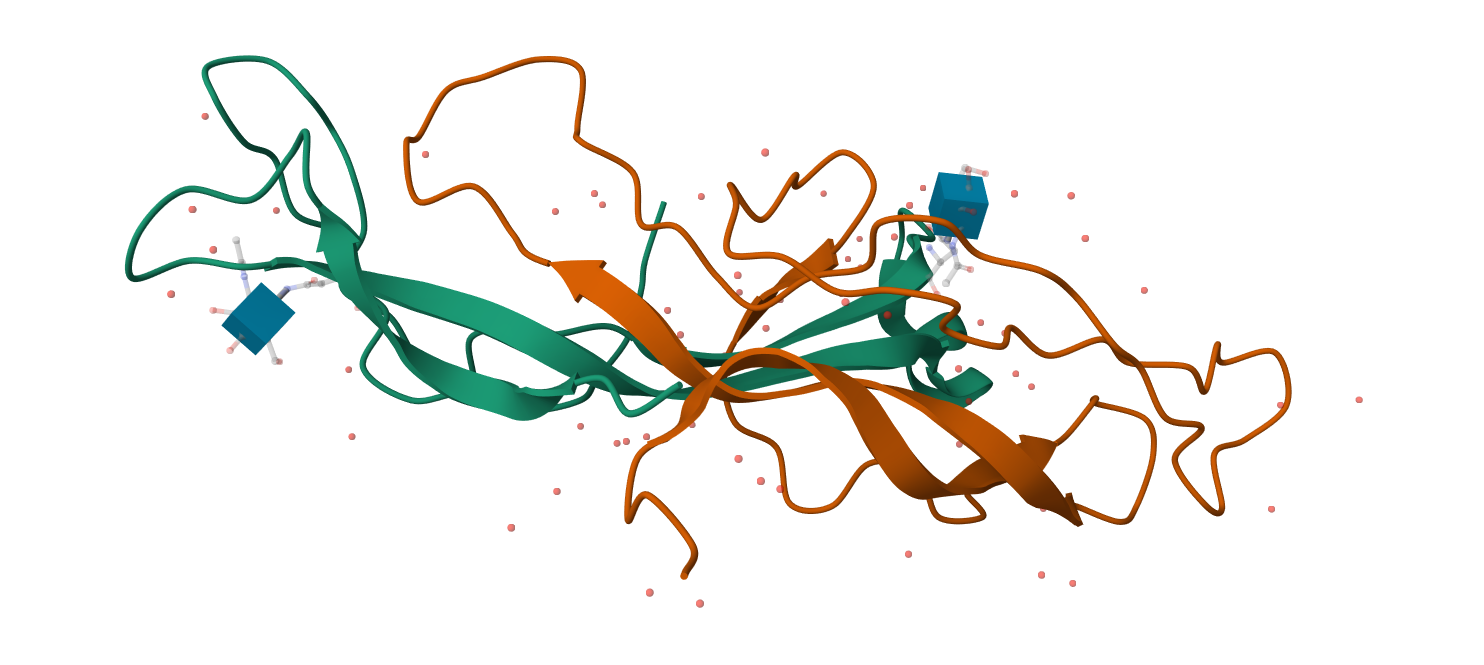
Three-dimensional cartoon model of human chorionic gonadotropin (HCG) showing the heterodimeric glycoprotein hormone — α-subunit non-covalently associated with the β-hCG subunit — based on the 2.6 Å crystal structure deposited as PDB 1HCN (Wu, Lustbader, Liu, Canfield, Hendrickson, 1994).
Image credit: Image rendered by Kersti Nebelsiek from PDB 1HCN coordinates (Wu et al., 1994), via Wikimedia Commons · Public Domain (CC0 1.0)
Amino Acid Sequence
α-subunit (92 aa, UniProt P01215, mature 25–116): APDVQDCPECTLQENPFFSQPGAPILQCMGCCFSRAYPTPLRSKKTMLVQKNVTSESTCCVAKSYNRVTVMGGFKVENHTACHCSTCYYHKS β-subunit (145 aa, UniProt P01233, mature 21–165): SKEPLRPRCRPINATLAVEKEGCPVCITVNTTICAGYCPTMTRVLQGVLPALPQVVCNYRDVRFESIRLPGCPRGVNPVVSYAVALSCQCALCRRSTTDCGGPKDHPLTCDDPRFQDSSSSKAPPPSLPSPSRLPGPSDTPILPQ Assembled as a non-covalent αβ-heterodimer with extensive N- and O-linked glycosylation; the four β-subunit O-linked glycans on the C-terminal peptide (Ser121, Ser127, Ser132, Ser138 of the mature β-chain) are responsible for the long circulating half-life of HCG relative to LH.
Molecular Formula
C₁₁₀₅H₁₇₇₀N₃₁₈O₃₃₆S₂₆ (deglycosylated polypeptide approximation per DrugBank DB00097; the assembled glycoprotein has variable empirical formula by glycoform)
Molecular Weight
~36–37 kDa (assembled, glycosylated αβ-heterodimer; α ≈ 22 kDa, β ≈ 28 kDa); ~25,720 g·mol⁻¹ (deglycosylated polypeptide)
CAS Number
9002-61-3 (urinary hCG); 177073-44-8 (recombinant choriogonadotropin alfa)
DrugBank ID
DB00097
IUPAC Name
Choriogonadotropin (heterodimer of glycoprotein hormone α-chain GLHA_HUMAN, UniProt P01215, and chorionic gonadotropin β-chain CGB_HUMAN, UniProt P01233); UNII 20ED16GHEB
Solubility
The assembled glycoprotein is highly water-soluble at neutral pH. Lyophilised urinary hCG (Pregnyl, Novarel) is reconstituted with bacteriostatic or sterile water for injection; Ovidrel/Ovitrelle is supplied as a sterile, ready-to-use prefilled syringe (250 µg in 0.5 mL, equivalent to ~6,500 IU urinary hCG). Insoluble in organic solvents.
Storage
Lyophilised urinary hCG is typically stored at 2–8 °C protected from light, with reconstituted solution used promptly per the product label. The Ovidrel/Ovitrelle prefilled syringe is stored at 2–8 °C and may be kept at or below 25 °C for up to 30 days during patient use.

Mechanism of Action

HCG is a placental glycoprotein hormone that signals predominantly through the luteinizing hormone / choriogonadotropin receptor (LHCGR) — a Class A G-protein-coupled receptor — driving Gαs → adenylyl cyclase → cAMP → PKA-mediated steroidogenesis in gonadal target cells; the four O-linked glycans on the β-subunit C-terminal peptide produce an LH-like signal with a markedly longer plasma half-life than endogenous LH.

In a normal menstrual cycle, the pituitary LH surge triggers final follicular maturation, oocyte meiotic resumption and ovulation; in pregnancy, HCG produced by the syncytiotrophoblast of the implanting blastocyst takes over corpus-luteum support to sustain progesterone secretion until placental steroidogenesis is established. Because HCG and LH share the LHCGR (Pierce & Parsons 1981), exogenous pharmaceutical HCG — whether purified from pregnancy urine or produced recombinantly in CHO cells — is used clinically and in research to mimic the LH surge in controlled-ovarian-stimulation cycles and to substitute for LH in men with hypogonadotropic hypogonadism. The C-terminal peptide of β-hCG carries four O-linked glycans (Ser121, Ser127, Ser132, Ser138 of the mature β-chain) that protect the molecule from rapid renal clearance (Cole 2010), giving it a substantially longer half-life than LH and enabling once-per-cycle dosing as an ovulation trigger. Recombinant choriogonadotropin alfa is produced in genetically engineered CHO cells, secreted into the medium and purified by chromatography; urinary hCG is purified from large pools of pregnancy urine and standardised by bioassay in International Units.

Molecular Targets

  • LHCGR (LH/CG receptor) — primary target; full agonist on Leydig cells of the testis, theca and luteinised granulosa cells of the ovary, and corpus luteum
  • TSHR (TSH receptor) — weak cross-reactive activity, clinically relevant only at very high HCG concentrations seen in some trophoblastic tumours and in first-trimester gestational thyrotoxicosis
  • Hyperglycosylated hCG / cytotrophoblast autocrine signalling — Cole 2010 proposes distinct receptor / autocrine activity of hyperglycosylated hCG in cytotrophoblast invasion, biologically distinct from the classical LHCGR-mediated endocrine action

Signaling Pathways

  • LHCGR → Gαs → adenylyl cyclase → ↑ cAMP → PKA → CREB-mediated transcription of steroidogenic enzymes (StAR, CYP11A1, CYP17A1, CYP19A1)
  • Endocrine endpoints: testosterone production in Leydig cells; progesterone and estradiol production in luteinised theca and granulosa cells; maintenance of the corpus luteum during early pregnancy
  • Secondary engagement of Gαq/PLCβ/IP₃/Ca²⁺ at higher receptor occupancy contributes to ovulatory granulosa-cell remodelling; the long acyl-glycan-mediated half-life lets a single bolus reproduce a sustained LH-like surge

Research Applications

The regulatory evidence base rests on two Phase III head-to-head trials of recombinant vs urinary hCG as ovulation trigger (Driscoll 2000; Chang 2001), an RCT of intratesticular testosterone maintenance under exogenous-testosterone-induced gonadotropin suppression (Coviello 2005), comprehensive reviews of HCG isoforms as tumour markers (Stenman 2006) and biological functions (Cole 2010), and a criteria-based meta-analysis refuting the Simeons "HCG diet" claim (Lijesen 1995).

Assisted reproduction — rhCG vs uHCG as ovulation trigger (Phase III, n=84)

Phase III

Studies report that subcutaneous Ovidrel 250 µg vs intramuscular Profasi 5,000 IU produced equivalent primary endpoints (oocytes retrieved, mature oocytes, fertilisation rate), with higher serum progesterone 6–7 days after trigger in the rhCG arm and fewer local-injection-site reactions.

— Driscoll et al., Hum Reprod 2000;15(6):1377–1381

Assisted reproduction — rhCG dose-finding vs uHCG (Phase III, n=297)

Phase III

Studies report a mean oocyte yield of 13.6 (Ovidrel 250 µg) vs 14.6 (Ovidrel 500 µg) vs 13.7 (Profasi 10,000 IU) in an open randomised three-arm study — non-inferiority of the 250 µg recombinant subcutaneous dose with fewer local injection-site reactions, providing the clinical basis for the FDA (2000) and EMA (2001) Ovidrel/Ovitrelle approvals.

— Chang et al., Fertil Steril 2001;76(1):67–74

Male hypogonadism — low-dose hCG to maintain intratesticular testosterone (RCT)

Phase II

Studies report that hCG co-administration (125, 250 or 500 IU every other day) in healthy men under exogenous testosterone preserved intratesticular testosterone in a dose-dependent manner, while testosterone alone produced a ~94% drop from baseline — the mechanistic rationale for adding hCG to testosterone regimens to preserve the spermatogenic axis.

— Coviello et al., J Clin Endocrinol Metab 2005;90(5):2595–2602

HCG isoforms as tumour markers — review

observational

Studies describe the differential diagnostic utility of intact hCG, free β-subunit, hyperglycosylated hCG and the urinary β-cf fragment in gestational trophoblastic disease, testicular germ-cell tumours and selected non-trophoblastic malignancies — and emphasise that assays detecting only intact hCG can miss free-β-subunit-secreting tumours.

— Stenman et al., Hum Reprod Update 2006;12(6):769–784

Biological functions of hCG — review

observational

Studies classify four hCG-related molecules with distinct biology: pregnancy hCG (syncytiotrophoblast, endocrine function), hyperglycosylated hCG (cytotrophoblast, invasion), free β-subunit (multiple non-trophoblastic malignancies) and pituitary hCG (low levels in postmenopausal women) — a stratification that shapes tumour-marker interpretation and research logic.

— Cole, Reprod Biol Endocrinol 2010;8:102

Simeons "HCG diet" — criteria-based meta-analysis

observational

Studies document, in a meta-analysis of 24 trials (8 controlled, 16 uncontrolled), that HCG as an adjunct to a very-low-calorie diet produces no weight loss, no fat redistribution, no reduction in hunger and no improvement in well-being beyond the calorie restriction itself; the FDA has separately issued public warnings against unapproved "homeopathic" HCG weight-loss products.

— Lijesen et al., Br J Clin Pharmacol 1995;40(3):237–243
Clinical Status

Regulatory Status
Urinary hCG (Pregnyl, Organon/Merck; Novarel, Ferring; historically Profasi, Serono) has long-standing FDA approval for female anovulatory infertility, male hypogonadotropic hypogonadism and prepubertal cryptorchidism. Recombinant choriogonadotropin alfa (Ovidrel®) was approved by the U.S. FDA on 20 September 2000 (NDA 21-149) for induction of final follicular maturation and early luteinisation in women undergoing ART and for induction of ovulation in anovulatory infertile women. The EMA granted centralised marketing authorisation for Ovitrelle® on 2 February 2001 (EMEA/H/C/000320). Separately, the FDA took enforcement action in 2011 and 2016 against unapproved "homeopathic" HCG weight-loss products.
Show more
Highest Trial Phase
Phase III approved (ART and male hypogonadotropic hypogonadism, FDA and EMA); long-standing post-marketing experience
Sponsor
Originator of recombinant choriogonadotropin alfa: Serono (now Merck KGaA / EMD Serono); urinary hCG marketed by Organon (Pregnyl, now part of Merck & Co.) and Ferring (Novarel); Profasi (Serono) is historical.

Safety Profile

Observed in research settings

In Phase III ART trials and decades of clinical experience, HCG has been generally well-tolerated, with adverse events that overlap substantially between recombinant and urinary preparations. The clinically most important risks observed in research settings are ovarian hyperstimulation syndrome (OHSS) in women undergoing controlled ovarian stimulation, gynecomastia and acne in men receiving hCG, and injection-site reactions and hypersensitivity across populations.

Adverse Events Reported in Studies

  • Injection-site reaction (pain, redness, bruising, induration) — lower with subcutaneous rhCG than intramuscular uHCG
  • Headache
  • Fatigue, irritability, restlessness
  • Nausea, vomiting and abdominal pain — often part of the OHSS spectrum in women in ART cycles
  • Mild-to-moderate ovarian hyperstimulation syndrome (OHSS) in women undergoing controlled ovarian stimulation
  • Gynecomastia, acne and fluid retention in men on hCG ± exogenous testosterone
  • Mood changes and depression in paediatric cryptorchidism cohorts (historical)

Serious Adverse Events

  • Severe OHSS — ascites, pleural effusion, hypovolaemia, electrolyte disturbance, hypercoagulability; potentially life-threatening, with risk increased by high estradiol, large follicle counts, PCOS phenotype, and luteal hCG support
  • Thromboembolic events (arterial and venous), reported in association with severe OHSS and independently
  • Ovarian torsion, ovarian rupture and haemoperitoneum (rare) in stimulated cycles
  • Multifetal gestation as a direct consequence of ART biology and a labelled risk
  • Hypersensitivity / anaphylaxis as a class effect across protein and glycoprotein biologics

References

  1. Pierce JG, Parsons TF Glycoprotein hormones: structure and function Annu Rev Biochem 1981;50:465–495. 1981 .

  2. Wu H, Lustbader JW, Liu Y, Canfield RE, Hendrickson WA Structure of human chorionic gonadotropin at 2.6 Å resolution from MAD analysis of the selenomethionyl protein (PDB 1HCN) Structure 1994;2(6):545–558. 1994 .

  3. Lijesen GKS, Theeuwen I, Assendelft WJJ, Van Der Wal G The effect of human chorionic gonadotropin (HCG) in the treatment of obesity by means of the Simeons therapy: a criteria-based meta-analysis Br J Clin Pharmacol 1995;40(3):237–243. 1995 .

  4. Driscoll GL, Tyler JPP, Hangan JT, Fisher PR, Birdsall MA, Knight DC A prospective, randomized, controlled, double-blind, double-dummy comparison of recombinant and urinary HCG for inducing oocyte maturation and follicular luteinization in ovarian stimulation Hum Reprod 2000;15(6):1377–1381. 2000 .

  5. Chang P, Kenley S, Burns T, Denton G, Currie K, DeVane G, O'Dea L Recombinant human chorionic gonadotropin (rhCG) in assisted reproductive technology: results of a clinical trial comparing two doses of rhCG (Ovidrel®) to urinary hCG (Profasi®) for induction of final follicular maturation in IVF–ET Fertil Steril 2001;76(1):67–74. 2001 .

  6. Coviello AD, Matsumoto AM, Bremner WJ, Herbst KL, Amory JK, Anawalt BD, Sutton PR, Wright WW, Brown TR, Yan X, Zirkin BR, Jarow JP Low-dose human chorionic gonadotropin maintains intratesticular testosterone in normal men with testosterone-induced gonadotropin suppression J Clin Endocrinol Metab 2005;90(5):2595–2602. 2005 .

  7. Stenman UH, Tiitinen A, Alfthan H, Valmu L The classification, functions and clinical use of different isoforms of HCG Hum Reprod Update 2006;12(6):769–784. 2006 .

  8. Cole LA Biological functions of hCG and hCG-related molecules Reprod Biol Endocrinol 2010;8:102. 2010 .

  9. U.S. Food and Drug Administration / EMD Serono Ovidrel® (choriogonadotropin alfa) — Highlights of Prescribing Information; NDA 21-149 approved 20 September 2000 FDA Drugs@FDA, 2010 label revision. 2000 .

  10. European Medicines Agency Ovitrelle (choriogonadotropin alfa) — EPAR product information; centralised marketing authorisation 2 February 2001 EMA, EMEA/H/C/000320. 2001 .

Frequently Asked Questions

Is HCG a synthetic peptide?
No. HCG is a heterodimeric glycoprotein hormone, not a chemically synthesised peptide. It consists of a 92-amino-acid α-subunit (shared with LH, FSH and TSH) and a 145-amino-acid β-subunit (β-hCG, unique to HCG), bearing extensive N-linked and O-linked glycosylation that together account for ~25–30% of its molecular mass and a total assembled molecular weight of approximately 36–37 kDa. Pharmaceutical HCG is produced either by extraction from the urine of pregnant women or by recombinant DNA technology in CHO cells.
What is the difference between urinary hCG and recombinant hCG?
Urinary hCG (e.g. Pregnyl, Novarel, historically Profasi) is purified from large pools of pregnancy urine and standardised by biological activity in International Units (IU); typical ART trigger doses are 5,000–10,000 IU intramuscularly. Recombinant hCG, also called choriogonadotropin alfa (Ovidrel in the US, Ovitrelle in the EU), is produced in genetically engineered Chinese-hamster-ovary (CHO) cells and standardised by mass: 250 µg subcutaneously is therapeutically equivalent to ~6,500 IU of urinary hCG. Phase III head-to-head trials (Driscoll 2000; Chang 2001) found equivalent ART efficacy with fewer local reactions for the recombinant subcutaneous formulation.
What is HCG approved for?
Urinary hCG products (Pregnyl, Novarel) have long-standing FDA approval for female anovulatory infertility, male hypogonadotropic hypogonadism and prepubertal cryptorchidism. Recombinant choriogonadotropin alfa (Ovidrel) was approved by the FDA on 20 September 2000 (NDA 21-149) for induction of final follicular maturation and early luteinisation in women undergoing ART and for induction of ovulation in anovulatory infertile women. The EMA approved Ovitrelle on 2 February 2001 for the same indications.
What is the role of hCG in fertility research?
HCG binds the LHCGR (LH/CG receptor) and reproduces the LH surge that triggers final oocyte maturation and ovulation, but with a much longer plasma half-life (~29 h subcutaneous Ovidrel vs ~30 min for LH). In ART research and practice it is therefore used to schedule ovulation in controlled-ovarian-stimulation cycles, to support the corpus luteum and — in male research populations — to maintain intratesticular testosterone and Leydig-cell function during exogenous-testosterone suppression.
Does HCG promote weight loss?
No. The "HCG diet" — combining HCG injections with a very-low-calorie (~500 kcal/day) regimen — was proposed by ATW Simeons in 1954 and has never been supported by independent randomised controlled trials. The criteria-based meta-analysis of 24 trials by Lijesen et al. (1995, Br J Clin Pharmacol) concluded that HCG produces no weight loss or fat redistribution beyond the very-low-calorie diet itself, does not reduce hunger and does not induce a feeling of well-being. The FDA has issued explicit warnings against unapproved "homeopathic HCG" weight-loss products. Any weight loss observed during a Simeons-style regimen is attributable to the calorie restriction, not to HCG.
Why is HCG sometimes elevated outside pregnancy?
Beyond pregnancy, elevated serum or urinary HCG (or its free β-subunit) is observed in gestational trophoblastic disease, testicular germ-cell tumours, certain other non-trophoblastic malignancies and — at low levels — in healthy postmenopausal women due to pituitary hCG. Distinguishing intact hCG, free β-subunit, hyperglycosylated hCG and the urinary β-cf fragment is clinically and analytically important; the Stenman et al. (2006) review remains a primary reference for HCG-isoform-aware tumour-marker interpretation.