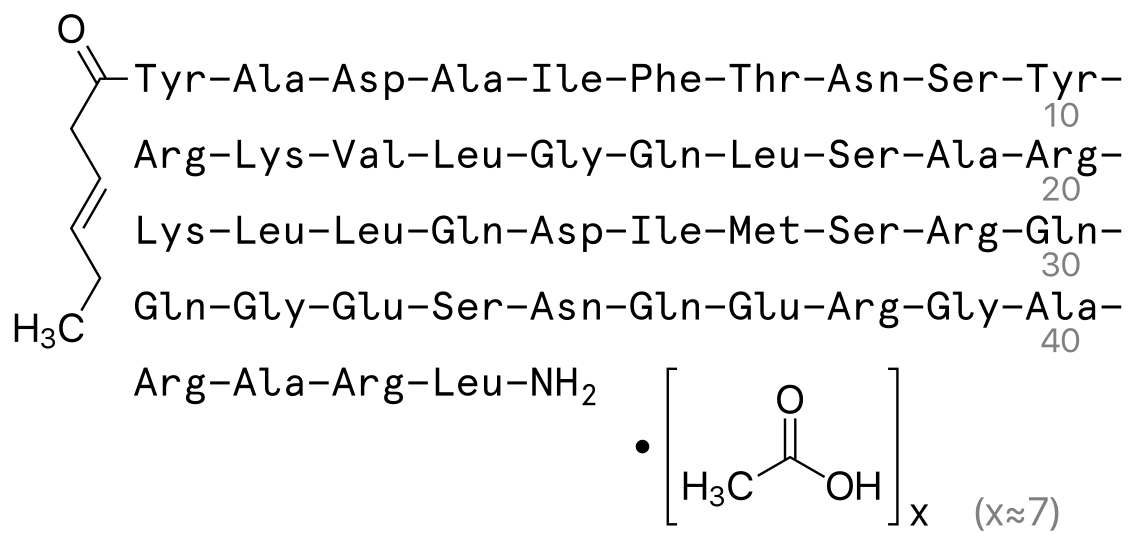
Tesamorelin is a DPP-IV-resistant GHRH(1-44) analogue that selectively activates the pituitary GHRH receptor (GHRHR) on somatotrophs, stimulating pulsatile, physiologic release of endogenous growth hormone with a downstream rise in hepatic IGF-1.
Tesamorelin (TH9507) was engineered by Theratechnologies from the full 44-residue hypothalamic peptide GRF(1-44) as an N-terminally acylated analogue: a (3E)-hex-3-enoic acid (trans-3-hexenoic acid) is conjugated to the α-amino group of Tyr¹. This modification sterically blocks dipeptidyl peptidase-IV (DPP-IV/CD26) — the protease principally responsible for the rapid (~7 min) plasma inactivation of native GHRH at the Tyr¹–Ala² bond — and confers a measurable plasma half-life of roughly 26–38 minutes after subcutaneous administration with absolute bioavailability ≤4% (FDA clinical pharmacology review NDA 22-505). Because tesamorelin acts through the endogenous somatotroph machinery rather than supplying exogenous recombinant human growth hormone (rhGH/somatropin), the resulting GH release is pulsatile and remains under negative feedback by IGF-1, somatostatin, and free fatty acids — preserving physiologic GH dynamics and largely avoiding the supraphysiologic IGF-1 excursions that complicated earlier rhGH-based regimens for HIV-associated lipodystrophy. In Phase III HIV-lipodystrophy trials, daily 2 mg subcutaneous tesamorelin produced a selective ~15–18% reduction in visceral adipose tissue (VAT) at 26 weeks without significantly altering subcutaneous adipose tissue or limb fat, with concurrent normalisation of mean IGF-1 toward the upper-normal physiologic range (~+81% from baseline) and improvements in triglycerides and the total-cholesterol-to-HDL ratio. Effects are reversible upon discontinuation, consistent with the short pharmacokinetic half-life and the requirement for ongoing GHRHR stimulation.