Semaglutide is a long-acting agonist of the glucagon-like peptide-1 receptor (GLP-1R) that mimics endogenous incretin signaling — augmenting glucose-dependent insulin secretion, suppressing glucagon, slowing gastric emptying, and reducing appetite via central GLP-1R-expressing neurons.
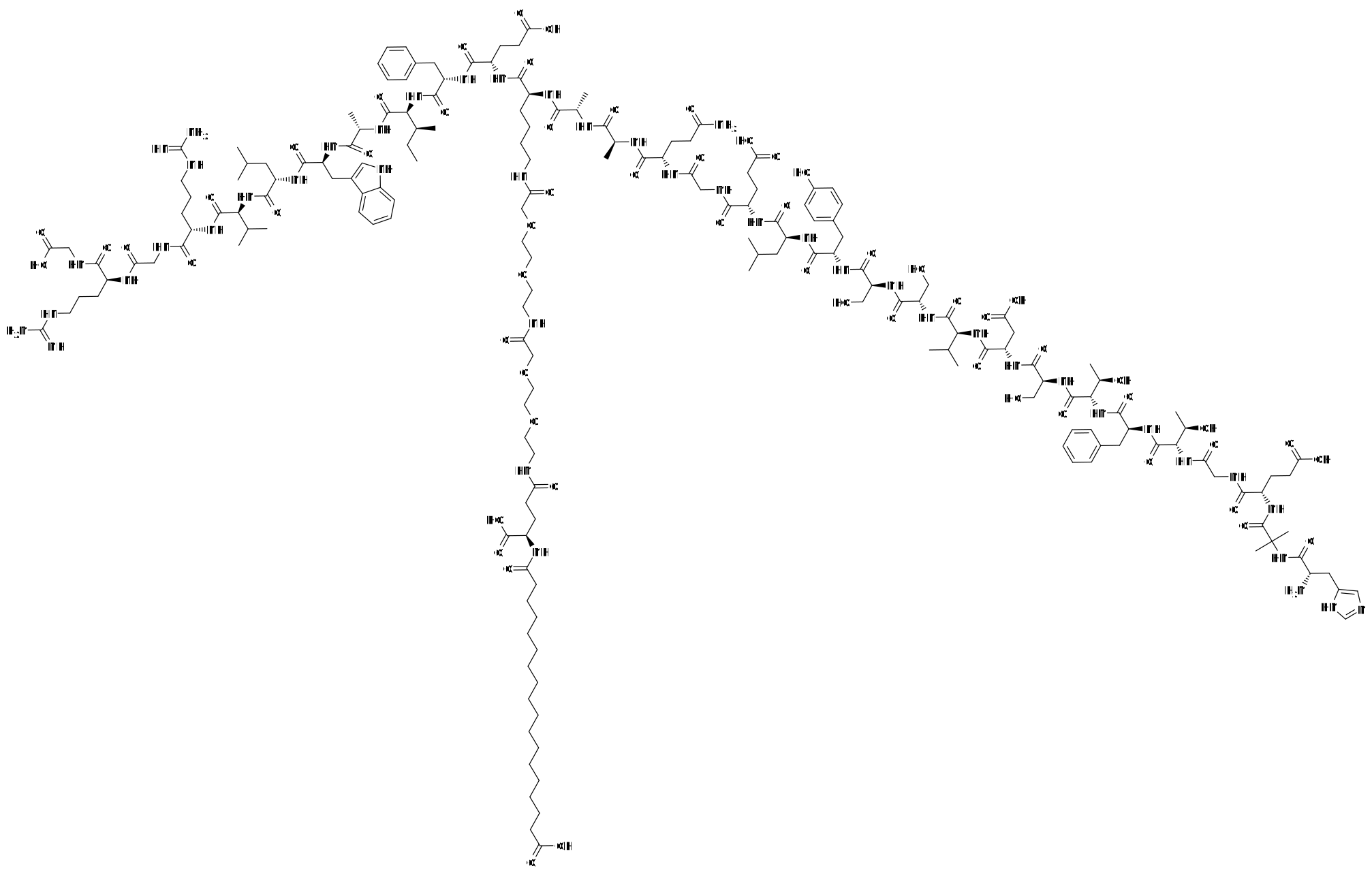
Semaglutide was engineered from native GLP-1(7-37) by Novo Nordisk (Lau et al. 2015) to overcome the rapid (~1–2 minute) plasma clearance of the endogenous hormone. Substitution of alanine at position 8 with α-aminoisobutyric acid (Aib) confers resistance to DPP-4 cleavage. Acylation of Lys²⁶ with a γ-glutamic acid spacer and two 8-amino-3,6-dioxaoctanoic acid (OEG/ADO) units terminating in a C18 fatty di-acid creates a high-affinity, reversible interaction with circulating albumin, shielding the peptide from renal filtration and neprilysin-mediated proteolysis. The Lys³⁴→Arg substitution prevents off-target acylation during synthesis. Together these modifications extend the elimination half-life to approximately 165–184 hours (~7 days), supporting once-weekly subcutaneous dosing. Rybelsus achieves oral delivery via co-formulation with the absorption enhancer SNAC (sodium N-(8-[2-hydroxybenzoyl]amino)caprylate), which transiently elevates local gastric pH and promotes transcellular uptake — albeit with absolute bioavailability of only ~1%.