Synthetic Heptapeptide (TKPRPGP, Cognitive-Nootropic Class — Investigational Anxiolytic) Limited Human Data

Selank

Also Known As: Selanc, TP-7, heptapeptide TP-7, TKPRPGP

Selank (TKPRPGP) is a synthetic heptapeptide developed at the Institute of Molecular Genetics of the Russian Academy of Sciences (Ashmarin / Myasoedov groups) as a C-terminal Pro-Gly-Pro-stabilised analogue of the endogenous immunomodulatory tetrapeptide tuftsin (TKPR) — the additional PGP extension confers proteolytic stability and broadens pharmacology beyond immunomodulation toward an anxiolytic / nootropic profile. Selank is NOT the same molecule as tuftsin (TKPR ≠ TKPRPGP) and is NOT the same as N-Acetyl Selank (a separate N-acetylated analogue with extended pharmacokinetics). The Russian Ministry of Health registered an intranasal 0.15% spray in 2009 (brand "Selanc" / "Селанк", manufacturer Pharmstandard / "Innovative Pharmaceutical Technologies") for the indications of generalised anxiety disorder and neurasthenia — this registration is a Russian-only regulatory action and does NOT constitute FDA or EMA marketing authorisation. A systematic ClinicalTrials.gov v2 API query on 1 May 2026 returned zero registered Selank trials (zero ClinicalTrials.gov NCT IDs, queried 2026-05-01); the single keyword-match hit NCT00464269 is a UCB Pharma brivaracetam Phase 3 epilepsy trial and is NOT cited as a Selank trial. Plasma half-life ≈ 5–10 minutes (intranasal) while CNS pharmacodynamic effects persist for hours-to-days — this PK/PD divergence is mediated by gene-expression and receptor-level remodeling rather than direct GABA_A binding. For athletes under WADA-Code jurisdiction the substance is non-approved and falls under WADA Class S0 (Non-Approved Substances).

Identity & Chemistry

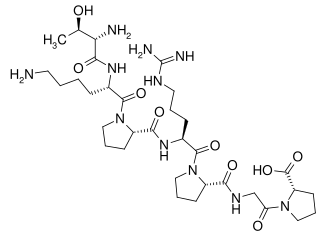
Skeletal chemical structure of Selank (Thr-Lys-Pro-Arg-Pro-Gly-Pro), a synthetic heptapeptide analogue of tuftsin extended at the C-terminus by a Pro-Gly-Pro stabiliser motif.
Image credit: Ronhjones, via Wikimedia Commons · Public Domain
Amino Acid Sequence
H-Thr-Lys-Pro-Arg-Pro-Gly-Pro-OH (TKPRPGP, 7 amino acids; C-terminal Pro-Gly-Pro extension of the immunomodulatory tetrapeptide tuftsin TKPR)
Molecular Formula
C₃₃H₅₇N₁₁O₉
Molecular Weight
751.89 g·mol⁻¹ (≈ 751.9 Da, free base; PubChem CID 11765600)
CAS Number
129954-34-3
PubChem CID
11765600
IUPAC Name
L-threonyl-L-lysyl-L-prolyl-L-arginyl-L-prolyl-glycyl-L-proline; (2S,3R)-2-amino-N-{(2S)-1-[(2S)-2-({(2S)-1-[(2S)-2-({(2S)-1-[2-({(2S)-2-carboxypyrrolidin-1-yl}-2-oxoethyl)amino]-2-oxoethyl}-2-oxopyrrolidin-1-yl]-5-(diaminomethylideneamino)-1-oxopentan-2-yl}-2-oxopyrrolidin-1-yl]-6-aminohexan-2-yl}-3-hydroxybutanamide
Solubility
Water-soluble; the Russian clinical product is supplied as an aqueous 0.15% solution (1.5 mg/mL) administered intranasally. Quantitative aqueous-solubility data are not publicly disclosed at PubChem CID 11765600.
Storage
Lyophilised peptide: store at −20 °C protected from light (long-term). Reconstituted solutions: store at 2–8 °C, short-term (vendor / supplier certificate of analysis governs); for research use only.

Mechanism of Action

Selank is hypothesised to act as a multi-target peptide neuromodulator: studies report competitive inhibition of enkephalin-degrading enzymes in human serum (IC₅₀ ≈ 20 μM, Kost 2001), allosteric modulation of GABA-receptor-subunit gene expression and serotonergic genes — NOT direct GABA_A agonism — and rapid BDNF upregulation in rat hippocampus. Selank is NOT a GABA receptor agonist and is NOT a benzodiazepine.

Studies report that Selank in the seminal Kost 2001 paper (PMID 11443939) competitively inhibits enkephalin-degrading enzymes in human serum (IC₅₀ ≈ 20 μM, more potent than the standard inhibitors puromycin or bacitracin) — the only directly biochemically measured mechanism and the biochemical anchor for the anxiolytic hypothesis. The follow-on Volkova 2016 paper (PMID 26924987) showed in vivo in Wistar rats that a single intranasal dose extensively remodelled frontal-cortex gene expression within 1 h (45 genes 1 h post-dose, 76% downregulated; 22 genes 3 h post-dose, 95% upregulated) and that this signature correlated with the GABA-induced signature at r = 0.86 — an upstream / allosteric modulator finding, NOT a direct GABA_A binding finding. The Filatova 2017 replication in human IMR-32 neuroblastoma cells confirmed the GABAergic gene-expression signature in vitro. At the behavioural level, Kasian 2017 (PMID 28280289) showed in the rat elevated plus maze under unpredictable chronic mild stress that 14 days of Selank (300 μg/kg intranasal) restored open-arm time to pre-stress levels and combined additively with diazepam (8.9× open-arm time vs. saline). The single PubMed-indexed human RCT (Zozulya 2008, n = 62, Selank vs. medazepam, GAD + neurasthenia) reports comparable anxiolysis with additional antiasthenic / psychostimulant effects — open-label, single-centre, Russian-published, NOT registered on ClinicalTrials.gov. The short plasma half-life (~5–10 min intranasal) together with CNS effects persisting for hours-to-days is consistent with action via gene expression and receptor-level remodeling rather than direct receptor occupancy. Mechanism statements here are therefore intentionally hedged — studies report, modulation language, in vitro / in vivo / observed in research settings — and never framed as established human pharmacology. Calling Selank a "GABA agonist" or a "benzodiazepine alternative" overstates what the published evidence actually shows.
Molecular Targets

  • Enkephalin-degrading peptidases (human serum, in vitro) — studies report dose-dependent inhibition of aminopeptidases, carboxypeptidase H and ACE; IC₅₀ ≈ 20 μM, more potent than puromycin or bacitracin (Kost 2001, PMID 11443939; Sokolov 2002, PMID 11550013)
  • GABAergic gene expression — allosteric, NOT direct GABA_A binding — a single intranasal dose (300 μg/kg) in male Wistar rats remodelled 45 frontal-cortex genes at 1 h (76% downregulated, up to ~25× suppression) and 22 genes at 3 h (95% upregulated, up to ~128× peak fold-change), with the post-Selank signature correlating with the post-GABA signature at r = 0.86 (p ≤ 0.05) (Volkova 2016, PMID 26924987; independently replicated in IMR-32 cells: Filatova 2017)
  • BDNF (rat hippocampus, in vivo) — studies report under intranasal Selank (250–500 μg/kg) an increase of hippocampal BDNF mRNA within 3 h and BDNF protein within 24 h
  • Serotonergic / monoaminergic modulation — effects on rat-brain serotonin metabolism and 5-HIAA turnover (Bull Exp Biol Med series)
  • Tuftsin lineage / immunomodulation — IL-6 and Th1/Th2 cytokine balance normalisation in patients with anxiety-asthenic disorders (Uchakina 2008, PMID 18577961)

Signaling Pathways

  • Enkephalinase inhibition → increased availability of endogenous enkephalins → opioidergic anxiolytic modulation (Kost 2001; Sokolov 2002)
  • Allosteric / upstream-modulator GABA axis: the Selank gene-expression signature correlates with the GABA signature (r = 0.86) — studies interpret this as upstream modulation, NOT direct receptor binding (Volkova 2016; Filatova 2017)
  • Hippocampal BDNF upregulation (in vivo, rat) → potential plasticity / nootropic effects
  • Tuftsin-lineage immunomodulation → IL-6 and Th1/Th2 normalisation (Uchakina 2008)
  • PK/PD divergence: plasma half-life ~5–10 min (intranasal) while CNS effects persist for hours-to-days — consistent with gene-expression and receptor-level remodeling rather than direct receptor occupancy

Research Applications

The published evidence base consists of in vitro enzymology in human serum, in vivo Wistar-rat transcriptomics, a human IMR-32 in vitro replication, a rat EPM chronic-mild-stress model, and a single small Russian open-label RCT (n = 62). Four of seven primary peer-reviewed references are co-authored by the Myasoedov / Ashmarin RAMS lineage at the Institute of Molecular Genetics; three involve partial overlap with the same lineage but include independent collaborators (Filatova 2017 IMR-32 replication, Kasian 2017 EPM, Uchakina 2008 NIH-affiliated immunology). Independent replication wholly outside the RAMS lineage is limited — the principal evidence-quality concern triggering the Limited Data Badge.

Enkephalinase inhibition — human serum, in vitro

in vitro

Studies report in human serum a dose-dependent inhibition of aminopeptidases, carboxypeptidase H and ACE by Selank (IC₅₀ ≈ 20 μM); more potent than the standard inhibitors puromycin and bacitracin. This is the only directly biochemically measured mechanism and the biochemical anchor for the anxiolytic hypothesis.

— Kost et al. 2001, Russ J Bioorg Chem 27(3):156–159 (PMID 11443939); Sokolov et al. 2002, Bull Exp Biol Med 133(2):158–160 (PMID 11550013)

GABAergic gene expression — Wistar rat (frontal cortex, in vivo) + human IMR-32 neuroblastoma cells (in vitro)

in vivo

Studies report that a single intranasal dose (300 μg/kg) remodelled 45 frontal-cortex genes at 1 h (76% downregulated, up to ~25× suppression) and 22 genes at 3 h (95% upregulated, up to ~128× peak fold-change); the post-Selank signature correlated with the post-GABA signature at r = 0.86 (p ≤ 0.05) — interpreted as upstream allosteric GABA modulation, NOT direct GABA_A binding. In human IMR-32 cells the same gene-set shift was independently replicated in 2017.

— Volkova et al. 2016, Front Pharmacol 7:31 (PMID 26924987); Filatova et al. 2017, Front Pharmacol 8:89 (DOI 10.3389/fphar.2017.00089)

Anxiolysis vs. benzodiazepine — rat EPM under chronic mild stress

in vivo

Studies report that 14 days of intranasal Selank (300 μg/kg) restored open-arm time to pre-stress levels; the Selank + diazepam combination yielded 8.9× more open-arm time and 2× less closed-arm time vs. saline controls, additive and superior to either drug alone.

— Kasian et al. 2017, Behav Neurol 2017:5091027 (PMID 28280289)

Generalised anxiety disorder — Russian open-label RCT (n = 62)

observational

Studies report in a single-centre open-label Russian RCT (Selank vs. oral medazepam, 14 days) comparable Hamilton Anxiety / Zung / CGI improvement; Selank additionally produced antiasthenic / psychostimulant effects absent from medazepam. Plasma leu-enkephalin τ½ was reduced at baseline in patients vs. healthy controls and restored by Selank treatment. Editorial caveat: open-label, single-centre, Russian-published; NOT a Western Phase II/III RCT and NOT registered on ClinicalTrials.gov.

— Zozulya et al. 2008, Zh Nevrol Psikhiatr 108(4):38–48 (PMID 18454096)

Tuftsin-lineage immunomodulation — small clinical observational series

observational

Studies report under Selank in patients with anxiety-asthenic disorders a normalisation of aberrant IL-6 levels and Th1/Th2 cytokine ratios — a re-expression of parent tuftsin pharmacology. Observed in research settings; small sample, not blinded.

— Uchakina et al. 2008, Bull Exp Biol Med 145(4):408–411 (PMID 18577961)

Clinical Status

Regulatory Status
Selank is NOT approved by the FDA and NOT approved by the EMA for any clinical indication. The Russian Ministry of Health (Минздрав РФ) registered an intranasal 0.15% spray in 2009 (brand "Selanc" / "Селанк", manufacturer Pharmstandard / "Innovative Pharmaceutical Technologies") for generalised anxiety disorder and neurasthenia — this registration is a Russian-only regulatory action and is NOT equivalent to Western marketing authorisation. A systematic ClinicalTrials.gov v2 API query on 1 May 2026 for "selank" and "selanc" returned zero registered Selank trials (zero ClinicalTrials.gov NCT IDs, queried 2026-05-01); the single keyword-match hit NCT00464269 is a UCB Pharma brivaracetam Phase 3 epilepsy trial and is NOT cited as a Selank trial. The 1500+ patient cohort sometimes cited in vendor copy is a state-funded post-marketing observational claim, NOT a registered controlled trial. For athletes under WADA-Code jurisdiction Selank is a non-approved substance and falls under WADA Class S0 (Non-Approved Substances) — Russian registration alone does NOT lift S0 applicability outside Russia.
Show more
Highest Trial Phase
Highest published phase: Russian-published open-label Phase II-equivalent RCT (Zozulya 2008, n = 62, Selank vs. medazepam, single-centre, GAD + neurasthenia); NO Western Phase 1/2/3 RCTs registered.
Sponsor
Institute of Molecular Genetics, Russian Academy of Sciences (Ashmarin / Myasoedov groups) and V. V. Zakusov SRI of Pharmacology, RAMS; commercial manufacturing by Pharmstandard / "Innovative Pharmaceutical Technologies".

Safety Profile

Observed in research settings

Studies report in the published Russian Kost-Sokolov-Zozulya literature good tolerability of the intranasal 0.15% spray with adverse-event rates below those for medazepam — observed in research settings, small samples, unblinded, single-centre. There is NO Western long-term pharmacovigilance dataset. Unlike benzodiazepines, the published preclinical and small-clinical literature reports no sedation, no muscle relaxation, no withdrawal syndromes and no observed dependence liability — but absence of reports in small short-duration studies is not equivalent to established absence of risk.

Adverse Events Reported in Studies

  • Mild local nasal irritation following intranasal administration (most-frequent event reported, not consistently quantified in English-language abstracts of the Russian studies)
  • Transient headache (small open-label Russian series; observed in research settings)
  • No sedation, no muscle relaxation, no ataxia and no tolerance development reported in the published Russian series — observed in research settings

Serious Adverse Events

  • Human data gap: there is NO Western long-term pharmacovigilance dataset for Selank — the only PubMed-indexed RCT was n = 62, single-centre and open-label; safety statements should be tagged exclusively as "observed in research settings" or "in small Russian-published clinical studies"
  • Editorial safety flag: the majority of the safety evidence base comes from a single research lineage (Myasoedov / Ashmarin / RAMS) and has not been independently replicated outside it; no Western Phase 1/2/3 RCTs exist
  • Reproductive and lactation safety: no human reproductive-toxicity data publicly available
  • Drug interactions with MAOIs, SSRIs and opioids have not been systematically evaluated in humans

References

  1. Kost NV, Sokolov OYu, Gabaeva MV, Grivennikov IA, Andreeva LA, Myasoedov NF, Zozulya AA Semax and Selank Inhibit the Enkephalin-Degrading Enzymes from Human Serum Russ J Bioorg Chem 2001;27(3):156–159. 2001 .

  2. Sokolov OYu, Meshavkin VK, Kost NV, Zozulya AA The inhibitory effect of Selank on enkephalin-degrading enzymes as a possible mechanism of its anxiolytic activity Bull Exp Biol Med 2002;133(2):158–160. 2002 .

  3. Zozulya AA, Neznamov GG, Siuniakov TS, Kost NV, Gabaeva MV, Sokolov OYu, et al. Efficacy and possible mechanisms of action of a new peptide anxiolytic Selank in the therapy of generalised anxiety disorders and neurasthenia Zh Nevrol Psikhiatr Im S S Korsakova 2008;108(4):38–48. 2008 .

  4. Uchakina ON, Uchakin PN, Miasoedov NF, Andreeva LA, Shcherbenko VE, Mezentseva MV, et al. Immunomodulatory effects of selank in patients with anxiety-asthenic disorders Bull Exp Biol Med 2008;145(4):408–411. 2008 .

  5. Volkova A, Shadrina M, Kolomin T, Andreeva L, Limborska S, Myasoedov N, Slominsky P Selank Administration Affects the Expression of Some Genes Involved in GABAergic Neurotransmission Front Pharmacol 2016;7:31. 2016 .

  6. Filatova E, Kasian A, Kolomin T, Rybalkina E, Alieva A, Andreeva L, et al. GABA, Selank, and Olanzapine Affect the Expression of Genes Involved in GABAergic Neurotransmission in IMR-32 Cells Front Pharmacol 2017;8:89. 2017 .

  7. Kasian A, Kolomin T, Andreeva L, Bondarenko E, Myasoedov N, Slominsky P, Shadrina M Peptide Selank Enhances the Effect of Diazepam in Reducing Anxiety in Unpredictable Chronic Mild Stress Conditions in Rats Behav Neurol 2017;2017:5091027. 2017 .

  8. World Anti-Doping Agency The 2026 Prohibited List — International Standard WADA, effective 1 January 2026. 2026 .

Frequently Asked Questions

Is Selank approved by the FDA or EMA?
No. Selank is NOT approved by the U.S. Food and Drug Administration and NOT approved by the European Medicines Agency for any clinical indication. In the US and EU it is sold strictly as a research chemical. A ClinicalTrials.gov v2 API query on 1 May 2026 returned zero registered Selank trials (zero ClinicalTrials.gov NCT IDs, queried 2026-05-01); the single keyword-match hit NCT00464269 is a UCB Pharma brivaracetam Phase 3 epilepsy trial and is NOT cited as a Selank trial.
Is Selank approved in Russia?
Selank received Russian Ministry of Health (Минздрав РФ) registration in 2009 as an intranasal 0.15% spray (brand "Selanc" / "Селанк", manufacturer Pharmstandard / "Innovative Pharmaceutical Technologies") for the indications of generalised anxiety disorder and neurasthenia. This is a Russian-only regulatory action and is NOT equivalent to FDA or EMA approval; it does not establish efficacy or safety to Western regulatory standards. Outside Russia, the legal status varies by jurisdiction; in the US and EU Selank is typically available only as a research chemical and is not approved for human consumption.
How does Selank work mechanistically?
Best-supported mechanisms: (i) competitive inhibition of enkephalin-degrading enzymes in human serum (IC₅₀ ≈ 20 μM, Kost 2001, PMID 11443939); (ii) allosteric modulation of GABAergic gene expression — NOT direct GABA_A binding — in rat frontal cortex and human IMR-32 cells (Volkova 2016, PMID 26924987; Filatova 2017); (iii) rapid hippocampal BDNF upregulation in rats; (iv) tuftsin-lineage immunomodulation (Uchakina 2008, PMID 18577961). Studies do NOT report direct GABA-receptor agonism — calling Selank a "benzodiazepine alternative" overstates what the published evidence shows.
What is the difference between Selank and tuftsin?
Tuftsin is the endogenous immunomodulatory tetrapeptide Thr-Lys-Pro-Arg (TKPR), released from immunoglobulin G in the spleen. Selank adds Pro-Gly-Pro at the C-terminus of tuftsin (TKPR + PGP → TKPRPGP) — the PGP extension confers proteolytic stability and broadens pharmacology beyond pure immunomodulation. Selank ≠ tuftsin (different molecules).
What is the difference between Selank and Semax?
Both are Russian-developed peptides combining a bioactive N-terminal motif with a C-terminal Pro-Gly-Pro stabiliser. Selank (TKPRPGP) is a tuftsin analogue positioned as an anxiolytic / nootropic. Semax (MEHFPGP) is an ACTH(4-10)-fragment analogue positioned as a nootropic / neuroprotective peptide. Different molecules with overlapping but distinct pharmacology; both share enkephalinase-inhibition activity (Kost 2001).
Does Selank cause dependence or withdrawal like benzodiazepines?
In the published Russian preclinical and clinical studies, no dependence, withdrawal, sedation, ataxia or muscle relaxation has been reported (observed in research settings). However, there is NO Western long-term pharmacovigilance dataset, and absence of reports in small short-duration studies is not equivalent to established absence of risk. Selank is NOT a GABA-receptor agonist and should not be characterised as a "benzodiazepine alternative".
What is Selank's pharmacokinetics?
Studies report a very short plasma half-life of approximately 5–10 minutes after intranasal administration (rapid renal / hepatic clearance), while CNS pharmacodynamic effects persist for hours-to-days. This PK/PD divergence is attributed to action mediated via gene expression and receptor-level remodeling rather than direct receptor occupancy. Intranasal absolute bioavailability is approximately 92.8% in rodent PK; human PK data are limited in English-language indexed sources.

Semax

≥98%

Synthetic Heptapeptide (MEHFPGP, Cognitive-Nootropic Class — Neuroprotective Research Peptide)

Synthetic heptapeptide Met-Glu-His-Phe-Pro-Gly-Pro (MEHFPGP) approved in Russia for acute ischaemic stroke (1% intranasal) and cognitive indications (0.1% intranasal) by the Ministry of Health and listed on the Russian Vital and Essential Drugs List (ZHVNLP) — NOT FDA-approved and NOT EMA-approved. Research use only outside Russia.

View Details

Epitalon

≥98%

Synthetic Pineal Tetrapeptide (AEDG, Bioregulator Class — Mitochondrial / Longevity Research)

Synthetic tetrapeptide Ala-Glu-Asp-Gly (AEDG) modeled on the active fraction of the bovine pineal extract Epithalamin. In vitro telomerase findings were independently replicated in 2025; human data are limited to small single-center open-label observational studies from one research group. Research use only; not approved by FDA or EMA.

View Details

Thymosin Alpha-1

≥98%

Thymic peptide hormone analogue / immune modulator (slug: immune-other; pleiotropic TLR2/TLR9-mediated effect rather than a classical single-receptor agonist)

Synthetic 28-amino-acid N-acetylated thymic peptide (thymalfasin / Zadaxin); pleiotropic TLR2/TLR9-mediated immune modulator — approved as Zadaxin in 35+ countries (Italy, China, Vietnam, Mexico and others) for chronic hepatitis B and as a vaccine adjuvant in immunocompromised populations, but NOT FDA-approved in the United States — only orphan-drug designations exist there.

View Details