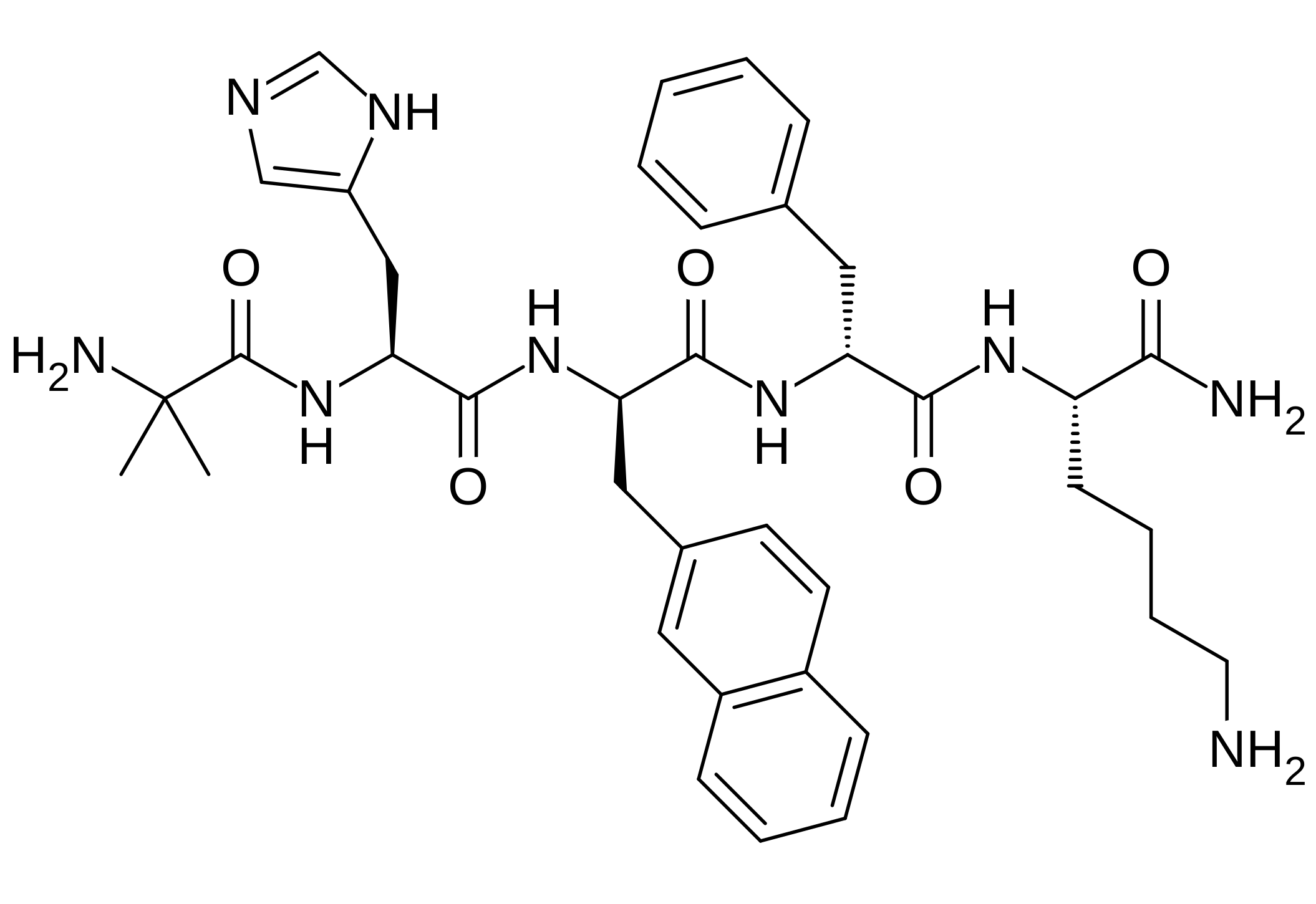
Ipamorelin is a synthetic pentapeptide and ghrelin mimetic that selectively activates the growth-hormone-secretagogue receptor type 1a (GHSR-1a) on pituitary somatotrophs, evoking a pulsatile release of endogenous GH — without measurable elevation of ACTH, cortisol, prolactin, FSH, LH, or TSH at GH-effective doses.
Ipamorelin (NNC 26-0161) was synthesised by the Novo Nordisk peptide-discovery programme in the late 1990s by structural variation of GHRP-1, with the explicit goal of dissociating GH-releasing activity from the cortisol- and prolactin-stimulating side effects characteristic of earlier GHRPs (Raun 1998). Mechanistically it acts upstream of the somatotroph at GHSR-1a, the same receptor as endogenous ghrelin; binding triggers the canonical Gq/PLCβ pathway, mobilising intracellular Ca²⁺ and producing immediate GH exocytosis, while a parallel hypothalamic effect attenuates somatostatin tone and synergises with endogenous GHRH at the GHRHR. In healthy male volunteers, single 15-minute IV infusions across 4.21–140.45 nmol/kg produced a single GH peak ~40 minutes after dosing with PK described by a half-life of approximately 2 hours, clearance of 0.078 L/h/kg, and dose-proportional exposure (Gobburu 1999). Importantly, ipamorelin's GHSR-1a-mediated mechanism is mechanistically distinct from the GHRHR class (sermorelin, tesamorelin, CJC-1295), and its selectivity profile is also distinct within the GHRP class: hexarelin engages off-target CD36 with cardiac effects, GHRP-6 stimulates cortisol and prolactin, and GHRP-2 raises ACTH and cortisol — ipamorelin remains, more than 25 years after its discovery, the cleanest published GH/cortisol/prolactin/ACTH selectivity within the GHRP-class chemistry.