Hexapeptide GHSR-1a Agonist (Ghrelin Mimetic, GHRP Class, Historical Prototype)

GHRP-6

Also Known As: Growth hormone-releasing peptide 6, Growth hormone-releasing hexapeptide, GH-releasing hexapeptide, GHRP6, SKF-110679, CIGB-500, [His¹,Lys⁶]-GHRP

GHRP-6 (Growth Hormone-Releasing Peptide 6; original Smith Kline & French development code SKF-110679; Cuban development code CIGB-500) is a synthetic linear hexapeptide with the sequence H-His-D-Trp-Ala-Trp-D-Phe-Lys-NH₂ and the FIRST member of the GHRP class to be characterised, by Bowers, Momany and colleagues at Tulane University in an Endocrinology paper in 1984 (PMID 6714155). Mechanistically GHRP-6 acts as a high-affinity agonist of the growth-hormone-secretagogue receptor type 1a (GHSR-1a) on pituitary somatotrophs and on hypothalamic neurons. Its molecular target was a pharmacological orphan for more than a decade until Howard et al. (Merck Research Laboratories) reported its expression cloning in Science in 1996 (PMID 8688086) — the GHSR-1a deorphanization paper that established GHRPs (including GHRP-6) as the prototype synthetic ligands of what was later recognised as the ghrelin receptor. The endogenous ligand of GHSR-1a, ghrelin, was identified subsequently by Kojima 1999. Unlike GHRH analogues (sermorelin, tesamorelin, CJC-1295) which act at the GHRH receptor, GHRP-6 works on the parallel ghrelin/GHSR axis and shows synergistic GH release when co-administered with GHRH (Pombo 1995). The principal differentiator of GHRP-6 versus GHRP-2, hexarelin and especially ipamorelin is its pronounced acute appetite stimulation, mediated by central GHSR-1a engagement in arcuate, paraventricular and lateral hypothalamic nuclei with NPY/AgRP and orexin activation (Lawrence 2002; PMID 11751604) — the single pharmacological feature most often misattributed to the entire GHRP class in secondary sources, when in fact it is far more pronounced for GHRP-6 than for ipamorelin. GHRP-6 also binds the scavenger receptor CD36, which is implicated in the cytoprotective / anti-ischaemic actions described in non-pituitary tissues (Berlanga-Acosta 2017). Regulatory status: NOT approved by the FDA, EMA, or Japan PMDA; the Western pharmaceutical programme (Smith Kline & French → SmithKline Beecham → GSK lineage) did not progress to approval. In Cuba, the Center for Genetic Engineering and Biotechnology (CIGB) developed GHRP-6 under code CIGB-500 and conducted a Phase I IV dose-escalation pharmacokinetic study in healthy volunteers under CECMED oversight (Cabrales 2013; PMID 23099431); however, no full Cuban marketing authorisation for any indication is publicly documented in indexed English-language literature — the status is investigational / Phase I. A ClinicalTrials.gov v2 API query on 2026-05-01 returned zero hits for "GHRP-6" or "growth hormone releasing peptide 6" — the Cuban Phase I programme predates / bypasses NIH ClinicalTrials.gov registration; the registry-gap pattern applies analogously to sermorelin, hCG, gonadorelin, hexarelin, epitalon, and GHRP-2, and is NOT a data-quality concern. In sport, GHRP-6 is named explicitly on the WADA Prohibited List 2026 under section S2.2.4 (growth-hormone-releasing peptides / GHRFs) as prohibited at all times — both in- and out-of-competition.

Identity & Chemistry

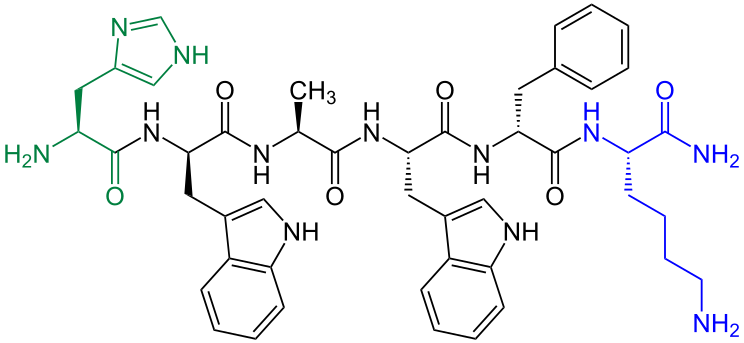
Two-dimensional structural formula of GHRP-6, a synthetic linear hexapeptide with sequence His–D-Trp–Ala–Trp–D-Phe–Lys-NH₂ showing the C-terminal amide and the two D-stereocenters (D-tryptophan at position 2 and D-phenylalanine at position 5).
Image credit: DorGe (2017), via Wikimedia Commons · Public Domain
Amino Acid Sequence
H-His-D-Trp-Ala-Trp-D-Phe-Lys-NH₂ — six residues, C-terminal lysinamide. Position 2 is D-tryptophan (D-Trp) and position 5 is D-phenylalanine (D-Phe); the two unnatural D-stereocenters confer resistance to proteolytic degradation. The free base is C₄₆H₅₆N₁₂O₆ (873.03 g·mol⁻¹, CAS 87616-84-0); research-grade material is most commonly supplied as the acetate salt (no canonical CAS for the acetate is uniformly published).
Molecular Formula
C₄₆H₅₆N₁₂O₆ (free base; PubChem CID 5486806)
Molecular Weight
873.03 g·mol⁻¹ (free base; commonly rounded ~872.99 / ~873.03 Da depending on isotope-mass model). Acetate-salt material reported in vendor catalogues at ~933 g·mol⁻¹ depending on stoichiometry of bound acetate; the chemically defined active species is the free base.
CAS Number
87616-84-0 (free base)
PubChem CID
5486806
IUPAC Name
L-histidyl-D-tryptophyl-L-alanyl-L-tryptophyl-D-phenylalanyl-L-lysinamide. UNII 4H7N4I6X6A; ChemSpider 26333269; IUPHAR/BPS Guide to Pharmacology ligand 1093. PubChem alternate record CID 4345065 (without explicit D-stereo encoding) carries the same C₄₆H₅₆N₁₂O₆ formula. No canonical DrugBank approved-drug monograph has surfaced for GHRP-6 as of May 2026; the compound is referenced in DrugBank only as a known ligand of BE0003383 (Growth hormone secretagogue receptor type 1).
Solubility
Water-soluble; commonly reconstituted in sterile or bacteriostatic water for parenteral research administration. Reported oral bioavailability < 1 % due to peptidase digestion in the GI tract. Research-grade material is most often supplied as the acetate salt.
Storage
Lyophilised peptide: store at ≤ −20 °C, protected from light and sealed against moisture. Reconstituted solution: 2–8 °C, short-term use per standard practice for hexapeptide research material. Avoid repeated freeze-thaw cycles.

Mechanism of Action

GHRP-6 is a synthetic hexapeptide and ghrelin mimetic whose primary action is high-affinity agonism at the growth-hormone-secretagogue receptor type 1a (GHSR-1a) on pituitary somatotrophs and on hypothalamic neurons, eliciting both pulsatile growth hormone release and central appetite-stimulating effects through ghrelin-axis signalling (Howard 1996; Lawrence 2002). The principal differentiator versus ipamorelin is markedly more pronounced central appetite stimulation; the principal differentiator versus GHRH analogues (sermorelin, tesamorelin, CJC-1295) is the receptor: GHRP-6 does NOT act at the GHRH receptor.

GHRP-6 was characterised by Bowers, Momany, and colleagues at Tulane University in 1984 as the first peptidyl growth hormone secretagogue; the molecule arose from a structure–activity programme on chemically modified met-enkephalin amides and established the GHRP class, whose later members include hexarelin (with D-2-methyl-Trp at position 2) and GHRP-2 (with D-Ala at position 1 and D-2-naphthyl-Ala at position 2). Its molecular target was a pharmacological orphan for more than a decade until Howard et al. (Merck Research Laboratories) reported the expression cloning of the receptor in Science 1996 (PMID 8688086). At the pituitary, GHRP-6 evokes acute GH release that is SYNERGISTIC with GHRH — combined GHRH + GHRP-6 is widely cited as one of the most potent provocative GH stimuli known (Pombo 1995) — and also drives modest acute increases in ACTH and cortisol secretion that are smaller than ghrelin's but larger than those elicited by ipamorelin (Frieboes 1999). Centrally, GHRP-6 mimics ghrelin in activating arcuate-nucleus NPY/AgRP and lateral-hypothalamic orexin neurons; the characteristic acute hunger sensation that distinguishes GHRP-6 pharmacodynamically from later, more selective ghrelin-mimetics is mechanistically anchored in Lawrence 2002 (Endocrinology, PMID 11751604) by c-Fos immunohistochemistry and by Y1-NPY-receptor blockade experiments. The central appetite-stimulating effect is the single pharmacodynamic feature that distinguishes GHRP-6 most strongly from the rest of the GHRP class — more pronounced than GHRP-2, hexarelin, and especially ipamorelin. In peripheral tissues, GHSR-1a + CD36 dual engagement underlies a cytoprotective signature (PI3K/AKT survival signalling, attenuation of oxidative stress) that is the focus of the Cuban CIGB research programme (Berlanga 2007 on cardiac ischaemia/reperfusion; Berlanga-Acosta 2017 review for the family).

Molecular Targets

  • GHSR-1a (growth-hormone-secretagogue receptor type 1a; gene GHSR; UniProt Q92847) — the ghrelin receptor; Class A Gαq-coupled GPCR; primary mediator of GH release from pituitary somatotrophs and of appetite stimulation via hypothalamic arcuate, paraventricular and lateral nuclei. Identified by expression cloning by Howard et al. (Merck Research Laboratories) in 1996 — the GHSR-1a deorphanization paper
  • CD36 (scavenger receptor B-2 / fatty-acid translocase) — secondary cardiac / peripheral receptor implicated in the cytoprotective / anti-ischaemic actions in non-pituitary tissues (Berlanga-Acosta 2017)
  • No meaningful agonism at the GHRH receptor (GHRHR) — mechanistically distinct from sermorelin, tesamorelin, and CJC-1295; this is why combined GHRH + GHRP-6 produces synergistic GH release greater than either compound alone (Pombo 1995)

Signaling Pathways

  • GHSR-1a → Gαq/11 → phospholipase C → IP₃ + DAG → intracellular Ca²⁺ mobilisation + PKC activation — confirmed in human pituitary somatotroph cultures by Lei 1995, who reported a 2.1- to 7.9-fold dose-dependent increase in phosphatidylinositol turnover
  • PI3K → AKT1 → reduced reactive-oxygen-species generation and anti-apoptotic signalling — the cytoprotective pathway across cardiac, hepatic, renal, and burn-injury models (Berlanga-Acosta 2017)
  • Hypothalamic appetite circuit: central GHSR-1a activation in arcuate, paraventricular, and lateral nuclei activates NPY/AgRP and orexin/hypocretin neurons; c-Fos induction shows direct pharmacology, not a feeding-secondary effect (Lawrence 2002)
  • Crossover to corticotroph / lactotroph axis: modest acute ACTH, cortisol, and prolactin release — greater than ipamorelin and broadly comparable to GHRP-2 (Frieboes 1999)
  • Systemic outcome: dose-dependent GH pulse (peak 15–60 min after parenteral administration), elevated IGF-1, transient hunger, plasma kinetics ~7.6 min distribution + 2.5 h elimination half-life (Cabrales 2013 IV Phase I PK)

Research Applications

GHRP-6 has been studied in the foundational Bowers paper (1984), in the Howard 1996 GHSR-1a deorphanization paper, in a human paediatric provocative-testing study of GH reserve after neonatal pituitary stalk transection (Pombo 1995), in a randomised placebo-controlled cross-over study of oral, sublingual and intranasal routes of administration (Frieboes 1999), in a cell-biology phosphatidylinositol-turnover experiment in human pituitary tumour cultures (Lei 1995), in a rat model of central appetite control (Lawrence 2002), in a preclinical porcine acute myocardial infarction model (Berlanga 2007), and in a Phase I IV dose-escalation PK study in N=9 healthy male volunteers at the Cuban CIGB under CECMED oversight (Cabrales 2013). All findings are reported as investigational and for research use only.

Historical anchor — discovery and in-vitro/in-vivo characterisation of the first GHRP (Bowers 1984)

preclinical

Studies report, in the foundational Endocrinology paper that founded the entire GHRP field, that H-His-D-Trp-Ala-Trp-D-Phe-Lys-NH₂ specifically releases GH in rat and pig pituitary models, characterising it as the first member of a new class of peptidyl GH secretagogues. GHRP-6 was later recognised as a high-affinity ligand of the ghrelin receptor (GHSR-1a); however, the substance remained a pharmacological orphan for more than a decade until Howard 1996 cloned the receptor.

— Bowers et al., Endocrinology 1984;114(5):1537–1545 (PMID 6714155)

GHSR-1a deorphanization — Howard 1996

preclinical

Studies report, in the Science publication from Merck Research Laboratories, the expression cloning of a pituitary/hypothalamic receptor that binds GHRP-6 with high affinity and mediates the GH-releasing action of the GHRP class. This work established GHSR-1a as the pharmacological target and positioned GHRP-6 as the prototype synthetic ligand of what was later identified as the ghrelin receptor.

— Howard et al., Science 1996;273(5277):974–977 (PMID 8688086)

Pituitary signalling — phosphatidylinositol turnover in human somatotroph tumour cultures (Lei 1995)

in vitro

Studies report, in a human pituitary tumour culture series (n=8 tumours) stimulated with GHRP-6, a 2.1- to 7.9-fold dose-dependent increase in phosphatidylinositol turnover with onset at 15 min and peak at 2 h, in parallel with stimulated GH secretion — direct cell-biology evidence that GHRP-6 signals through Gαq/11 → phospholipase C → IP₃ + DAG.

— Lei et al., J Mol Endocrinol 1995;14(1):135–138 (PMID 7772238)

Pituitary axis reserve — neonatal pituitary stalk transection (Pombo 1995)

Phase I

Studies report, in a human paediatric provocative-testing study (N=8 patients with neonatal pituitary stalk transection vs healthy controls) given IV GHRH alone, GHRP-6 alone, and GHRH + GHRP-6, that combined GHRH + GHRP-6 produced significantly higher GH peaks in healthy controls than either agent alone — establishing the synergy that underpins the clinical use of GHRH+GHRP combinations in GH-reserve assessment. In stalk-transection patients, NONE reached GH > 5 µg/L even under the combined stimulus, indicating a hypothalamic origin of the deficit and confirming GHRP-6's hypothalamic mode of action.

— Pombo et al., J Clin Endocrinol Metab 1995;80(11):3180–3184 (PMID 7593423)

Route-of-administration pharmacodynamics — oral, sublingual, intranasal cross-over (Frieboes 1999)

Phase I

Studies report, in a randomised placebo-controlled cross-over study in healthy young men, that oral GHRP-6 300 µg/kg failed to change GH, ACTH, or cortisol; sublingual 30 µg/kg produced a non-significant trend toward elevated GH in the first half of the night; and intranasal 30 µg/kg produced a significant night-long increase in GH, a trend toward increased ACTH in the first half of the night, no significant change in cortisol, and a trend toward increased stage-2 sleep with reduced delta-power. The study established that GHRP-6 has substantial first-pass / mucosal-absorption barriers and that intranasal/parenteral delivery is required for clinically meaningful exposure. ACTH/cortisol elevations are modest — greater than ipamorelin and broadly comparable to GHRP-2.

— Frieboes et al., J Neuroendocrinol 1999;11(6):473–478 (PMID 10336729)

Central appetite stimulation — the principal differentiator of GHRP-6 (Lawrence 2002)

preclinical

Studies report, in a mechanistic rat model with intracerebroventricular GHRP-6 (and ghrelin) administration, that the substances significantly increased food intake in fasted rats and reduced body temperature. c-Fos immunohistochemistry showed activation of the arcuate nucleus, paraventricular nucleus, and lateral hypothalamus — including orexin-expressing neurons. The feeding response was blocked by a Y1 NPY-receptor antagonist, confirming downstream NPY/AgRP involvement. Activation of hypothalamic appetite centres was independent of whether the animals actually ate, demonstrating direct central pharmacology rather than a feeding-secondary effect. Among the synthetic GHRPs, GHRP-6 is the canonical "hunger ghrelin-mimetic" — more pronounced than GHRP-2, hexarelin, or especially ipamorelin.

— Lawrence et al., Endocrinology 2002;143(1):155–162 (PMID 11751604)

Cardiac cytoprotection — porcine acute myocardial infarction model (Berlanga 2007)

preclinical

Studies report, in a preclinical porcine acute myocardial infarction model (LAD occlusion + reperfusion) given IV GHRP-6 vs control, a reduction in infarct size by 78 % and infarct thickness by 50 %, with parallel reductions in CK-MB and CRP, preservation of antioxidant defences, and absence of pathological Q-waves on post-reperfusion ECG in over half of treated animals. Mechanism attributed: suppression of reactive-oxygen-species generation and PI3K/AKT survival-pathway activation. These findings form the basis of the Cuban CIGB programme (CIGB-500) for cardiac cytoprotection.

— Berlanga et al., Clin Sci (Lond) 2007;112(4):241–250 (PMID 16989643)

Phase I — Cuban CIGB pharmacokinetics in healthy volunteers (Cabrales 2013)

Phase I

Studies report, in a Phase I dose-escalating single-IV-bolus pharmacokinetic study in N=9 healthy male volunteers, conducted at the Center for Genetic Engineering and Biotechnology (CIGB), Havana, under CECMED oversight as part of the CIGB-500 development programme, bi-exponential plasma kinetics (R² > 0.99): distribution half-life 7.6 ± 1.9 min; elimination half-life 2.5 ± 1.1 h. AUC scaled approximately proportionally with dose across 100, 200, and 400 µg·kg⁻¹. NO serious adverse events were reported; the IV bolus regimen was tolerated across all six dose tiers (1, 10, 50, 100, 200, 400 µg·kg⁻¹).

— Cabrales et al., Eur J Pharm Sci 2013;48(1-2):40–46 (PMID 23099431)
Clinical Status

Regulatory Status
NOT approved by the FDA: GHRP-6 has never been submitted for, or granted, US FDA marketing approval. NOT approved by the EMA: no active EU marketing authorisation. NOT approved by Japan PMDA. The Western pharmaceutical programme (Smith Kline & French → SmithKline Beecham → GSK lineage; internal development code SKF-110679) did not progress to approval. CUBAN CECMED status: investigational. The Center for Genetic Engineering and Biotechnology (CIGB) in Havana developed GHRP-6 under code CIGB-500 and completed a Phase I IV dose-escalation PK and safety study in healthy volunteers under CECMED oversight (Cabrales 2013, PMID 23099431; Berlanga-Acosta 2017, PMC5392015). Whether CECMED has subsequently authorised any Phase II/III trial, compassionate-use protocol, or full marketing authorisation is NOT publicly disclosed in English-language indexed literature; the status is investigational / Phase I completed in Cuba under CECMED oversight — NO implication of Cuban clinical approval. Highest verified clinical phase: Phase I (Cuba, CIGB, 2013 PK / safety Phase I in healthy volunteers). Earlier 1990s human investigational use (provocative GH testing, Pombo 1995; sleep/route-of-administration study, Frieboes 1999) was published as small mechanistic clinical research, not as registered Phase II/III drug development. Originator: Smith Kline & French / SmithKline Beecham (now GSK lineage); Cuban development under CIGB. ClinicalTrials.gov status: a v2 API query on 2026-05-01 for "GHRP-6" and "growth hormone releasing peptide 6" returned zero hits — the Cuban Phase I programme predates / bypasses NIH ClinicalTrials.gov registration; the registry-gap pattern applies analogously to sermorelin, hCG, gonadorelin, hexarelin, epitalon, and GHRP-2, and is NOT a data-quality concern. Other CT.gov hits for the broader query "GHRP" — NCT00309855, NCT00381602 (GHRP-1/AG, ESRD), NCT00846872 (GHRP-3) — do NOT study GHRP-6 and must NOT be cited as if they were GHRP-6 trials. Sport: GHRP-6 is named explicitly on the WADA Prohibited List 2026 under section S2.2.4 (growth-hormone-releasing peptides / GHRFs) — both in- and out-of-competition. Material from research-chemical suppliers is not regulatory approval and not a Triscience endorsement.
Show more
Highest Trial Phase
Phase I (Cuba, CIGB / CECMED, IV dose-escalation PK 2013)
Sponsor
Originator: Smith Kline & French / SmithKline Beecham (now GSK lineage; internal development code SKF-110679); academic characterisation: C. Y. Bowers / F. A. Momany laboratory at Tulane University in 1984. Cuban development: Center for Genetic Engineering and Biotechnology (CIGB), Havana, programme code CIGB-500.
Show more

Safety Profile

Observed in research settings

In the published Phase I single-IV-bolus dose-escalation programme in healthy volunteers (Cuban CIGB / CIGB-500, doses 1–400 µg·kg⁻¹, n=18 across all dose tiers) GHRP-6 was reported as safe and well tolerated, with NO serious adverse events across all six tiers and 23 mostly transient AEs across the cohort (Cabrales 2013; Berlanga-Acosta 2017). The most consistently reported acute pharmacodynamic effect across studies is transient subjective hunger / appetite stimulation appearing within ~15–30 min of dosing, mediated by central GHSR-1a engagement.

Adverse Events Reported in Studies

  • Acute hunger / appetite increase — the most distinctive and most-cited acute effect; mechanism via central GHSR-1a in arcuate, paraventricular and lateral hypothalamic nuclei (Lawrence 2002)
  • Modest acute cortisol and prolactin elevation — observed with parenteral dosing; magnitude greater than ipamorelin and broadly comparable to GHRP-2 (Frieboes 1999)
  • Modest acute ACTH increase — observed with intranasal dosing; cortisol unchanged at that route at the dose tested (Frieboes 1999)
  • Transient flushing, mild headache, injection-site reactions, and mild gastric discomfort — reported across the broader GHRP literature

Serious Adverse Events

  • No serious adverse events in the published Cuban CIGB Phase I cohort (n=18 across six dose tiers up to 400 µg·kg⁻¹ IV; Cabrales 2013; Berlanga-Acosta 2017)
  • No long-term randomised safety data exist in any human population — sustained ghrelin-axis activation theoretically risks cumulative weight gain (orexigenic effect), insulin resistance, and the broader IGF-1-axis safety signals shared with chronic GH-axis stimulation; specific long-term GHRP-6 data in healthy adults are INSUFFICIENT
  • Cortisol/prolactin elevation, while modest acutely, may be relevant under chronic dosing and has NOT been characterised in long-term human trials
  • Anti-doping liability: GHRP-6 is named explicitly on the WADA Prohibited List 2026 under section S2.2.4 (growth-hormone-releasing peptides / GHRFs) — both in- and out-of-competition
  • Wellness-market claims of sustained anabolic or anti-aging benefit are NOT supported by the published evidence; the combination of chronic cortisol/prolactin/ACTH elevation alongside sustained appetite stimulation is a theoretical neuroendocrine concern and a key differentiator from the selective ghrelin mimetic ipamorelin

References

  1. Bowers CY, Momany FA, Reynolds GA, Hong A On the in vitro and in vivo activity of a new synthetic hexapeptide that acts on the pituitary to specifically release growth hormone. Endocrinology 1984;114(5):1537–1545. 1984 .

  2. Howard AD, Feighner SD, Cully DF, et al. A receptor in pituitary and hypothalamus that functions in growth hormone release. Science 1996;273(5277):974–977. 1996 .

  3. Pombo M, Barreiro J, Peñalva A, Peino R, Dieguez C, Casanueva FF Absence of growth hormone (GH) secretion after the administration of either GH-releasing hormone (GHRH), GH-releasing peptide (GHRP-6), or GHRH plus GHRP-6 in children with neonatal pituitary stalk transection. J Clin Endocrinol Metab 1995;80(11):3180–3184. 1995 .

  4. Lei T, Buchfelder M, Fahlbusch R, Adams EF Growth hormone releasing peptide (GHRP-6) stimulates phosphatidylinositol (PI) turnover in human pituitary somatotroph cells. J Mol Endocrinol 1995;14(1):135–138. 1995 .

  5. Frieboes RM, Murck H, Antonijevic IA, Steiger A Effects of growth hormone-releasing peptide-6 on the nocturnal secretion of GH, ACTH and cortisol and on the sleep EEG in man: role of routes of administration. J Neuroendocrinol 1999;11(6):473–478. 1999 .

  6. Lawrence CB, Snape AC, Baudoin FM-H, Luckman SM Acute central ghrelin and GH secretagogues induce feeding and activate brain appetite centers. Endocrinology 2002;143(1):155–162. 2002 .

  7. Berlanga J, Cibrian D, Guevara L, Dominguez H, Alba JS, Seralena A, Guillén G, López-Mola E, López-Saura P, Rodriguez A, Perez B, Garcia D, Vispo NS Growth-hormone-releasing peptide 6 (GHRP6) prevents oxidant cytotoxicity and reduces myocardial necrosis in a model of acute myocardial infarction. Clin Sci (Lond) 2007;112(4):241–250. 2007 .

  8. Cabrales A, Gil J, Fernández E, et al. Pharmacokinetic study of Growth Hormone-Releasing Peptide 6 (GHRP-6) in nine male healthy volunteers. Eur J Pharm Sci 2013;48(1-2):40–46. 2013 .

  9. Berlanga-Acosta J, Abreu-Cruz A, García-del Barco Herrera D, Mendoza-Marí Y, Rodríguez-Ulloa A, García-Ojalvo A, Falcón-Cama V, Hernández-Bernal F, Beichen Q, Guillén-Nieto G Synthetic Growth Hormone-Releasing Peptides (GHRPs): A Historical Appraisal of the Evidences Supporting Their Cytoprotective Effects. Clin Med Insights Cardiol 2017;11:1179546817694558. 2017 .

  10. PubChem GHRP-6, CID 5486806 — molecular formula C₄₆H₅₆N₁₂O₆; free-base mass 873.03 Da; UNII 4H7N4I6X6A; ChemSpider 26333269. Note: PubChem CID 9810562 resolves to an unrelated 16-membered macrolide and is NOT GHRP-6; the alternate stereo-unspecified record is also indexed at CID 4345065. National Library of Medicine, PubChem record. 2026 .

  11. IUPHAR/BPS Guide to Pharmacology GHRP-6 — ligand 1093. Synthetic ghrelin-mimetic / growth hormone secretagogue receptor type 1a (GHSR-1a) agonist; the historical prototype of the GHRP family. IUPHAR Guide to Pharmacology. 2026 .

  12. World Anti-Doping Agency The 2026 Prohibited List — International Standard. Section S2.2.4 (Growth hormone (GH), its fragments and releasing factors → GH-releasing peptides) names "GHRP-6" alongside alexamorelin, examorelin (hexarelin), GHRP-1, GHRP-2 (pralmorelin), GHRP-3, GHRP-4, and GHRP-5. WADA, effective 1 January 2026. 2026 .

Frequently Asked Questions

What is GHRP-6?
GHRP-6 (Growth Hormone-Releasing Peptide 6; original Smith Kline & French development code SKF-110679) is a synthetic linear hexapeptide with the sequence His-D-Trp-Ala-Trp-D-Phe-Lys-NH₂. It was the FIRST member of the GHRP class to be characterised, by Bowers and colleagues at Tulane University in 1984, and remains the historical prototype of the synthetic ghrelin-mimetic / GHSR-1a agonist family. It releases growth hormone from the pituitary and acutely stimulates appetite via central ghrelin-axis signalling. Molecular formula C₄₆H₅₆N₁₂O₆; free-base molecular weight 873.03 Da; CAS 87616-84-0; PubChem CID 5486806.
How does GHRP-6 differ from sermorelin, tesamorelin, or CJC-1295?
Sermorelin, tesamorelin, and CJC-1295 are GHRH-receptor agonists — they act on the GHRH receptor on pituitary somatotrophs. GHRP-6 acts on a completely different receptor: GHSR-1a (the ghrelin receptor). This is why combined GHRH + GHRP-6 produces synergistic GH release greater than either compound alone (Pombo 1995). GHRP-6 also has a central appetite-stimulating effect that GHRH analogues do NOT have.
How does GHRP-6 differ from GHRP-2, hexarelin, or ipamorelin?
All four are GHSR-1a agonists, but they differ in sequence and pharmacodynamic profile. GHRP-2 (pralmorelin) has D-Ala at position 1 and D-2-naphthyl-Ala at position 2; hexarelin has D-2-methyl-Trp at position 2; ipamorelin is a pentapeptide with a markedly more selective profile (minimal cortisol/prolactin/appetite effects). GHRP-6 is distinguished primarily by its strong acute appetite-stimulating effect, mediated by central GHSR-1a engagement in the arcuate, paraventricular and lateral hypothalamic nuclei (Lawrence 2002, PMID 11751604) — a feature far more pronounced for GHRP-6 than for ipamorelin.
Is GHRP-6 approved by any regulatory agency?
NO. GHRP-6 is NOT approved by the US FDA, the EU EMA, or Japan's PMDA for any clinical indication. The Western pharmaceutical programme (Smith Kline & French → SmithKline Beecham → GSK lineage) did not advance to marketing approval. In Cuba, the Center for Genetic Engineering and Biotechnology (CIGB) developed GHRP-6 under code CIGB-500 and conducted a Phase I IV dose-escalation pharmacokinetic and safety study in healthy volunteers under CECMED oversight (Cabrales 2013, PMID 23099431) — but no full Cuban marketing authorisation for any indication is publicly documented in indexed English-language literature. GHRP-6 is named explicitly on the WADA Prohibited List 2026 under section S2.2.4 as a prohibited substance for athletes.
Why are no GHRP-6 trials listed on ClinicalTrials.gov?
A v2 API query on 2026-05-01 for "GHRP-6" and "growth hormone releasing peptide 6" returned zero hits — the Cuban CIGB Phase I programme predates / bypasses the NIH ClinicalTrials.gov registration mandate. This matches the registry-gap pattern we apply to sermorelin, hCG, gonadorelin, hexarelin, epitalon, and GHRP-2. Other CT.gov hits for the broader query "GHRP" (NCT00309855, NCT00381602 — GHRP-1/AG, ESRD; NCT00846872 — GHRP-3) do NOT study GHRP-6 and must not be cited as if they were GHRP-6 trials.
Is GHRP-6 banned in sport?
Yes. GHRP-6 is named explicitly on the WADA Prohibited List 2026 under section S2.2.4 (growth-hormone-releasing peptides / GHRFs) — alongside alexamorelin, examorelin (hexarelin), GHRP-1, GHRP-2 (pralmorelin), GHRP-3, GHRP-4, and GHRP-5 — and is therefore prohibited at all times in WADA-compliant sport (in- and out-of-competition).