Hexapeptide GHSR-1a Agonist (Ghrelin Mimetic, GHRP Class)

GHRP-2

Also Known As: Pralmorelin, Pralmorelin hydrochloride, Pralmorelin dihydrochloride, KP-102, KP-102D, KP-102LN, GPA-748, WAY-GPA-748, GHRP Kaken

GHRP-2 (INN pralmorelin; development codes KP-102, KP-102D, KP-102LN, GPA-748) is a synthetic hexapeptide (H-D-Ala-D-2-Nal-Ala-Trp-D-Phe-Lys-NH₂) and ghrelin mimetic developed in the early 1990s by C. Y. Bowers and colleagues at Tulane University as a more potent successor to GHRP-6 — the substitutions His¹→D-Ala and Trp²→D-2-naphthyl-alanine improve metabolic stability and GH-releasing potency over the parent compound (Bowers 1984; Drugs R D 2004). Mechanistically GHRP-2 acts as an agonist at the growth-hormone-secretagogue receptor type 1a (GHSR-1a) on hypothalamic and pituitary neurons, evoking pulsatile GH release that peaks within 15–60 minutes after a 100 µg IV bolus (Doi 2004). The principal differentiator of GHRP-2 versus selective ghrelin mimetics like ipamorelin is its broader endocrine signature: at GH-releasing doses there are additional, measurable rises in ACTH, cortisol, and prolactin (Arvat 1997; Massoud 1996) — a key pharmacology note for any research application requiring isolated GH stimulation. Within the broader GH-secretagogue class, GHRP-2 shares GHSR-1a binding with hexarelin; the cardiac scavenger receptor CD36, most extensively characterised for hexarelin in published cardiovascular work, is in principle accessible to GHRP-2 as well (Bodart 2002 reports comparable CD36 affinities across the GHRP family), though the GHRP-2-specific cardiovascular dataset is smaller. CJC-1295, sermorelin, and tesamorelin act at the GHRH receptor (GHRHR) — a different receptor altogether — and are mechanistically distinct. Regulatory anchor: on 22 October 2004 the Japanese PMDA authorised the IV single-dose 100 µg diagnostic formulation under the brand name "GHRP Kaken" (sponsor Kaken Pharmaceutical Co., Ltd., Kyoto) for assessment of severe adult GH deficiency and of GHD in children aged ≥ 4 years — the first and so far only ghrelin-mimetic with marketing approval anywhere in the world (Synapse PatSnap; NCATS Inxight; Drugs R D 2004). GHRP-2 is NOT approved by the FDA or EMA; North American development with Wyeth was discontinued. The intranasal paediatric growth-velocity formulation (KP-102LN) failed its Phase II endpoint (Tanaka 2014) and was NOT approved — claims of an "intranasal approval" are inaccurate. In sport, GHRP-2 is named explicitly on the WADA Prohibited List 2026 under section S2 (Peptide Hormones / GHRFs) as "GHRP-2 (pralmorelin)". A ClinicalTrials.gov v2 API query on 2026-05-01 returned zero hits for "GHRP-2" and "pralmorelin" — the pivotal Japanese diagnostic trials and the KP-102LN programme predate or bypass NCT registration; the registry-gap pattern applies analogously to sermorelin, hCG, gonadorelin, hexarelin, and epitalon, and is NOT a data-quality concern.

Identity & Chemistry

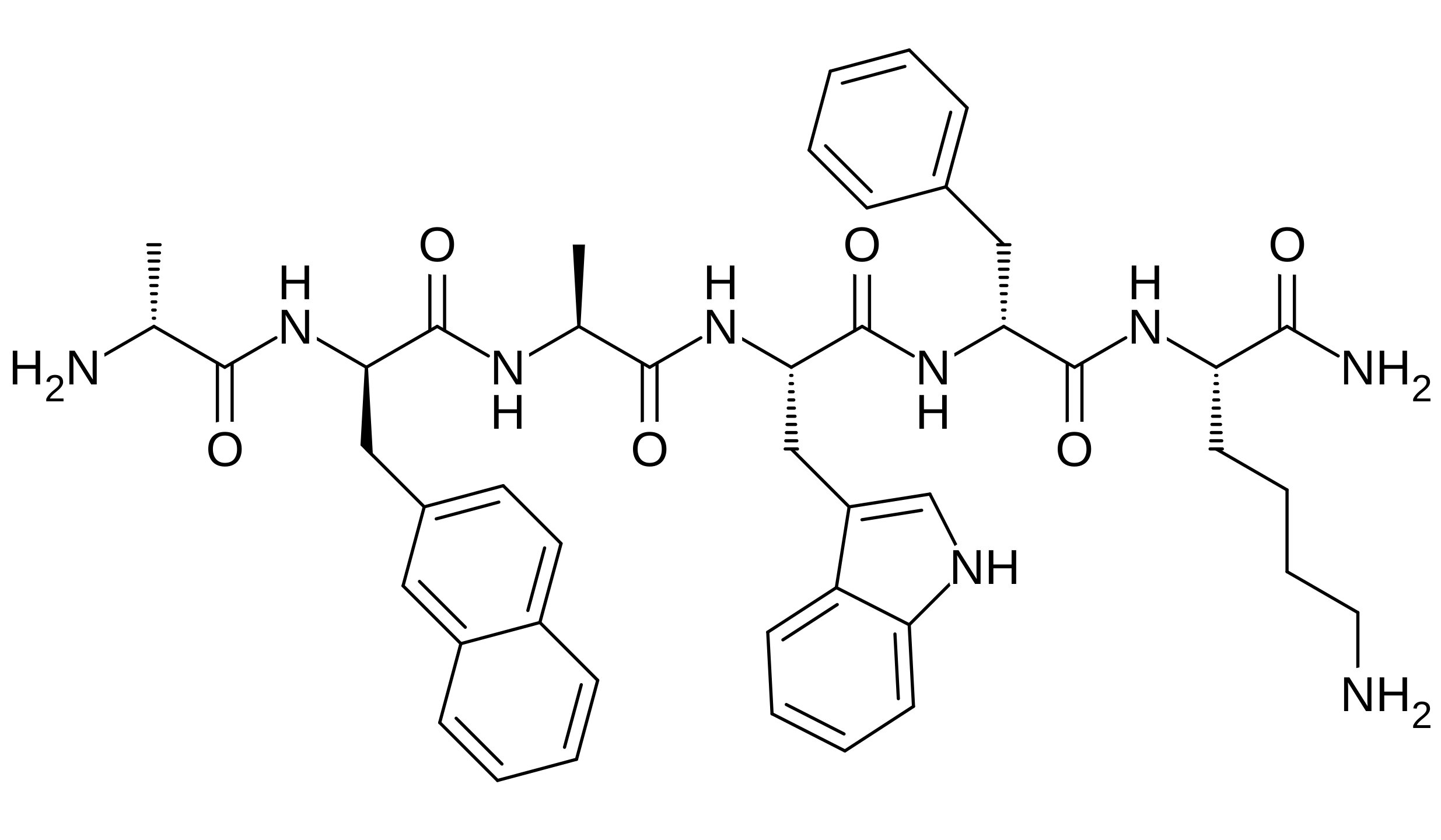
Two-dimensional chemical structure of GHRP-2 (pralmorelin), the synthetic hexapeptide H-D-Ala-D-2-naphthyl-Ala-Ala-Trp-D-Phe-Lys-NH₂, a ghrelin-receptor (GHSR-1a) agonist with C-terminal lysinamide.
Image credit: Edgar181 (2015), via Wikimedia Commons · Public Domain
Amino Acid Sequence
H-D-Ala-D-2-Nal-Ala-Trp-D-Phe-Lys-NH₂ — six residues, C-terminal lysinamide. Position 2 is D-2-naphthyl-alanine (D-2-Nal), the non-canonical aromatic residue that distinguishes GHRP-2 (pralmorelin) from hexarelin (whose position-2 residue is 2-methyl-D-tryptophan). The free base is C₄₅H₅₅N₉O₆ (817.99 g·mol⁻¹, CAS 158861-67-7); clinical / pharmacopoeial material is the dihydrochloride salt (CAS 158827-34-0).
Molecular Formula
C₄₅H₅₅N₉O₆ (free base; PubChem CID 6852372)
Molecular Weight
817.99 g·mol⁻¹ (free base). The dihydrochloride salt (CAS 158827-34-0) used in the approved Japanese diagnostic formulation has a higher catalog mass; the chemically defined active species is the free base.
CAS Number
158861-67-7 (free base) / 158827-34-0 (dihydrochloride salt)
PubChem CID
6852372
IUPAC Name
(2S)-6-amino-2-[[(2S)-2-[[(2S)-2-[[(2S)-2-[[(2R)-2-[[(2R)-2-aminopropanoyl]amino]-3-(naphthalen-2-yl)propanoyl]amino]propanoyl]amino]-3-(1H-indol-3-yl)propanoyl]amino]-3-phenylpropanoyl]amino]hexanamide. INN/USAN pralmorelin; UNII E6S6E1F19M; ChEMBL CHEMBL106593; ChemSpider 5293451; IUPHAR/BPS Guide to Pharmacology ligand 1092; CompTox Dashboard DTXSID601032404. No canonical DrugBank approved-drug monograph has surfaced for pralmorelin as of May 2026.
Solubility
Water-soluble as the dihydrochloride salt (CAS 158827-34-0); commonly reconstituted in sterile or bacteriostatic water for parenteral research administration. Research-grade material is also frequently supplied as the acetate or trifluoroacetate salt.
Storage
Lyophilised peptide: store at ≤ −20 °C, protected from light and sealed against moisture. Reconstituted solution: 2–8 °C, short-term use per pharmacy reconstitution standards. Avoid repeated freeze-thaw cycles.

Mechanism of Action

GHRP-2 (pralmorelin) is a synthetic hexapeptide and ghrelin mimetic whose primary action is agonism at the growth-hormone-secretagogue receptor type 1a (GHSR-1a) on hypothalamic and pituitary neurons, evoking pulsatile GH release. Unlike highly selective GHSR-1a agonists such as ipamorelin, GHRP-2 also produces measurable rises in ACTH, cortisol, and prolactin at GH-releasing doses — a central endocrine differentiator (Arvat 1997; Doi 2004).

GHRP-2 was developed by C. Y. Bowers and colleagues at Tulane University in the early 1990s as a more potent successor to GHRP-6, with the substitutions His¹→D-Ala and Trp²→D-2-naphthyl-alanine conferring resistance to proteolytic degradation and yielding higher GH-releasing potency than the parent peptide (Bowers 1984; Drugs R D 2004). Following intravenous administration in humans, a single 100 µg bolus produces a sharp GH peak within 15–60 minutes and a plasma half-life on the order of 30–90 minutes (Doi 2004). Because GHRP-2 acts on both the pituitary and the hypothalamus, the GH response is less susceptible to somatostatin inhibition than the response to exogenous GHRH and is preserved across age groups, including elderly subjects in whom GHRH responsiveness declines (Doi 2004; Arvat 1997). Mechanistically GHRP-2 differs from the highly selective GHSR-1a agonist ipamorelin, which leaves ACTH, cortisol, and prolactin essentially unchanged at GH-releasing doses, and from hexarelin, which shares GHSR-1a binding and engages the cardiac CD36 pathway most extensively in published cardiovascular work; the CD36 mode of action is in principle accessible to GHRP-2 as well (Bodart 2002 reports comparable CD36 affinities across the GHRP family), but the GHRP-2-specific cardiovascular dataset is smaller. The non-selective HPA-axis activation — concurrent cortisol and prolactin release alongside GH — is the primary pharmacological differentiator of GHRP-2 versus ipamorelin and should be considered for any research application requiring isolated GH stimulation.
Molecular Targets

  • GHSR-1a (growth-hormone-secretagogue receptor type 1a; UniProt Q92847) — the ghrelin receptor; class A G-protein-coupled receptor; primary mediator of GH release from pituitary somatotrophs and of appetite stimulation via hypothalamic arcuate-nucleus neurons
  • CD36 (scavenger receptor B-2 / fatty-acid translocase) — cardiac off-target receptor for GHRPs; CD36 binding has been characterised most extensively for hexarelin but is in principle accessible to the entire GHRP family (Bodart 2002 reports comparable affinities); the GHRP-2-specific cardiovascular dataset is smaller
  • No meaningful agonism at the GHRH receptor (GHRHR) — mechanistically distinct from sermorelin, tesamorelin, and CJC-1295

Signaling Pathways

  • GHSR-1a → Gαq/11 → phospholipase Cβ → IP₃ + DAG → ↑ intracellular Ca²⁺ and PKC → GH exocytosis from somatotroph secretory granules
  • Secondary Gαi/o engagement modulates cAMP signalling; concurrent hypothalamic stimulation of arcuate-nucleus neurons enhances endogenous GHRH release and antagonises somatostatin tone
  • Crossover to corticotroph / lactotroph pathways: dose-dependent ACTH/cortisol and prolactin release — a key differentiator from the selective GHSR-1a agonist ipamorelin (Arvat 1997; Massoud 1996)
  • Systemic outcome: discrete dose-dependent GH pulse (peak 15–60 min after 100 µg IV), elevated IGF-1, transient appetite increase (Laferrère 2005); plasma half-life ~30–90 min

Research Applications

GHRP-2 has been studied in the foundational Bowers paper (1984), in the pharmacological characterisation series for the Japanese PMDA approval (Doi 2004), in a human comparative study of GH/prolactin/ACTH/cortisol versus GHRH/TRH/CRH (Arvat 1997), in a controlled cross-over infusion study of the appetite effect (Laferrère 2005), in the failed Phase II of the intranasal paediatric growth-velocity indication (Tanaka 2014), and in a 12-month oral paediatric-GHD study (Mericq 2003). All findings are reported as investigational and for research use only.

Pivotal pharmacological characterisation — Japanese diagnostic approval (Doi 2004)

Phase II

Studies report, in the pharmacological characterisation series for KP-102 (GHRP-2) underpinning the 22 October 2004 Japan PMDA approval as the IV 100 µg diagnostic formulation "GHRP Kaken", diagnostic peak-GH cut-offs of 9 ng/mL for adults and 16 ng/mL for children ≥ 4 years, with diagnostic accuracy comparable to the insulin-tolerance test (ITT) but without the hypoglycaemic risk of the ITT.

— Doi et al., Arzneimittelforschung 2004;54(12):857–867 (PMID 15646370)

Comparative GH/prolactin/ACTH/cortisol response in young and elderly subjects (Arvat 1997)

Phase I

Studies report, in a within-subject comparative study in N=12 volunteers (six young 22–27 yr + six elderly 66–73 yr) given IV GHRP-2 or hexarelin at 1 µg·kg⁻¹ or 2 µg·kg⁻¹, similar strong GH responses — both higher than the response to GHRH alone (P < 0.05). Both peptides produced additional modest but significant rises in PRL, ACTH, and cortisol; the GH response was preserved in elderly subjects in contrast to the blunted GHRH response — the central endocrine differentiator of GHRP-2 versus the more selective ipamorelin.

— Arvat et al., Peptides 1997;18(6):885–891 (PMID 9285939)

Appetite stimulation as a ghrelin-like effect (Laferrère 2005)

Phase I

Studies report, in a single-blind cross-over infusion in N=7 lean healthy male volunteers given subcutaneous GHRP-2 1 µg·kg⁻¹·h⁻¹ over 270 minutes versus saline followed by an ad libitum buffet meal, a 35.9 ± 10.9 % increase in caloric intake versus saline (per-kilogram intake 136.0 ± 13.0 vs 101.3 ± 10.5 kJ/kg, P = 0.008) with unchanged macronutrient composition. GH AUC during infusion was 5550 ± 1090 vs 412 ± 161 µg/L·240 min (P = 0.003).

— Laferrère et al., J Clin Endocrinol Metab 2005;90(2):611–614 (PMID 15699539)

Phase II of the intranasal paediatric growth indication — failed (Tanaka 2014)

Phase II

Studies report, in a multicentre double-blind, randomised, placebo-controlled Phase II trial in N=126 prepubertal Japanese children with confirmed GHD (placebo n=44; KP-102LN intranasal low-dose 50–100 µg twice daily n=41; KP-102LN high-dose 100–200 µg twice daily n=41 over 48 weeks), that stimulated GH peaks rose to 14.6–26.4 ng/mL with active treatment (vs 4.5 ng/mL placebo) but the primary growth-response endpoint failed: mean ΔSDS for height was only 0.02–0.07 across active arms with no significant difference vs placebo, and IGF-1 levels did not change. The intranasal formulation was NOT advanced to approval.

— Tanaka et al., Clin Pediatr Endocrinol 2014;23(4):107–114 (PMID 25374440)

Long-term oral GHRP-2 in paediatric GHD — appetite findings (Mericq 2003)

Phase II

Studies report, in an open-label long-term pharmacology study in N=10 prepubertal children with confirmed GHD (mean age 10.4 ± 2 yr) given oral GHRP-2 at 900 µg·kg⁻¹ twice daily for 12 months, that seven of ten children reported significant increases in appetite during the first six months; BMI SDS change was +0.21 ± 1.5 vs +0.25 ± 1.5 (not significant) — indicating transient appetite stimulation without sustained anthropometric change.

— Mericq et al., J Pediatr Endocrinol Metab 2003;16(7):981–985 (PMID 14513874)

CD36 as the shared cardiac receptor across the GHRP family (Bodart 2002)

preclinical

Studies report, in a receptor-identification experiment in isolated rat heart preparations, that several GHRPs (most extensively hexarelin) bind the cardiac scavenger receptor CD36 with comparable affinities and mediate a GH-independent rise in coronary perfusion pressure. The CD36 mode of action is therefore in principle accessible to GHRP-2 (pralmorelin) as well — though the GHRP-2-specific cardiovascular dataset is smaller than that for hexarelin.

— Bodart et al., Circ Res 2002;90(8):844–849 (PMID 11988484)

Clinical Status

Regulatory Status
JAPAN PMDA: approved on 22 October 2004 as "GHRP Kaken" (IV 100 µg single-dose diagnostic injection) for assessment of severe adult GH deficiency and paediatric GHD (children aged ≥ 4 years). Sponsor: Kaken Pharmaceutical Co., Ltd. (Kyoto). This is the first and so far only ghrelin-mimetic / GHSR-1a agonist with marketing approval in any jurisdiction worldwide. NOT approved by the FDA — North American development with Wyeth as sublicensee was discontinued; NOT approved by the EMA — no central marketing authorisation; NOT approved by Health Canada or any other major regulatory agency. The intranasal paediatric growth-velocity formulation KP-102LN failed its Phase II endpoint in 2014 (Tanaka 2014) and was NOT approved — claims of an intranasal approval are inaccurate. Highest verified clinical phase: approved (Japan, IV diagnostic). Originator: C. Y. Bowers (Tulane University Hospital & Clinic) and Polygen; commercial rights to Kaken Pharmaceutical (worldwide; Japan rights retained); Wyeth as North American sublicensee (terminated). ClinicalTrials.gov status: a v2 API query on 2026-05-01 for "GHRP-2", "pralmorelin", `intr=GHRP-2`, and `intr=pralmorelin` returned zero hits — pivotal Japanese diagnostic trials and the KP-102LN Phase II predate or bypass the ClinicalTrials.gov registration mandate (FDAAA 2007); the registry-gap pattern applies analogously to sermorelin, hCG, gonadorelin, hexarelin, and epitalon, and is NOT a data-quality concern. Sport: GHRP-2 is named explicitly on the WADA Prohibited List 2026 under section S2 (Peptide Hormones / GHRFs) as "GHRP-2 (pralmorelin)" — both in- and out-of-competition. Material from research-chemical suppliers is not regulatory approval and not a Triscience endorsement.
Show more
Highest Trial Phase
Approved (Japan PMDA, 22 October 2004, IV diagnostic)
Sponsor
Originator: Tulane University Hospital & Clinic (C. Y. Bowers laboratory) and Polygen; commercial rights and worldwide manufacturing: Kaken Pharmaceutical Co., Ltd. (Kyoto, Japan; holder of the Japanese marketing authorisation); North American sublicensee: Wyeth (development terminated 2004).
Show more

Safety Profile

Observed in research settings

Across published acute single-dose diagnostic studies and short- to medium-term Phase II trials, GHRP-2 has been generally well tolerated; the principal pharmacological "side-signal" is its non-selective endocrine profile — measurable increases in cortisol and prolactin alongside GH — which distinguishes it from highly selective GHSR-1a agonists such as ipamorelin (Arvat 1997; Doi 2004).

Adverse Events Reported in Studies

  • Transient flushing and warmth at injection site
  • Mild headache
  • Nausea and increased hunger (consistent with the ghrelin-like appetite effect; Laferrère 2005; Mericq 2003)
  • Dysgeusia / metallic taste
  • Mild, transient rises in serum cortisol and prolactin (mechanism-on-target, not toxicity; Arvat 1997)
  • Local reactions for the NOT-approved intranasal formulation: nasal irritation, rhinorrhoea (Tanaka 2014)

Serious Adverse Events

  • Transient reductions in fasting glucose tolerance via GH counter-regulation, particularly with chronic dosing; characterised in animal models and short paediatric studies (Mericq 2003)
  • Sustained elevation of IGF-1 over prolonged administration carries the GH/IGF-1-axis-class concerns (insulin resistance, neoplasia signal); chronic safety in healthy adults is NOT characterised
  • Theoretical risk of CD36-mediated cardiovascular effects analogous to those described for hexarelin (Bodart 2002 reports comparable CD36 affinities across the GHRP family) — not extensively studied for GHRP-2 specifically
  • Anti-doping liability: GHRP-2 (pralmorelin) is named explicitly on the WADA Prohibited List 2026 under section S2 (Peptide Hormones / GHRFs) — both in- and out-of-competition
  • Wellness-market claims of sustained anabolic or anti-aging benefit are NOT supported by the published evidence; the combination of cortisol/prolactin/ACTH elevation with chronic dosing is a theoretical neuroendocrine concern and a key differentiator from the selective ghrelin mimetic ipamorelin

References

  1. Bowers CY, Momany FA, Reynolds GA, Hong A On the in vitro and in vivo activity of a new synthetic hexapeptide that acts on the pituitary to specifically release growth hormone. Endocrinology 1984;114(5):1537–1545. 1984 .

  2. [No author listed] Pralmorelin: GHRP 2, GPA 748, growth hormone-releasing peptide 2, KP-102 D, KP-102 LN, KP-102D, KP-102LN. Drugs R D 2004;5(4):236–239. 2004 .

  3. Doi N, Hirotani C, Ukai K, Shimada O, Okuno T, Kurasaki S, Kiyofuji T, Ikegami R, Futamata M, Nakagawa T, Ase K, Chihara K Pharmacological characteristics of KP-102 (GHRP-2), a potent growth hormone-releasing peptide. Arzneimittelforschung 2004;54(12):857–867. 2004 .

  4. Arvat E, di Vito L, Maccagno B, Broglio F, Boghen MF, Deghenghi R, Camanni F, Ghigo E Effects of GHRP-2 and hexarelin, two synthetic GH-releasing peptides, on GH, prolactin, ACTH and cortisol levels in man. Comparison with the effects of GHRH, TRH and hCRH. Peptides 1997;18(6):885–891. 1997 .

  5. Laferrère B, Abraham C, Russell CD, Bowers CY Growth hormone-releasing peptide-2 (GHRP-2), like ghrelin, increases food intake in healthy men. J Clin Endocrinol Metab 2005;90(2):611–614. 2005 .

  6. Tanaka T, Hasegawa Y, Yokoya S, Nishi Y Increased Secretion of Endogenous GH after Treatment with an Intranasal GH-releasing Peptide-2 Spray Does Not Promote Growth in Short Children with GH Deficiency. Clin Pediatr Endocrinol 2014;23(4):107–114. 2014 .

  7. Mericq V, Cassorla F, Bowers CY, Avila A, Gonen B, Merriam GR Changes in appetite and body weight in response to long-term oral administration of the ghrelin agonist GHRP-2 in growth hormone deficient children. J Pediatr Endocrinol Metab 2003;16(7):981–985. 2003 .

  8. Bodart V, Febbraio M, Demers A, McNicoll N, Pohankova P, Perreault A, Sejlitz T, Escher E, Silverstein RL, Lamontagne D, Ong H CD36 mediates the cardiovascular action of growth hormone-releasing peptides in the heart. Circ Res 2002;90(8):844–849. 2002 .

  9. PubChem GHRP-2 (Pralmorelin), CID 6852372 — molecular formula C₄₅H₅₅N₉O₆; free-base mass 817.99 Da; UNII E6S6E1F19M. Note: PubChem CID 9839332 resolves to an unrelated fluoroaromatic compound and is NOT GHRP-2; the canonical Pralmorelin record is also indexed at CID 6918245. National Library of Medicine, PubChem record. 2026 .

  10. NCATS Inxight Drugs PRALMORELIN — UNII E6S6E1F19M; INN/USAN pralmorelin; Japan PMDA marketing approval as the IV diagnostic formulation "GHRP Kaken" (Kaken Pharmaceutical, Kyoto), 22 October 2004; first and only ghrelin-mimetic with regulatory approval anywhere in the world. National Center for Advancing Translational Sciences. 2026 .

  11. World Anti-Doping Agency The 2026 Prohibited List — International Standard. Section S2 (Peptide Hormones, Growth Factors, Related Substances and Mimetics; sub-class growth-hormone-releasing peptides / GHRFs) names "GHRP-2 (pralmorelin)" alongside GHRP-1, GHRP-4, GHRP-5, GHRP-6, hexarelin / examorelin and alexamorelin. WADA, effective 1 January 2026. 2026 .

Frequently Asked Questions

What is GHRP-2?
GHRP-2 (international non-proprietary name pralmorelin; development codes KP-102, KP-102LN) is a synthetic hexapeptide that mimics the action of the gut peptide ghrelin at the GHSR-1a receptor. Sequence: H-D-Ala-D-2-naphthyl-Ala-Ala-Trp-D-Phe-Lys-NH₂; molecular formula C₄₅H₅₅N₉O₆; free-base molecular weight 817.99 Da. Developed by C. Y. Bowers and colleagues at Tulane University in the early 1990s as a more potent successor to GHRP-6.
Is GHRP-2 approved for clinical use?
Yes — but only in Japan, and only as a diagnostic agent. Japan PMDA approved the intravenous 100 µg single-dose formulation (brand name "GHRP Kaken", sponsor Kaken Pharmaceutical) on 22 October 2004 for the diagnostic assessment of severe adult GH deficiency and of GHD in children aged ≥ 4 years. GHRP-2 is NOT approved by the FDA or EMA. An intranasal paediatric formulation (KP-102LN) for growth-velocity treatment failed its Phase II endpoint in 2014 and was NOT approved (Tanaka 2014).
How does GHRP-2 differ from ipamorelin?
Both are synthetic GHSR-1a agonists, but their endocrine selectivity differs sharply. At GH-releasing doses GHRP-2 produces measurable rises in ACTH, cortisol, and prolactin in addition to GH, while ipamorelin (designed specifically for GHSR-1a selectivity) leaves ACTH, cortisol, prolactin, and gonadotropins essentially unchanged (Arvat 1997). For research applications requiring isolated GH stimulation without confounding HPA-axis activation, ipamorelin is the more selective tool; GHRP-2 is preferred where its broader endocrine signature, or its higher absolute GH-releasing potency, is desired.
How does GHRP-2 differ from hexarelin?
GHRP-2 and hexarelin are closely related synthetic hexapeptides (Bowers family). Hexarelin's sequence is H-His-D-2-methyl-Trp-Ala-Trp-D-Phe-Lys-NH₂; GHRP-2 substitutes D-Ala for His at position 1 and D-2-naphthyl-Ala for D-2-methyl-Trp at position 2. In direct head-to-head comparisons in humans both peptides produce comparable GH responses at 1–2 µg/kg (Arvat 1997). The cardiovascular CD36 binding pathway has been characterised most extensively for hexarelin (Bodart 2002 reports comparable CD36 affinities across the GHRP family); GHRP-2 likely shares this mode of action but the published cardiovascular dataset for GHRP-2 specifically is smaller.
Why are no GHRP-2 trials listed on ClinicalTrials.gov?
The pivotal Japanese diagnostic trials and the KP-102LN Phase II programme predate or bypass the FDAAA 2007 registration mandate. A v2 API query on 2026-05-01 for "GHRP-2", "pralmorelin", `intr=GHRP-2`, and `intr=pralmorelin` returned zero hits — which is expected for compounds whose pivotal trials were conducted before registration was mandatory. This matches the registry-gap pattern we apply to sermorelin, hCG, gonadorelin, hexarelin, and epitalon.
Is GHRP-2 banned in sport?
Yes. GHRP-2 / pralmorelin is named explicitly on the WADA Prohibited List 2026 under section S2 (Peptide Hormones / GHRFs / growth-hormone-releasing peptides) and is therefore prohibited at all times in WADA-compliant sport. LC-MS/MS detection methods for pralmorelin and its urinary metabolite have been published since 2010.