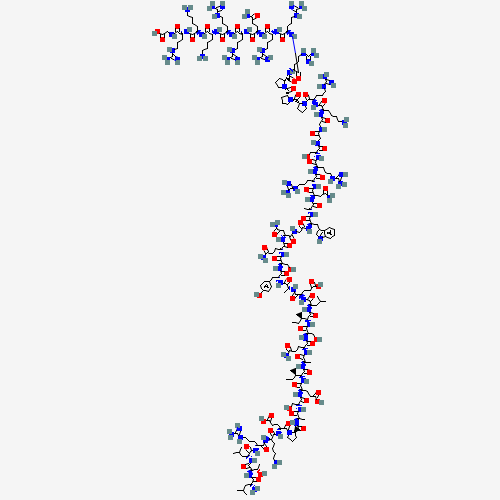
Studies report that FOXO4-DRI competitively disrupts the FOXO4-p53 protein-protein interaction in senescent cells. Disruption causes phosphorylated p53 to be excluded from the nucleus, which in senescent cells — uniquely, due to their elevated p53-phosphorylation tone — triggers cell-intrinsic apoptosis via the BAX / cleaved caspase-3 mitochondrial pathway (selective senolysis). Healthy proliferating cells without that elevated p53-phosphorylation tone are spared. Observed in research settings.
In healthy cells, FOXO4 and p53 cooperatively regulate the cell cycle and apoptosis at modest levels (Bourgeois & Madl 2018, FEBS Lett, PMID 29683489). In senescent cells — which accumulate during aging, post-chemotherapy and at sites of fibrosis — FOXO4 is upregulated and forms persistent foci with phosphorylated p53. These foci sequester p53 in the nucleus and prevent it from triggering apoptosis, allowing senescent cells to persist and secrete pro-inflammatory SASP factors. FOXO4-DRI is the D-amino-acid retro-inverso version of the FOXO4 forkhead-domain p53-binding region, fused to a cationic cell-penetrating peptide cargo (HIV-TAT-derived cargo / poly-Arg). Once internalized, FOXO4-DRI competitively binds the disordered p53 transactivation domain (TAD2), displacing endogenous FOXO4 and releasing p53 from the foci. Released phosphorylated p53 is then exported from the nucleus, which in senescent cells (uniquely, due to their elevated p53-phosphorylation tone) triggers the BAX / cleaved caspase-3 mitochondrial apoptotic pathway. Healthy cells do not have the elevated p53-phospho tone, so the same exclusion does not trigger apoptosis in them — yielding selective senolysis. Reported in Baar 2017 (mechanism), Bourgeois 2025 (structure, Nat Commun), and Hu 2026 (BAX / cleaved caspase-3 readout). Important editorial scoping: statements about human pharmacology do not exist — zero registered FOXO4-DRI human trials per ClinicalTrials.gov v2 API audit 2026-05-02. Mechanism statements here are intentionally hedged — studies report, observed in research settings — and never framed as established human pharmacology. Research use only.