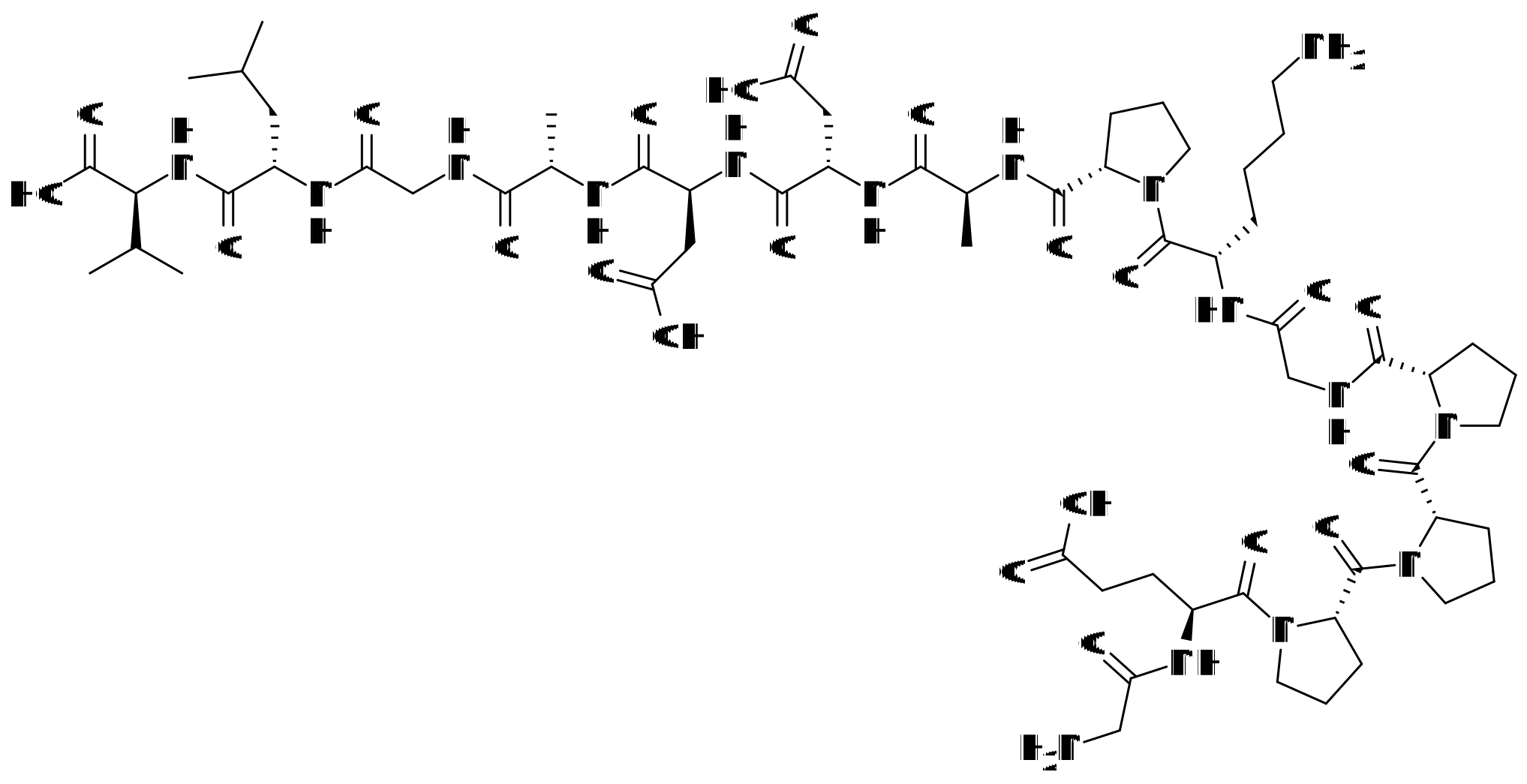
BPC-157 is a synthetic pentadecapeptide whose proposed activity centres on cytoprotection and angiogenesis, putatively via modulation of the nitric-oxide / VEGF / endothelial-NO-synthase axis and several growth-factor and neurotransmitter systems; no specific receptor has been identified, and the molecular mechanism is NOT established.
The Sikiric group at the University of Zagreb has characterised BPC-157 as a "cytoprotective mediator" — a peptide that is unusually stable in human gastric juice (>24 h in vitro) and that, in rodent models, prophylactically and therapeutically protects gastric, intestinal, hepatic, pancreatic, cardiovascular and central-nervous tissues against a wide range of injurious stimuli (Sikiric 2020; 2024). The most reproducible mechanistic finding is angiogenic / vasculogenic activity: multiple groups, including the independent replication by Chang et al. 2011 in J Appl Physiol, report increased fibroblast outgrowth and migration, accelerated re-endothelialisation, and bypass-vessel recruitment around occluded vasculature in rats. However, NO specific cell-surface receptor for BPC-157 has been formally identified, cloned, or pharmacologically characterised — the proposed molecular targets above are inferred from downstream signalling read-outs (eNOS phosphorylation, VEGFR2 activation, FAK – Paxillin) rather than direct binding studies. The 2025 narrative review by McGuire et al. (Curr Rev Musculoskelet Med) summarises the field as showing "robust preclinical regenerative and cytoprotective effects" while explicitly concluding that "until well-designed clinical trials are conducted, BPC-157 should be considered investigational." Mechanism statements here are therefore intentionally hedged — studies report, proposed pathways, inferred from preclinical data — and never framed as established human pharmacology.