Thymic polypeptide extract (immunomodulator research) Limited Human Data

Thymalin

Also Known As: Thymalinum

Thymalin is a polypeptide extract of calf thymus developed by Vladimir Khavinson and colleagues at the Saint-Petersburg Institute of Bioregulation and Gerontology. It is NOT a single defined peptide but a complex mixture of low-molecular-weight thymic polypeptides. Thymalin must be distinguished from Thymosin α1 (a synthetic 28-residue peptide) and from Thymulin. Limited human data — the published evidence base is predominantly Russian-language and from the Khavinson lineage. Research use only.

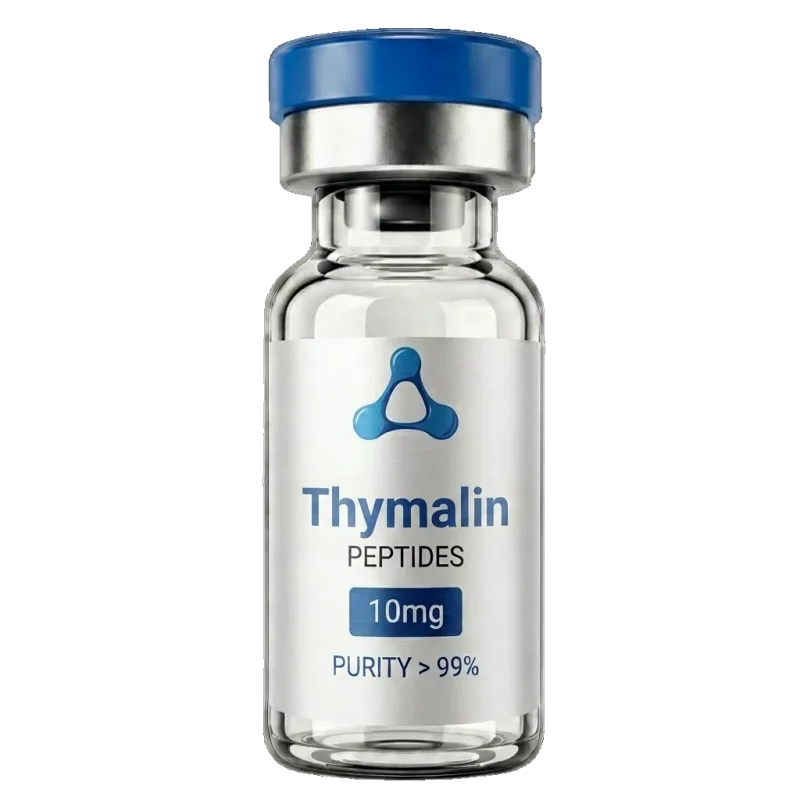
Thymalin – peptide vial product image

Identity & Chemistry

Amino Acid Sequence
Thymalin is a polypeptide extract of calf-thymus origin (Khavinson / Saint-Petersburg Institute of Bioregulation and Gerontology). It is not a single defined sequence but a complex mixture of low-molecular-weight thymic polypeptides. Distinct from Thymosin α1 (a synthetic 28-residue peptide) and from Thymulin.
Molecular Formula
Mixture — no single molecular formula
Molecular Weight
Approximate range 1,000–10,000 Da (low-molecular-weight thymic polypeptide fraction)
IUPAC Name
Not applicable — polypeptide mixture, not a single chemical entity

Mechanism of Action

Studies report immunomodulatory effects with restoration of T-cell maturation and modulation of cytokine responses. Observed in research settings.

Because thymalin is a mixture, no single receptor or single signalling pathway can be identified as the mechanism of action. The Khavinson group reports immunomodulatory and geroprotective effects in animal and small human studies, predominantly in Russian-language literature. Mechanism statements are intentionally hedged.

Molecular Targets

  • T-lymphocyte maturation (complex mixture — discrete molecular targets not fully characterised)
  • Cytokine networks (reported)

Signaling Pathways

  • Thymopoiesis / T-cell differentiation
  • General immunomodulatory signalling

Research Applications

The published evidence base consists predominantly of Russian-language Khavinson-school studies with limited independent international replication.

Geriatric immune function — small human observational studies

observational

Studies from the Khavinson lineage report improved T-cell parameters and reduced infection rates in elderly patients; independent replication is limited.

— Khavinson VK 2002, Neuroendocrinol Lett 23 Suppl 3:11-144

Clinical Status

Regulatory Status
Thymalin is registered in Russia as an immunomodulator (historical Soviet / Russian pharmaceutical register). It is NOT approved by the FDA, EMA, MHRA or any other Western regulator.
Sponsor
Saint-Petersburg Institute of Bioregulation and Gerontology (Khavinson lineage)

Safety Profile

Observed in research settings

Limited human data. The Russian-language literature describes thymalin as well tolerated; Western pharmacovigilance data do not exist. Observed in research settings.

Adverse Events Reported in Studies

  • Injection-site reactions (reported)
  • Rare: allergic reactions (reported)

References

  1. Khavinson VK Peptides and Ageing Neuroendocrinology Letters 2002;23 Suppl 3:11-144. 2002 .

  2. Anisimov VN, Khavinson VKh Peptide bioregulation of aging: results and prospects Biogerontology 2010;11(2):139-149. 2010 .

  3. Kuznik BI, Linkova NS, Tarnovskaya SI, Khavinson VKh Peptide regulation of gene expression: a systematic review Molekuliarnaia Biologiia (Moscow) 2014;48(3):373-383. 2014 .

Frequently Asked Questions

Is thymalin the same as thymosin α1?
No. Thymosin α1 is a synthetic 28-residue peptide with a defined sequence. Thymalin is a low-molecular-weight polypeptide fraction extracted from calf thymus — a mixture, not a single peptide.
Is thymalin approved in the EU or US?
No. Thymalin is registered only in Russia. It is not approved by the FDA, EMA or any other Western regulatory agency.