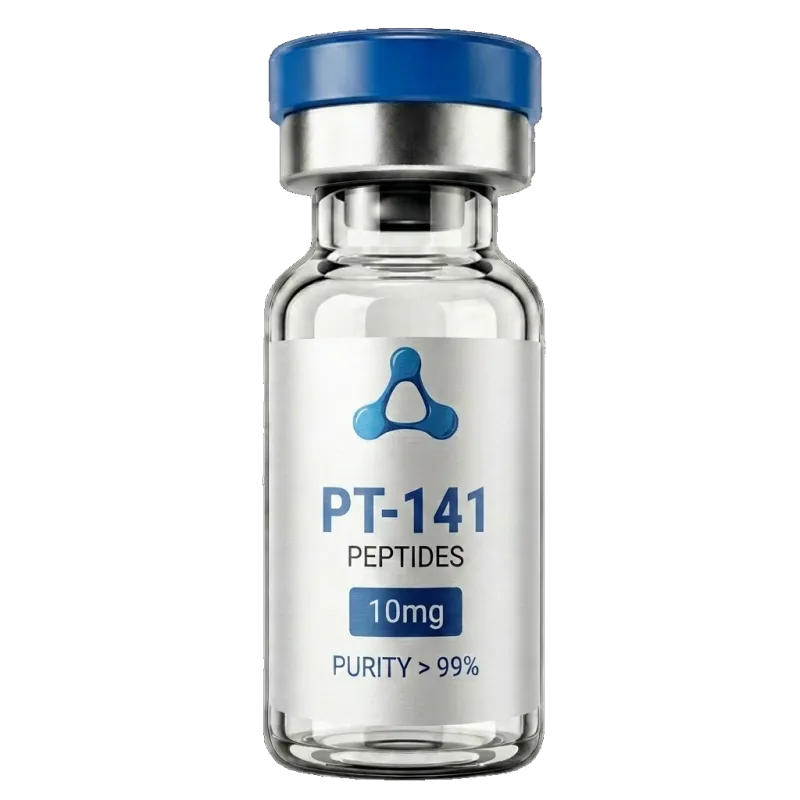
Bremelanotide is a non-selective melanocortin-receptor agonist with preferential activity at MC4R that exerts its pro-sexual effect through central nervous system MC4R-expressing hypothalamic-limbic circuits, rather than through the vascular pathways targeted by PDE5 inhibitors.
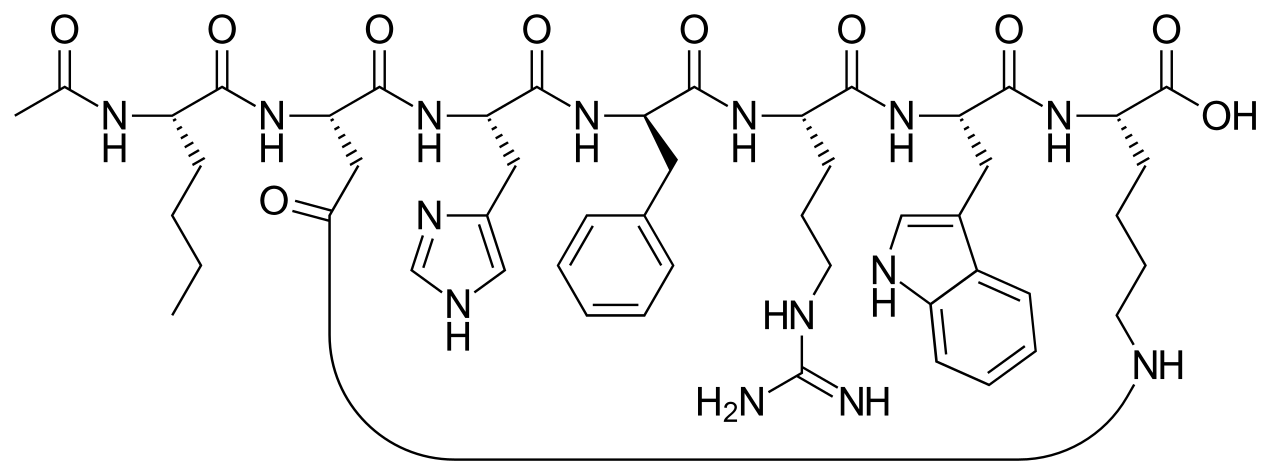
PT-141 was developed by Palatin Technologies as a derivative of the skin-tanning peptide melanotan-II after early melanotan-II clinical studies serendipitously reported off-target erectogenic and pro-sexual effects. Removal/modification of the C-terminal amide attenuated MC1R-driven melanogenic potency while preserving the His–D-Phe–Arg–Trp melanocortin core required for MC4R activation; the lactam bridge between Asp² and Lys⁷ rigidifies the bioactive turn conformation, and N-acetylation plus D-Phe⁴ confer protease resistance (Molinoff 2003). Mechanistically, bremelanotide acts upstream of the dopaminergic and oxytocinergic pathways implicated in sexual motivation: in female-rat preclinical models reviewed by Pfaus et al. 2007, systemic or intracerebroventricular bremelanotide increased solicitations and proceptive behaviours, an effect attenuated by selective MC4R antagonists and by paraventricular oxytocin-receptor blockade — supporting a central, MC4R-mediated mechanism rather than a peripheral vasoactive one (Pfaus 2007). This is the basis for its clinical development in hypoactive sexual desire disorder (HSDD) — a desire-domain rather than an arousal/erectile-vascular indication.