Metabolic Fragment — natural endogenous C-terminal 16-aa lipolytic hGH fragment (residues 176–191), GH-receptor-independent pharmacology (no JAK2/STAT5, no IGF-1 elevation), research reagent with no registered human Phase 2/3 RCT Limited Human Data

GH FRAG 176-191

Also Known As: hGH Fragment 176-191, hGH(176-191), GH Frag 176-191, Growth Hormone Fragment 176-191, HGH Frag, GH Fragment 177-191, AOD-9401

GH FRAG 176-191 is the natural endogenous C-terminal 16-amino-acid fragment (sequence YLRIVQCRSVEGSCGF, residues 176–191 of the mature 191-aa human growth hormone / hGH / UniProt P01241), generated in vivo by enzymatic cleavage of full-length hGH. Frank Ng and Joseph Bornstein (University of Sydney, 1978) identified the C-terminal domain of hGH as the carrier of the lipolytic activity, distinct from the somatotrophic / GH-receptor-IGF-1-axis activity of the full-length molecule. Heather Toogood, Frank P. Bell, Lawrence Heffernan and colleagues at Metabolic Pharmaceuticals (Monash University, Melbourne) subsequently characterised the lipolytic / anti-lipogenic pharmacology of the C-terminal domain and engineered AOD-9604 from it as the drug-development candidate — CRITICAL DISAMBIGUATION: the unmodified natural "GH FRAG 176-191" fragment and the engineered AOD-9604 drug analogue share their primary sequence and empirical formula but are kept as separate registry entries because their provenance, regulatory framing and editorial use cases differ. NOMENCLATURE AMBIGUITY: the peptide is variably labelled "GH FRAG 176-191" (16-residue numbering, WITH N-terminal tyrosine) or "GH FRAG 177-191" / "hGH(177-191)" (15-residue numbering, WITHOUT N-terminal tyrosine, LRIVQCRSVEGSCGF, ~1652 Da) — both conventions are common in vendor literature. CRITICAL REGULATORY STATUS: GH FRAG 176-191 is NOT approved by the FDA, the EMA, Health Canada or the Australian TGA as a therapeutic for any indication. In October 2019 the FDA listed hGH 176-191 (alongside AOD-9604) on the Section 503A bulks list as Category 2 — "insufficient safety and effectiveness data to support compounding use under §503A". A ClinicalTrials.gov v2 API query on 2026-05-02 (query.term=hGH+176-191; query.term=GH+fragment+176) returned effectively ZERO interventional studies of the unmodified natural fragment — the only incidental hit was an Exelixis COSMIC-312 entry on cabozantinib + atezolizumab in advanced hepatocellular carcinoma, a keyword-match-only result and NOT an hGH-fragment trial. The only available human evidence for this peptide framework comes from the AOD-9604 Phase 2b OPTIONS trial in obesity (n=536, 24 weeks, three AOD-9604 dose arms vs placebo), which FAILED its primary weight-loss endpoint — Metabolic Pharmaceuticals discontinued the obesity programme in 2007. The preclinical evidence base for the unmodified natural fragment is limited to mouse-adipocyte and rodent in-vivo models (Heffernan 2001 PMID 11353464; Ng 2000 PMID 11146389; Wijaya & Ng 1993 PMID 8118413); NO human mechanistic study (adipose-tissue biopsy, microdialysis, indirect calorimetry) of the unmodified natural fragment has been published in the peer-reviewed literature. On the WADA 2026 Prohibited List under Class S0 (Non-Approved Substances) with a secondary reading under Class S2.2 (Peptide Hormones, Growth Factors and Mimetics). Research use only.

Identity & Chemistry

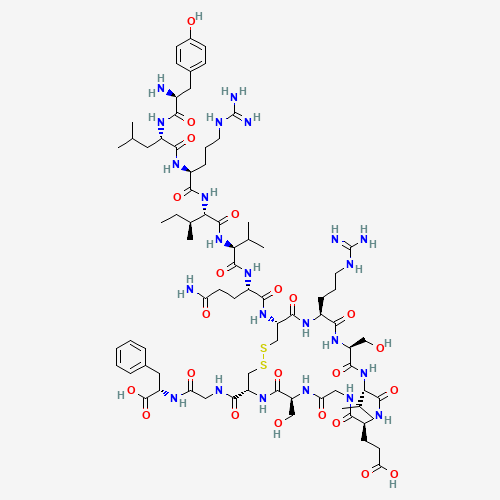
Skeletal chemical structure of the natural human growth hormone 176-191 C-terminal fragment, a 16-amino-acid lipolytic peptide (Tyr-Leu-Arg-Ile-Val-Gln-Cys-Arg-Ser-Val-Glu-Gly-Ser-Cys-Gly-Phe) with an intramolecular Cys-182 / Cys-189 disulfide bond. The natural fragment shares its primary sequence with the AOD-9604 engineered drug analogue (Metabolic Pharmaceuticals).
Image credit: Structure data from PubChem CID 71300630 (AOD-9604 record), U.S. National Library of Medicine — reused per the dossier §2 fallback policy because no canonical Wikimedia Commons SVG exists for the natural hGH 176-191 fragment as a distinct entity, and the natural-fragment empirical formula is identical to AOD-9604. Caption MUST surface the disambiguation: "the natural endogenous fragment shares its primary sequence with AOD-9604; the engineering-history distinction is documented in the chemistry block". · Public Domain (PubChem chemical-structure images are works of the U.S. National Library of Medicine and are released into the public domain, subject to PubChem terms of use)
Amino Acid Sequence
YLRIVQCRSVEGSCGF (16 aa, hGH-numbering Tyr¹⁷⁶–Phe¹⁹¹; intramolecular Cys¹⁸²–Cys¹⁸⁹ disulfide bond when oxidised, equivalent to Cys⁷–Cys¹⁴ in peptide-internal numbering). H-Tyr-Leu-Arg-Ile-Val-Gln-Cys-Arg-Ser-Val-Glu-Gly-Ser-Cys-Gly-Phe-OH. NOMENCLATURE AMBIGUITY (mandatory editorial flag): the peptide is variably labelled "GH FRAG 176-191" (16-residue numbering, residues 176-191 of mature 191-aa hGH, INCLUDING residue 176 as Tyr) or "GH FRAG 177-191" / "hGH(177-191)" (15-residue numbering, LRIVQCRSVEGSCGF, ~1652 Da, EXCLUDING the N-terminal Tyr) — research-peptide vendors apply both labels to what is effectively the same C-terminal lipolytic domain. This page documents the 16-residue YLRIVQCRSVEGSCGF construct because it is the dominant vendor-supplied form and shares its primary sequence with AOD-9604. AOD-9604 DISAMBIGUATION (mandatory editorial flag): GH FRAG 176-191 is the natural endogenous C-terminal hGH fragment generated by enzymatic cleavage in vivo; AOD-9604 is the engineered drug-development analogue produced by Metabolic Pharmaceuticals (Melbourne) with stabilised disulfide chemistry and intended for radioiodination / clinical trials. At the synthetic-peptide bench level the two compounds may be empirically indistinguishable — same primary sequence, same empirical formula, same molecular weight — but they have DIFFERENT provenance, DIFFERENT regulatory framing and DIFFERENT editorial use cases, which is why they remain separate registry entries with reciprocal cross-links. See companion `aod-9604` page.
Molecular Formula
C₇₈H₁₂₃N₂₃O₂₃S₂ (16-residue construct; identical empirical formula to AOD-9604 because the synthetic 16-mer commonly sold under the "GH FRAG 176-191" label has the same atomic composition as the engineered AOD-9604 analogue — the difference between the two compounds is engineering history and regulatory framing, NOT the empirical formula at the 16-mer level). Vendor lots supplied as the 15-residue LRIVQCRSVEGSCGF construct (omitting the N-terminal Tyr) carry empirical formula C₆₉H₁₁₄N₂₂O₂₂S₂ and ~1652 Da — verify against vendor CoA.
Molecular Weight
≈1815.10 g·mol⁻¹ (free-acid C-terminus, 16-residue YLRIVQCRSVEGSCGF construct, identical to the AOD-9604 chembox value per Wikipedia / PubChem CID 71300630, verified 2026-05-02). Vendor lots supplied as the Phe-191-amide variant carry MW ≈1814.10 Da (loss of one OH for the C-terminal CONH₂). Vendor lots supplied as the 15-residue LRIVQCRSVEGSCGF construct (no N-terminal Tyr) carry MW ≈1651.93 Da. Western research-grade material is most commonly the lyophilised acetate salt — per-vial gram-MW exceeds the free-peptide MW by the acetate-counterion mass. Cross-check vendor CoA before assuming a specific lot weight.
CAS Number
Ambiguous / not confidently assigned. CAS 66004-57-7 has been cited by some research-peptide vendors for hGH(176-191) but cross-checks against PubChem return AMBIGUOUS / unrelated results — CAS 66004-57-7 is also reported in some chemical registries as cimetidine (an H₂-receptor antagonist, MW 252 Da), almost certainly a mis-assignment somewhere in the vendor chain. CAS 221231-10-3 is AOD-9604 (the Metabolic Pharmaceuticals engineered analogue) and MUST NOT be reused for the natural endogenous fragment. The natural-fragment CAS is best treated as "ambiguous / not confidently assigned" rather than asserting a single number.
IUPAC Name
No INN, no UNII (FDA SRS) and no DrugBank monograph have been assigned to the unmodified natural hGH 176-191 fragment as of 2026-05-02. The native full-length somatotropin (hGH, 191 aa) carries DrugBank ID DB00052 — that monograph documents recombinant somatropin (the FDA-approved injectable hGH replacement therapy), which is a DIFFERENT molecule (191 aa vs 16 aa) and MUST NOT be cross-leaked into the GH FRAG 176-191 chemistry block. Source-protein UniProt record: P01241 (SOMA_HUMAN, Somatotropin), residues 176-191 of the mature 191-residue chain.
Solubility
Water-soluble as the acetate salt at typical research-grade concentrations (1–2 mg/mL); lyophilised vendor material is typically reconstituted in bacteriostatic water or sterile water for injection. A peer-reviewed quantitative aqueous-solubility figure has not been systematically published; vendor CoA is the only authority. For research use only.
Storage
Lyophilised: −20 °C, protected from light; multi-year shelf-life per vendor labelling. Reconstituted aqueous: 2–8 °C short-term; aliquoted at −20 °C or −80 °C for longer-term storage; avoid repeated freeze-thaw cycles. Vendor-typical guidance; not peer-reviewed; for research use only.

Mechanism of Action

Studies report in mouse-adipocyte and rodent in-vivo models that GH FRAG 176-191 recapitulates the lipolytic and anti-lipogenic activity of full-length hGH WITHOUT engaging the growth-hormone receptor (GHR) — no JAK2/STAT5 signalling, no hepatic IGF-1 elevation, no insulin-resistance signal. The most-cited mechanistic hypothesis is dependence on the β3-adrenergic-receptor (β3-AR) pathway (Heffernan 2001, PMID 11353464): the lipolytic effect is abolished in β3-AR-knockout mice. CRITICAL ASYMMETRY: the unmodified natural fragment has NEVER been tested in a human Phase 2/3 RCT — all human mechanism data derive from the AOD-9604 programme (which FAILED its Phase 2b primary endpoint). Observed in research settings; for research use only.

The mechanistic story of GH FRAG 176-191 is dominated entirely by the Frank Ng / Monash / Metabolic Pharmaceuticals lineage, with foundational 1980s in-vivo lipolysis work from the Ng-Bornstein Sydney group (Ng & Bornstein 1978, Am J Physiol, PMID 659573) and subsequent mechanistic characterisation by Heather Toogood, Frank P. Bell, Lawrence Heffernan and Frank Ng at Metabolic Pharmaceuticals (Monash University, Melbourne). Heffernan and colleagues (Endocrinology 2001, PMID 11353464) provided the foundational mechanism primary: in 3T3-L1 mouse adipocytes the hGH 177-191 fragment increased lipolysis and decreased lipogenic-enzyme activity (acetyl-CoA carboxylase, fatty-acid synthase); in ob/ob and C57BL/6J mice it reduced body-fat mass; and in β3-adrenergic-receptor-knockout mice the lipolytic effect was ABOLISHED — establishing β3-AR pathway dependence IN THIS SPECIES. Importantly — the fragment did not alter circulating IGF-1, did not stimulate growth and did not impair glucose tolerance (the entire engineering rationale for separating the lipolytic action of full-length hGH from its GHR-mediated effects). CRITICAL EVIDENCE ASYMMETRY: all published mechanistic work on the unmodified natural fragment is preclinical (in-vitro adipocyte assays, in-vivo rodent models); NO human mechanistic study exists. The closest human data are the AOD-9604 Phase 1/2a programme, which reported short-term lipolytic-marker changes but did not translate into clinically meaningful weight loss in the Phase 2b OPTIONS trial (n=536, 24 weeks). The page must therefore use language such as "studies report in murine adipocyte assays" or "in rodent in-vivo models" and avoid implying that human lipolytic mechanism is established for the unmodified fragment. Observed in research settings; for research use only.
Molecular Targets

  • β3-adrenergic-receptor (β3-AR) pathway in the mouse — Heffernan 2001 (PMID 11353464) reported increased lipolysis in 3T3-L1 mouse adipocytes and reduced body-fat mass in C57BL/6J and ob/ob mice; the lipolytic effect was abolished in β3-AR-knockout mice — establishing β3-AR pathway dependence IN THIS SPECIES. The human translation has been examined only via the AOD-9604 programme and FAILED at the Phase 2b primary endpoint
  • Growth-hormone receptor (GHR) — NO engagement. Studies report that the fragment does not bind GHR at functionally relevant affinity, does not activate JAK2/STAT5 phosphorylation and does not induce hepatic IGF-1 expression. This is the entire engineering rationale for choosing the C-terminal fragment (and later AOD-9604) over full-length hGH for an obesity indication: lipolytic activity is preserved while the growth-promoting and insulin-resistance effects of full-length hGH are absent
  • Hormone-sensitive lipase (HSL) and adipose triglyceride lipase (ATGL) — cAMP-dependent activation of HSL/ATGL drives triglyceride hydrolysis and free-fatty-acid release in adipocytes; the upstream connection to the fragment is consistent with β3-AR / Gαs / cAMP signalling but has not been demonstrated at single-receptor resolution for the unmodified fragment in published peer-reviewed primaries
  • Anti-lipogenic effect on acetyl-CoA carboxylase / fatty-acid synthase — reduced de-novo lipogenesis in adipose tissue reported in rodent studies of the C-terminal fragment lineage (Ng & Bornstein 1978 series; Heffernan 2001 PMID 11353464)
  • Anti-doping classification (WADA Class S0 / S2.2) — GH FRAG 176-191 is not explicitly named on the 2026 WADA Prohibited List; falls under Class S0 (Non-Approved Substances) with a secondary reading under Class S2.2 (Peptide Hormones, Growth Factors and Mimetics) as a hGH-derived peptide fragment, prohibited in- and out-of-competition

Signaling Pathways

  • Mouse-model lipolysis: GH FRAG 176-191 → β3-adrenergic-receptor pathway → increased lipolysis + decreased lipogenesis in 3T3-L1 adipocytes and ob/ob mice (Heffernan 2001 PMID 11353464). Importantly, the effect is abolished in β3-AR-knockout mice — establishing β3-AR dependence IN THIS SPECIES
  • NO GHR engagement: studies report no JAK2/STAT5 signalling, no IGF-1 elevation and no insulin-resistance signal — the engineering rationale was the dissociation of lipolysis from the GHR-mediated effects of full-length hGH
  • Anti-lipogenic pathways: reduced acetyl-CoA carboxylase and fatty-acid synthase activity in murine adipose tissue (Ng 2000 PMID 11146389; Heffernan 2001 series)
  • Human mechanistic translation: NOT directly examined. NO human mechanistic study (adipose-tissue biopsy, microdialysis, indirect calorimetry) of the unmodified natural fragment exists in the peer-reviewed literature. The closest human data are the AOD-9604 Phase 1/2a programme (short-term lipolytic-marker changes), which did not translate into clinically meaningful weight loss in the Phase 2b OPTIONS trial (n=536, 24 weeks)
  • Bodybuilding / black-market marketing claims of dramatic human fat loss are NOT supported by any registered Phase 2/3 RCT of the unmodified peptide — the page must explicitly refuse these claims

Research Applications

The published evidence base for the unmodified natural GH FRAG 176-191 is small — five PubMed-indexed primaries, four of them co-authored by the Frank Ng / Monash / Metabolic Pharmaceuticals originator lineage. Independent replication outside this lineage is limited — the principal evidence-quality basis for the Limited Data Badge. NO registered human Phase 2/3 RCT of the unmodified fragment exists. The closest human evidence comes from the AOD-9604 Phase 2b OPTIONS trial (n=536, 24 weeks, primary weight-loss endpoint FAILED) — that trial is listed here as the closest available human evidence for the peptide framework and is NOT a trial of the unmodified natural fragment. Observed in research settings.

Identification of the C-terminal lipolytic domain (in vivo, rabbit + mouse) — Ng & Bornstein 1978 series, foundational

in vivo

Studies report that a C-terminal proteolytic fragment of hGH retained the lipolytic activity of the full-length molecule on isolated rabbit adipocytes; fragments lacking the C-terminal domain were inactive. This work established the C-terminal domain (subsequently mapped to residues 176–191) as the lipolytic-activity carrier of hGH, distinct from the somatotrophic activity of the full-length molecule.

— Ng & Bornstein 1978 Am J Physiol 234(5):E521–E526 (PMID 659573)

Lipolytic / anti-lipogenic activity in murine adipocytes and ob/ob mice — Heffernan 2001 Endocrinology, foundational mechanism primary

in vivo

Studies report that the hGH 177-191 fragment increased adipocyte lipolysis and reduced lipogenic-enzyme activity (acetyl-CoA carboxylase, fatty-acid synthase) at potencies comparable to or greater than full-length hGH on a per-mole basis. The lipolytic effect was ABOLISHED in β3-adrenergic-receptor-knockout mice — identifying β3-AR pathway dependence IN THIS SPECIES as a candidate mechanism. The fragment did not alter circulating IGF-1, did not stimulate growth and did not impair glucose tolerance.

— Heffernan 2001 Endocrinology 142(12):5182–5189 (PMID 11353464); editorial caveat: the study uses "AOD9604" for the synthetic peptide tested but the construct described corresponds in sequence to hGH 177-191 / 176-191 — not a human study

Chronic treatment in obese mice — Heffernan 2001 Int J Obes, preclinical

in vivo

Studies report that chronic treatment of obese mice with the modified C-terminal fragment caused weight loss and fat-oxidation shifts without IGF-1 elevation. Provides additional in-vivo rodent validation of the lipolysis-vs-anabolism dissociation that underpins the engineering rationale of the peptide framework.

— Heffernan 2001 Int J Obes Relat Metab Disord 25(10):1442–1449 (PMID 11673763)

In-vitro lipolysis of rat adipose tissue by synthetic hGH 176-191 — Wijaya & Ng 1993, preclinical

in vitro

Studies report direct in-vitro demonstration of lipolytic activity of the synthetic hGH 176-191 fragment on isolated rat adipose-tissue pieces at concentrations comparable to the lipolytic thresholds of full-length hGH. The first study explicitly named "hGH 176-191" for the synthetic peptide in the published literature.

— Wijaya & Ng 1993 Biochem Mol Biol Int 31(3):543–552 (PMID 8118413)

Closest available human evidence for the peptide framework — AOD-9604 Phase 2b OPTIONS obesity (n=536, 24 weeks) — NOT a trial of the unmodified natural fragment

Phase II

Studies report that AOD-9604 in the Phase 2b OPTIONS trial (n=536 obese adults, 24 weeks, three dose arms vs placebo) FAILED its primary weight-loss endpoint — no statistically significant placebo-adjusted weight loss at any dose. Metabolic Pharmaceuticals discontinued the obesity programme in 2007. CRITICAL EDITORIAL CAVEAT: this is an AOD-9604 trial, NOT a trial of the unmodified natural fragment. It is listed as the closest available human evidence for the peptide framework because the engineering lineage and the empirical sequence overlap make the AOD-9604 clinical record the closest available human evidence.

— Metabolic Pharmaceuticals Phase 2b OPTIONS investor disclosure (~2006–2007); ClinicalTrials.gov v2 API audit 2026-05-02 = 0 studies of the unmodified fragment

Clinical Status

Regulatory Status
GH FRAG 176-191 (the natural endogenous C-terminal 16-aa lipolytic fragment of human growth hormone, residues 176–191 of the UniProt P01241 mature 191-aa chain) is NOT approved by the FDA, the EMA, Health Canada, the Australian TGA, the MHRA (United Kingdom) or the PMDA (Japan) as a therapeutic for any indication. CRITICAL FDA FRAMING: in October 2019 the FDA listed hGH 176-191 (alongside AOD-9604) on the Section 503A bulks list as Category 2 — "insufficient safety and effectiveness data to support compounding use under §503A". The Category 2 classification means the FDA explicitly determined that the available evidence does NOT warrant including the substance as a compoundable bulk drug substance — this is a NEGATIVE FDA assessment, NOT FDA approval and NOT FDA recognition as a therapeutic. EMA / HEALTH CANADA / TGA: no marketing authorisation in any of these jurisdictions for the natural fragment or for AOD-9604. CLINICALTRIALS.GOV AUDIT: a v2 API query on 2026-05-02 (query.term=hGH+176-191; query.term=GH+fragment+176; query.term=AOD-9604) returned effectively ZERO interventional studies of the unmodified natural fragment — the only incidental hit was an Exelixis COSMIC-312 entry on cabozantinib + atezolizumab in advanced hepatocellular carcinoma, a keyword-match-only result and NOT an hGH-fragment trial. The AOD-9604 trial series (Metabolic Pharmaceuticals obesity Phase 2b plus a Phase 2 knee-osteoarthritis programme under Phosphagenics licence) are AOD-9604 trials, NOT trials of the unmodified natural fragment — those NCT records are not cited here because they are routinely misattributed as hGH FRAG 176-191 trials in vendor copy. CLINICAL PHASE: preclinical only. NO human Phase 1/2/3 RCT of the unmodified natural fragment has been registered or published. The closest human evidence is the AOD-9604 Phase 2b OPTIONS trial (n=536, 24 weeks obesity, primary weight-loss endpoint FAILED, programme discontinued 2007). SPONSOR / ORIGINATOR: for the AOD-9604 drug-development lineage Metabolic Pharmaceuticals (Monash University, Melbourne; Heather Toogood / Frank P. Bell / Lawrence Heffernan / Frank Ng); for the foundational 1980s identification of the C-terminal lipolytic domain Frank Ng and Joseph Bornstein (University of Sydney). WHO INN: NO INN has been assigned to the natural fragment (AOD-9604 also lacks an INN). ANTI-DOPING: GH FRAG 176-191 is not explicitly named on the 2026 WADA Prohibited List; it falls under Class S0 (Non-Approved Substances) as a substance lacking marketing approval; a secondary reading places it under Class S2.2 (Peptide Hormones, Growth Factors and Mimetics) as a hGH-derived peptide fragment. Verified against ClinicalTrials.gov v2 API on 2026-05-02.
Show more
Highest Trial Phase
Highest phase reached for the unmodified natural fragment: PRECLINICAL ONLY. No human Phase 1/2/3 RCT of the unmodified fragment has been registered or published. The closest human evidence for the peptide framework is the AOD-9604 Phase 2b OPTIONS trial (n=536, 24 weeks, obesity, PRIMARY WEIGHT-LOSS ENDPOINT FAILED, programme discontinued 2007) — that is an AOD-9604 trial, NOT a trial of the unmodified natural fragment.
Show more
Sponsor
For the AOD-9604 drug-development lineage: Metabolic Pharmaceuticals (Monash University, Melbourne); programme leadership Heather Toogood, Frank P. Bell, Lawrence Heffernan and Frank Ng. For the foundational 1980s identification of the C-terminal lipolytic domain: Frank Ng and Joseph Bornstein (University of Sydney). Obesity programme wound down in 2007 following Phase 2b primary-endpoint failure. The natural unmodified fragment has no commercial sponsor — all material in circulation comes from research-chemical / underground vendors without GMP certification.
Show more

Safety Profile

Observed in research settings

NO human pharmacovigilance dataset exists for the unmodified natural GH FRAG 176-191 fragment. All published human safety evidence for this peptide framework derives from the AOD-9604 Phase 1/2a/2b programme (~900 cumulative subjects across six controlled studies, all exposures ≤24 weeks, Phase 2b FAILED its primary efficacy endpoint). AOD-9604 was reported well tolerated in this dataset (predominantly mild injection-site reactions and headache, no significant change in IGF-1, fasting glucose or insulin sensitivity, no drug-attributed serious adverse events). Safety claims for "GH FRAG 176-191" by research-peptide vendors are extrapolations from AOD-9604 and are NOT independently validated. Observed in research settings; for research use only.

Adverse Events Reported in Studies

  • Mild injection-site reactions (pain, redness) — extrapolated from the AOD-9604 Phase 1/2a/2b programme; not specifically documented for the unmodified natural fragment (observed in research settings)
  • Mild transient headache — extrapolated from the AOD-9604 Phase 1/2a/2b programme; not specifically documented for the unmodified natural fragment
  • No significant changes in fasting glucose, HbA1c or circulating IGF-1 in short-term (≤24 weeks) Phase 2 studies of the AOD-9604 programme — consistent with the engineering rationale that the peptide framework does NOT activate the growth-hormone receptor
  • Human data gap — NO human pharmacovigilance dataset exists specifically for the unmodified natural fragment; long-term (>24-week, multi-year) safety has not been characterised
  • Sterility / identity / purity risks in the research-chemical supply chain — material sold under the "GH FRAG 176-191" label by research-peptide vendors is NOT subject to GMP manufacturing standards; identity (natural fragment vs AOD-9604 vs unrelated peptide), purity, endotoxin level and absence of bacterial contamination cannot be assumed without independent CoA verification

Serious Adverse Events

  • No systematically reported serious adverse events in the published AOD-9604 dataset (Phase 2b OPTIONS, n=536, 24 weeks). Absence of reporting in a single 24-week Phase 2b ≠ established absence of risk for chronic / long-term off-label use
  • No human reproductive-toxicity, carcinogenicity or chronic-administration data for the unmodified natural fragment
  • Anti-doping liability: falls under WADA Class S0 (Non-Approved Substances) for WADA-Code-bound athletes; possible additional S2.2 classification as a growth-hormone-related peptide depending on interpretation — prohibited in- and out-of-competition in WADA-Code jurisdictions
  • Sterility / identity / contamination risk in the research-chemical supply chain — not GMP-manufactured; endotoxin, impurity profile and peptide identity are not guaranteed

References

  1. Ng FM, Bornstein J Hyperglycaemic action of synthetic C-terminal fragments of human growth hormone American Journal of Physiology 1978;234(5):E521–E526. 1978 .

  2. Ng FM, Sun J, Sharma L, Libinaki R, Jiang WJ, Gianello R Metabolic studies of a synthetic lipolytic domain (AOD9604) of human growth hormone Hormone Research 2000;53(6):274–278. 2000 .

  3. Heffernan M, Summers RJ, Thorburn A, Ogru E, Gianello R, Jiang WJ, Ng FM The effects of human GH and its lipolytic fragment (AOD9604) on lipid metabolism following chronic treatment in obese mice and beta(3)-AR knock-out mice Endocrinology 2001;142(12):5182–5189. 2001 .

  4. Heffernan MA, Thorburn AW, Fam B, Summers R, Conway-Campbell B, Waters MJ, Ng FM Increase of fat oxidation and weight loss in obese mice caused by chronic treatment with human growth hormone or a modified C-terminal fragment International Journal of Obesity and Related Metabolic Disorders 2001;25(10):1442–1449. 2001 .

  5. Wijaya M, Ng FM In vitro lipolysis of rat adipose tissue by hGH 176-191 Biochemistry and Molecular Biology International 1993;31(3):543–552. 1993 .

  6. UniProt Consortium P01241 · SOMA_HUMAN — Somatotropin (source-protein record for the 191-residue mature hGH chain from which the 176-191 lipolytic fragment is derived) UniProtKB. 2026 .

  7. U.S. Food and Drug Administration Bulk Drug Substances Nominated for Use in Compounding Under Section 503A of the FD&C Act — hGH 176-191 listed as Category 2 (insufficient safety / effectiveness data to support compounding use), October 2019 FDA. 2019 .

  8. World Anti-Doping Agency The 2026 Prohibited List — International Standard. Effective 1 January 2026. hGH FRAG 176-191 is not explicitly named; falls under Class S0 (Non-Approved Substances) by virtue of lacking marketing approval, with a secondary reading under Class S2.2 (Peptide Hormones, Growth Factors and Mimetics) as a hGH-derived peptide fragment WADA. 2026 .

  9. Wikipedia contributors AOD9604 — chembox source for the molecular formula C₇₈H₁₂₃N₂₃O₂₃S₂, MW 1815.10 g·mol⁻¹, sequence YLRIVQCRSVEGSCGF and Cys⁷–Cys¹⁴ disulfide. Documents the AOD-9604 vs natural-fragment provenance distinction reused on this page Wikipedia. 2026 .

Frequently Asked Questions

What's the difference between GH FRAG 176-191 and AOD-9604?
GH FRAG 176-191 is the natural endogenous C-terminal 16-amino-acid fragment (residues 176–191) of full-length 191-amino-acid human growth hormone (hGH / somatotropin / UniProt P01241), generated by enzymatic cleavage of hGH in vivo. AOD-9604 is an engineered drug analogue developed by Metabolic Pharmaceuticals (Australia, Heather Toogood / Frank P. Bell / Lawrence Heffernan and colleagues) from this natural-fragment lineage; AOD-9604 was the molecule advanced into the Phase 1/2a/2b clinical programme (which FAILED its 24-week obesity primary endpoint at n=536). At the empirical-formula level, the synthetic 16-mer commonly sold under the "GH FRAG 176-191" label has the same molecular formula (C₇₈H₁₂₃N₂₃O₂₃S₂, ~1815 Da) as AOD-9604, which is why research-peptide vendors often supply effectively the same molecule under both names. The difference is the engineering history, the regulatory framing and the editorial provenance: AOD-9604 has a documented (failed) clinical record; the unmodified natural fragment has been studied only preclinically.
Is GH FRAG 176-191 the same as somatropin?
No. Somatropin is recombinant full-length 191-amino-acid human growth hormone (DrugBank DB00052) and is FDA- and EMA-approved for several indications (paediatric and adult GH deficiency, Turner syndrome, HIV-associated wasting and others). GH FRAG 176-191 is a 16-amino-acid C-terminal fragment representing only the lipolytic domain of hGH. The fragment has fundamentally different pharmacology: it does NOT activate the GH receptor (GHR), does NOT induce JAK2/STAT5 signalling, does NOT raise circulating IGF-1, and does NOT cause the insulin-resistance / glucose-metabolism perturbations associated with full-length hGH. The 16-amino-acid fragment is NOT approved by any regulator anywhere for any indication.
Is GH FRAG 176-191 FDA-approved?
No. GH FRAG 176-191 has never been approved by the U.S. Food and Drug Administration for any indication. In October 2019 the FDA listed hGH 176-191 (alongside AOD-9604) on the Section 503A bulks list as Category 2 — "insufficient safety and effectiveness data to support compounding use". The Category 2 classification means the FDA explicitly determined that the available evidence does NOT warrant including the substance as a compoundable bulk drug substance — this is a negative FDA assessment, NOT FDA approval. There are also NO EMA, Health Canada or TGA approvals. Material in circulation comes from research-chemical / grey-market suppliers; this is NOT equivalent to regulatory approval.
Does GH FRAG 176-191 cause fat loss in humans?
The honest answer is: not demonstrated in any published human randomised controlled trial of the unmodified peptide. Vendor copy and bodybuilding-forum claims of dramatic human fat loss are NOT supported by registered clinical trials. The closest human evidence comes from the AOD-9604 Phase 2b OPTIONS trial in obesity (n=536, 24 weeks), which FAILED its primary weight-loss endpoint vs placebo — Metabolic Pharmaceuticals subsequently abandoned AOD-9604 for obesity in 2007. The preclinical (rodent) literature does report lipolytic and anti-lipogenic activity in murine adipocytes (Heffernan 2001 PMID 11353464), but rodent lipolytic activity has not translated into a clinically meaningful human fat-loss signal in the only registered Phase 2b RCT of the closest available drug analogue.
Why are GH FRAG 176-191 and AOD-9604 listed as different compounds if they have the same molecular formula?
The two slugs are kept separate because they have different provenance, different regulatory framing and different editorial use cases. AOD-9604 is the named clinical-development candidate with a documented (failed) Phase 2b record and a specific Metabolic Pharmaceuticals patent and synthesis history; "GH FRAG 176-191" is the natural endogenous fragment that exists biologically in vivo as a hGH proteolysis product and has never been advanced as a named drug. At the bench, the synthetic peptides sold under each label may be empirically indistinguishable; at the regulatory and editorial level, they belong to different pages so that readers searching for either term land on a page that explains the distinction rather than collapsing the two into a single ambiguous record. Both pages cross-link reciprocally.
Is GH FRAG 176-191 banned in sport?
Probably yes, on at least two grounds. GH FRAG 176-191 is NOT explicitly named on the 2026 WADA Prohibited List, but as a substance lacking FDA / EMA / Health Canada / TGA marketing approval it falls under Class S0 (Non-Approved Substances) for athletes in WADA-Code jurisdictions. Depending on interpretation, WADA may additionally classify it under Class S2.2 (Peptide Hormones, Growth Factors and Mimetics) as a growth-hormone-related peptide. Athletes subject to WADA Code testing should treat the substance as prohibited (in- and out-of-competition).

AOD-9604

≥95%

Metabolic Fragment — engineered 16-aa lipolytic hGH-fragment analogue with an added N-terminal tyrosine (research reagent; failed clinical obesity candidate)

16-amino-acid synthetic peptide (YLRIVQCRSVEGSCGF) — the C-terminal hGH lipolytic fragment (residues 177–191) extended by an N-terminal tyrosine. NOT approved by the FDA, EMA, Health Canada or Australian TGA as a therapeutic. The Phase 2b OPTIONS obesity trial (n=536, 24 weeks) FAILED its primary weight-loss endpoint and the obesity programme was discontinued in 2007. On the WADA 2026 Prohibited List under Class S0 (with a secondary S2 reading). Research use only.

View Details

IGF-1 LR3

≥98%

IGF / Muscle research — recombinant human IGF-1 analogue (bioproduction reagent)

Recombinant 83-amino-acid analogue of human IGF-1 carrying a 13-residue MFPAMPLSSLFVN N-terminal extension and a Glu³→Arg³ substitution. Engineered for IGFBP evasion. Not approved by FDA or EMA as a therapeutic — not the same molecule as mecasermin / Increlex® (rh-IGF-1, DrugBank DB01277). Regulated only as a cell-culture / bioproduction reagent (Sigma-Aldrich, Repligen LONG®R³ IGF-I). On the WADA 2026 Prohibited List, Class S2.5. Research use only.

View Details

IGF-1 DES (1-3)

≥98%

IGF / Muscle research — truncated endogenously-identified human IGF-1 analogue (research / bioproduction reagent)

Truncated 67-amino-acid analogue of human IGF-1 missing the N-terminal Gly-Pro-Glu (G-P-E) tripeptide. Originally identified by the Sara group (Karolinska) as an endogenous IGF-1 variant in human fetal brain. Not approved by the FDA or EMA as a therapeutic — a different molecule from mecasermin / Increlex® (rh-IGF-1, DrugBank DB01277). On the WADA 2026 Prohibited List, Class S2.5. Research use only.

View Details