Metabolic Fragment — engineered 16-aa lipolytic hGH-fragment analogue with an added N-terminal tyrosine (research reagent; failed clinical obesity candidate) Limited Human Data

AOD-9604

Also Known As: AOD9604, AOD 9604, anti-obesity drug 9604, hGH 177-191 + N-Tyr, Tyr-hGH(177-191), hGH Frag 177-191, sh-Oligopeptide-74

AOD-9604 is a 16-amino-acid synthetic peptide (sequence YLRIVQCRSVEGSCGF) developed by Metabolic Pharmaceuticals Ltd (Melbourne, Australia) — structurally the C-terminal hGH lipolytic fragment (residues 177–191 of human growth hormone) with an additional N-terminal tyrosine added to enable radioiodination chemistry on the new phenolic ring and confer marginal added stability against aminopeptidases. The peptide carries a single intramolecular disulfide bond Cys⁷–Cys¹⁴ (= Cys-182 / Cys-189 in hGH numbering). CRITICAL DISAMBIGUATION: AOD-9604 (16 aa, YLRIVQCRSVEGSCGF, WITH N-terminal tyrosine) is NOT the same molecule as hGH FRAG 176-191 (15 aa, LRIVQCRSVEGSCGF, WITHOUT N-terminal tyrosine) — different molecule with different molecular weight, different CAS number and different PubChem CID. CRITICAL REGULATORY STATUS: AOD-9604 is NOT approved by the FDA, the EMA, Health Canada or the Australian TGA as a therapeutic. The Phase 2b OPTIONS trial (n=536 obese adults, 24 weeks, three AOD-9604 dose arms vs placebo) FAILED its primary weight-loss endpoint — no statistically significant placebo-adjusted weight loss at any dose. Metabolic Pharmaceuticals discontinued the obesity programme in 2007. Studies report that in mouse models AOD-9604 increases lipolysis via a β3-adrenergic-receptor-dependent pathway (Heffernan 2001, PMID 11713213); the translation of this murine mechanism to humans FAILED at the Phase 2b primary efficacy endpoint — this caveat must surface adjacent to any mechanism claim. AOD-9604 was placed on the FDA Section 503A interim bulks list in Category 2 ("substances that may present significant safety risks / insufficient safety/effectiveness data") around October 2019, and REMOVED from Category 2 on 27 September 2024 following withdrawal of the bulk-substance nomination by the original nominator — removal-by-nomination-withdrawal is NOT FDA approval. A ClinicalTrials.gov v2 API query on 2026-05-02 (query.term=AOD-9604; query.term=AOD9604; query.intr=AOD-9604) returned ZERO studies in which AOD-9604 is the investigational product. On the WADA 2026 Prohibited List under Class S0 (Non-Approved Substances) with a secondary reading under Class S2 (Peptide Hormones, Growth Factors, Related Substances and Mimetics). Research use only.

Identity & Chemistry

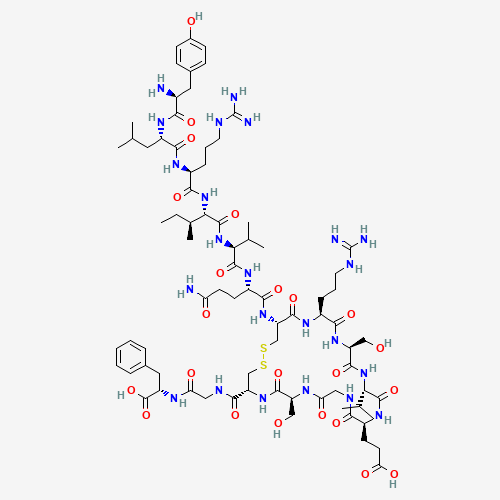
Skeletal chemical structure of AOD-9604, a 16-amino-acid synthetic peptide (Tyr-Leu-Arg-Ile-Val-Gln-Cys-Arg-Ser-Val-Glu-Gly-Ser-Cys-Gly-Phe) corresponding to residues 177–191 of human growth hormone with an added N-terminal tyrosine, showing the intramolecular Cys⁷–Cys¹⁴ disulfide bond.
Image credit: Structure data from PubChem CID 71300630, U.S. National Library of Medicine. PubChem 2D rendering used because no high-quality dedicated AOD-9604 SVG was available on Wikimedia Commons as of 2026-05-02; the Triscience image-acquisition policy permits the PubChem PNG fallback when no Wikimedia SVG exists. · Public Domain (PubChem chemical-structure images are works of the U.S. National Library of Medicine and are released into the public domain, subject to PubChem terms of use)
Amino Acid Sequence
YLRIVQCRSVEGSCGF (16 aa, AOD-9604 numbering Tyr¹–Phe¹⁶; single intramolecular disulfide bond Cys⁷–Cys¹⁴, equivalent to Cys-182 / Cys-189 in hGH numbering). H-Tyr-Leu-Arg-Ile-Val-Gln-Cys-Arg-Ser-Val-Glu-Gly-Ser-Cys-Gly-Phe-OH. AOD-9604 is the engineered drug-development analogue of the C-terminal hGH lipolytic fragment: residues 177–191 of human growth hormone PLUS an additional N-terminal tyrosine (Tyr¹) added by Metabolic Pharmaceuticals to enable radioiodination chemistry on the new phenolic ring and confer marginal added stability against aminopeptidases. AOD-9604 is therefore NOT identical to hGH FRAG 176-191 (LRIVQCRSVEGSCGF, 15 aa, no N-terminal Tyr) and NOT identical to the unmodified hGH(177-191) sequence — the two peptides have different molecular weights, different CAS numbers and different PubChem CIDs and MUST NOT be conflated.
Molecular Formula
C₇₈H₁₂₃N₂₃O₂₃S₂
Molecular Weight
1815.10 g·mol⁻¹ (free peptide, Wikipedia chembox / PubChem CID 71300630, verified 2026-05-02). Some vendor SDS round to ~1817.1 Da; the canonical Wikipedia chembox / PubChem value is 1815.10 g·mol⁻¹. Western research-grade vendor material is most commonly the lyophilised acetate salt — per-vial gram MW exceeds the free-peptide MW by the acetate-counterion mass.
CAS Number
221231-10-3 (Wikipedia chembox / PubChem CID 71300630, verified 2026-05-02)
PubChem CID
71300630
IUPAC Name
Engineered 16-residue cyclic disulfide-bridged peptide: H-Tyr-Leu-Arg-Ile-Val-Gln-Cys-Arg-Ser-Val-Glu-Gly-Ser-Cys-Gly-Phe-OH with intramolecular Cys⁷–Cys¹⁴ disulfide bond (full systematic IUPAC peptide name published at PubChem CID 71300630). UNII 7UP768IP4M; ChemSpider 57582224; InChI Key GVIYUKXRXPXMQM-BPXGDYAESA-N. INCI cosmetic name: sh-Oligopeptide-74 (INCI registry ID 27701).
Solubility
Water-soluble as the acetate salt; lyophilised vendor material is typically reconstituted in bacteriostatic water or sterile water for injection. A quantitative aqueous solubility figure is not publicly indexed at PubChem. Vendor CoA governs; for research use only.
Storage
Lyophilised: −20 °C, protected from light, multi-year shelf-life per vendor labelling. Reconstituted aqueous: 2–8 °C short-term; aliquoted at −20 °C or −80 °C for longer-term storage to avoid freeze-thaw. Vendor-typical guidance; for research use only.

Mechanism of Action

Studies report that in mouse models AOD-9604 increases lipolysis and decreases lipogenesis WITHOUT engaging the growth-hormone receptor (GHR) — no JAK2/STAT5 signalling, no hepatic IGF-1 elevation, no insulin-resistance signal. The most-cited mechanistic hypothesis is dependence on the β3-adrenergic-receptor pathway (Heffernan 2001, PMID 11713213): the lipolytic effect is abolished in β3-AR-knockout mice. This murine mechanism has NOT been confirmed to translate clinically into humans — the Phase 2b OPTIONS trial (n=536, 24 weeks) failed its primary weight-loss endpoint. Observed in research settings; for research use only.

The mechanistic story of AOD-9604 is one of a narrow pharmacological corridor that worked in the mouse and did not translate in humans. The Metabolic Pharmaceuticals construct (Frank Ng, with academic origins in the Frank P. Bell era of Monash University hGH-fragment work) was based on the observation that the C-terminal hGH(177–191) fragment retains the lipolytic activity of full-length hGH in mouse adipose tissue while lacking the N-terminal binding interface required for GH-receptor activation. An additional N-terminal tyrosine was added to enable radioiodination chemistry on the phenolic ring for tracer studies and to confer marginal added stability against aminopeptidases — the construct YLRIVQCRSVEGSCGF with the Cys⁷–Cys¹⁴ disulfide bond is the canonical 16-aa AOD-9604 sequence. Heffernan and colleagues (Endocrinology 2001, PMID 11713213) provided the foundational preclinical mechanism paper: in 3T3-L1 mouse adipocytes AOD-9604 increased lipolysis (glycerol release) and decreased lipogenesis; in ob/ob mice it reduced body-fat mass; and in β3-adrenergic-receptor-knockout mice the lipolytic effect was abolished — establishing β3-AR pathway dependence IN THIS SPECIES. Importantly — the human translation FAILED: while a 12-week Phase 2a trial (~300 subjects) reported approximately 1.8 kg placebo-adjusted weight loss, the larger 24-week Phase 2b OPTIONS study (n=536) found NO statistically significant weight-loss difference between AOD-9604 and placebo at any of the three doses tested. The Phase 2b results were disclosed via Metabolic Pharmaceuticals investor channels rather than peer-reviewed publication; the trial was NOT registered on ClinicalTrials.gov (CT.gov v2 API audit 2026-05-02 = 0 hits for AOD-9604). The page must therefore frame the mechanism with the "studies report …" / "in murine models …" hedging convention and surface the human Phase 2b efficacy failure adjacent to any murine mechanism claim. Observed in research settings; for research use only.
Molecular Targets

  • β3-adrenergic receptor pathway (mouse) — Heffernan 2001 reported increased lipolysis and decreased lipogenesis in 3T3-L1 mouse adipocytes and reduced body-fat mass in ob/ob mice; the lipolytic effect was abolished in β3-AR-knockout mice (PMID 11713213). This is a murine mechanism — the human translation FAILED at the Phase 2b efficacy endpoint
  • Growth hormone receptor (GHR) — NO engagement. Studies report that AOD-9604 does not activate JAK2/STAT5 signalling, does not elevate hepatic IGF-1 and does not impair insulin sensitivity — the entire design rationale was to dissociate the lipolytic action of full-length hGH from its GHR-mediated growth and insulin-resistance effects
  • Mitochondrial / fatty-acid oxidation hypothesis — subsequent papers proposed direct effects of AOD-9604 on adipocyte fatty-acid oxidation and mitochondrial metabolism, partially independent of β3-AR; the precise molecular target has not been definitively identified (Moré 2018)
  • Cartilage / chondrocyte effects (intra-articular use case) — preclinical data in a rabbit collagenase-induced knee OA model (Kwon 2015) report that intra-articular AOD-9604 (with or without hyaluronic acid) enhanced cartilage regeneration; the molecular mechanism for chondroprotection has not been characterised at the receptor level. Preclinical — no registered human Phase 2 OA-knee trial of intra-articular AOD-9604 was found on ClinicalTrials.gov (audit 2026-05-02)
  • Anti-doping detection (WADA Class S0 / S2) — AOD-9604 is not explicitly named on the 2026 WADA Prohibited List; falls under Class S0 (Non-Approved Substances) with a secondary reading under Class S2 (hGH-derived peptide fragment), prohibited in- and out-of-competition

Signaling Pathways

  • Mouse-model lipolysis: AOD-9604 → β3-adrenergic-receptor pathway → increased lipolysis + decreased lipogenesis in 3T3-L1 adipocytes and ob/ob mice (Heffernan 2001 PMID 11713213). Importantly, the effect is abolished in β3-AR-knockout mice — establishing β3-AR dependence IN THIS SPECIES
  • NO GHR engagement: studies report no JAK2/STAT5 signalling, no IGF-1 elevation and no insulin-resistance — design rationale was the dissociation of lipolysis from GHR effects
  • Proposed mitochondrial / fatty-acid oxidation effects: subsequent work (Moré 2018) proposed direct adipocyte fatty-acid oxidation, partially independent of β3-AR; the exact molecular sensor has not been identified
  • Human Phase 2b translation: FAILED. The mouse-to-human translation of the β3-AR mechanism produced no statistically significant placebo-adjusted weight loss in the Phase 2b OPTIONS trial (n=536, 24 weeks). This caveat MUST surface adjacent to any mechanism claim
  • Cartilage chondroprotection (rabbit OA model, preclinical): intra-articular AOD-9604 ± hyaluronic acid → cartilage regeneration in rabbit collagenase-induced OA model (Kwon 2015); no human registered clinical programme

Research Applications

The published evidence base for AOD-9604 is small — approximately 4–6 PubMed-indexed primaries, dominated by the Metabolic Pharmaceuticals / Monash originator lineage (Ng, Heffernan and collaborators). The pivotal Phase 2b OPTIONS study was NOT peer-reviewed-published (investor-disclosure-only) and NOT registered on ClinicalTrials.gov (v2 API audit 2026-05-02 = 0 hits); independent human replication of the murine β3-AR mechanism does not exist. These limitations are the principal evidence-quality basis for the Limited Data Badge. Observed in research settings.

Lipolytic mechanism in mouse adipocytes and ob/ob mice — Heffernan 2001, preclinical (foundational)

in vivo

Studies report that AOD-9604 increased lipolysis (glycerol release) and decreased lipogenesis in 3T3-L1 mouse adipocytes; reduced body-fat mass in ob/ob mice; and that the lipolytic effect was ABOLISHED in β3-AR-knockout mice — establishing β3-AR pathway dependence in this species. The foundational preclinical mechanism paper of the Metabolic Pharmaceuticals / Ng lineage.

— Heffernan 2001 Endocrinology 142(12):5182–5189 (PMID 11713213)

Phase 2a obesity (12-week, ~300 subjects) — Metabolic Pharmaceuticals 2004, clinical (investor-disclosure-only, NOT peer-reviewed)

Phase II

Studies report a mean placebo-adjusted weight loss of ~1.8 kg in the AOD-9604 arm at 12 weeks, with no significant change in IGF-1, fasting glucose or insulin sensitivity. These Phase 2a results were the basis for advancing into the larger Phase 2b OPTIONS study. Trial NOT registered on ClinicalTrials.gov.

— Metabolic Pharmaceuticals investor disclosure / News-Medical press coverage 16 December 2004; not peer-reviewed

Phase 2b OPTIONS obesity (24-week, n=536) — Metabolic Pharmaceuticals 2006/2007, clinical (PRIMARY ENDPOINT FAILURE)

Phase II

FAILED to meet the primary weight-loss endpoint at any of the three AOD-9604 dose levels vs placebo over 24 weeks — no statistically significant placebo-adjusted weight-loss benefit. The drug was reported well tolerated, with no significant changes in IGF-1, fasting glucose or insulin sensitivity. Metabolic Pharmaceuticals discontinued the obesity programme in 2007. Trial NOT registered on ClinicalTrials.gov (CT.gov v2 API audit 2026-05-02 = 0 hits for AOD-9604).

— Metabolic Pharmaceuticals investor disclosure 2006/2007; independent obesity-pharmacotherapy review Cooke & Bloom (PMC3584306) 2013; BioSpace coverage 2006

Cumulative safety dataset across the development programme — Moré 2018, review (nutraceutical repositioning post-Phase-2b)

observational

Studies report no drug-attributed serious adverse events across the programme (~900 subjects across six controlled studies); no significant elevation of IGF-1; no impairment of glucose tolerance or insulin sensitivity; predominantly mild injection-site reactions and headache. Long-term (>24-week) safety remains uncharacterised.

— Moré et al. 2018 J Endocrinol Metab

Intra-articular AOD-9604 + hyaluronic acid in rabbit OA-knee model — Kwon 2015, preclinical

in vivo

Studies report that intra-articular AOD-9604 enhanced cartilage regeneration vs saline in a rabbit collagenase-induced OA-knee model (n=32); the AOD-9604 + HA combination outperformed either monotherapy. Provides the published preclinical rationale for the post-obesity OA-knee repositioning; NO registered human Phase 2 OA-knee trial of intra-articular AOD-9604 was found on ClinicalTrials.gov (audit 2026-05-02).

— Kwon et al. 2015 Ann Clin Lab Sci 45(4):426–432

Clinical Status

Regulatory Status
AOD-9604 is NOT approved by the FDA, the EMA, Health Canada, the Australian TGA (as a therapeutic), the MHRA (United Kingdom) or the PMDA (Japan) as a therapeutic for any indication. AUSTRALIAN TGA SCHEDULING: the Advisory Committee on Medicines Scheduling (ACMS) recommended Schedule Appendix D listing with implementation date 1 June 2015; AOD-9604 is marketed overseas as a cosmetic ingredient under the INCI name sh-Oligopeptide-74. FDA SECTION 503A BULKS LIST: AOD-9604 was placed in Category 2 of the FDA Section 503A interim bulks list ("substances that may present significant safety risks / insufficient safety/effectiveness data") around October 2019, and REMOVED from Category 2 on 27 September 2024 following withdrawal of the bulk-substance nomination by the original nominator. REMOVAL-BY-NOMINATION-WITHDRAWAL IS NOT FDA APPROVAL and does NOT permit compounding under §503A. CLINICAL PHASE: highest phase reached is Phase 2b (Metabolic Pharmaceuticals OPTIONS, n=536, 24-week obesity, primary weight-loss endpoint FAILED, programme discontinued 2007); the subsequent OA-knee repositioning has NOT advanced to a registered human Phase 2/3 trial as of the CT.gov audit on 2026-05-02. CLINICALTRIALS.GOV AUDIT: a v2 API query on 2026-05-02 (query.term=AOD-9604; query.term=AOD9604; query.intr=AOD-9604) returned 0 studies — the original Phase 2b OPTIONS trial appears never to have been registered on ClinicalTrials.gov. Various NCT records that occasionally surface in vendor copy as AOD-9604 trials instead verify to entirely unrelated programmes (an APHP observational study on the inclusion of elderly patients with colorectal cancer in clinical trials, completed 2016; a Wyeth/Pfizer pneumococcal conjugate vaccine Phase 3 in healthy infants, completed 2009; an NCT entry that could not be located in the 2026-05-02 audit) — none of these studies used AOD-9604 as the investigational product. SPONSOR / ORIGINATOR: Metabolic Pharmaceuticals Ltd (Melbourne, Australia; ASX-listed micro-cap); programme leadership Frank Ng; academic origin in the Frank P. Bell era of Monash University hGH-fragment work. Lateral Pharmaceuticals (successor entity) picked up the OA-knee repositioning. WHO INN: NO INN assigned. ANTI-DOPING: AOD-9604 is not explicitly named on the 2026 WADA Prohibited List; it falls under Class S0 (Non-Approved Substances) as a substance lacking marketing approval; a secondary reading places it under Class S2 (Peptide Hormones, Growth Factors, Related Substances and Mimetics) by virtue of being a hGH-derived peptide fragment — the sport-jurisdictional reading is conservative (prohibited in- and out-of-competition in WADA-Code jurisdictions).
Show more
Highest Trial Phase
Highest published phase: Phase 2b (Metabolic Pharmaceuticals OPTIONS, n=536, 24-week obesity, PRIMARY WEIGHT-LOSS ENDPOINT FAILED, programme discontinued 2007). The subsequent OA-knee repositioning has not reached a registered human Phase 2/3 trial per the CT.gov audit on 2026-05-02.
Show more
Sponsor
Metabolic Pharmaceuticals Ltd (Melbourne, Australia; ASX-listed micro-cap); programme leadership Frank Ng; academic origin in the Frank P. Bell era of Monash University hGH-fragment work. Obesity programme wound down 2007–2008. Successor entity Lateral Pharmaceuticals picked up the OA-knee repositioning.
Show more

Safety Profile

Observed in research settings

AOD-9604 was reported well tolerated in the Phase 2b OPTIONS study (n=536, 24 weeks) — predominantly mild injection-site reactions and headache, no drug-attributed serious adverse events, and no significant change in IGF-1, fasting glucose or insulin sensitivity (observed in research settings). However: (i) all human exposures were short (≤24 weeks); long-term (multi-year) safety has not been characterised; (ii) the primary efficacy endpoint failed at Phase 2b, so cumulative-benefit-vs-cumulative-risk has never been established for chronic use; (iii) no Western post-marketing pharmacovigilance dataset exists. "Reported well tolerated in short-term Phase 2 studies" is NOT the same as "safe for chronic human use". Observed in research settings; for research use only.

Adverse Events Reported in Studies

  • Mild injection-site reactions — predominant finding in the Phase 2b OPTIONS study (n=536, 24 weeks, observed in research settings; Moré 2018)
  • Headache — mild, frequently reported in the Phase 2b OPTIONS study (observed in research settings)
  • No significant changes in IGF-1, fasting glucose or insulin sensitivity in Phase 2/2b studies (≤24 weeks) — consistent with the design rationale of an hGH fragment that does NOT activate the growth-hormone receptor
  • Human data gap — long-term (>24 weeks, multi-year) safety has NOT been characterised in any Western pharmacovigilance dataset; ~900 cumulative subject exposures across six controlled studies, all ≤24 weeks
  • Sterility and impurity risks — AOD-9604 supplied by research-chemical / underground vendors is NOT manufactured under GMP; endotoxin contamination, peptide-sequence variation and impurity profiles are realistic concerns

Serious Adverse Events

  • No drug-attributed serious adverse events were reported in the Phase 2b OPTIONS study — cumulatively ~900 subjects across six controlled studies, all exposures ≤24 weeks (Moré 2018, observed in research settings)
  • No human reproductive-toxicity, pregnancy/lactation data and no systematic drug-interaction studies in humans
  • Human data gap: NO Western post-marketing pharmacovigilance dataset exists; long-term (multi-year) human safety data have not been published
  • Anti-doping: AOD-9604 is prohibited under WADA Class S0 (Non-Approved Substances), with a secondary reading under Class S2 (Peptide Hormones, Growth Factors) — in- and out-of-competition in WADA-Code jurisdictions; positive tests result in sanctions

References

  1. Heffernan M, Summers RJ, Thorburn A, Ogru E, Gianello R, Jiang WJ, Ng FM The effects of human GH and its lipolytic fragment (AOD9604) on lipid metabolism following chronic treatment in obese mice and beta(3)-AR knock-out mice Endocrinology 2001;142(12):5182–5189. 2001 .

  2. Ng FM, Sun J, Sharma L, Libinaki R, Jiang WJ, Gianello R Metabolic studies of a synthetic lipolytic domain (AOD9604) of human growth hormone Hormone Research 2000;53(6):274–278. 2000 .

  3. Moré MI, Lawrence T, Fischer K, Burchardt A, Ronnenberg A Safety and Metabolism of AOD9604, a Novel Nutraceutical Ingredient for Improved Metabolic Health Journal of Endocrinology and Metabolism 2018. 2018 .

  4. Kwon DR, Park GY, Lee SC Effect of Intra-articular Injection of AOD9604 with or without Hyaluronic Acid in Rabbit Osteoarthritis Model Annals of Clinical and Laboratory Science 2015;45(4):426–432. 2015 .

  5. Cooke D, Bloom S Obesity Pharmacotherapy: Current Perspectives and Future Directions — independent review covering AOD-9604 Phase 2b OPTIONS primary-endpoint failure PMC review (PMC3584306). 2013 .

  6. Therapeutic Goods Administration (Australia) Advisory Committee on Medicines Scheduling — Reasons for scheduling delegate's final decisions, March 2015 (AOD-9604 Schedule Appendix D recommendation, implementation 1 June 2015; cosmetic INCI name sh-Oligopeptide-74) TGA. 2015 .

  7. U.S. Food and Drug Administration Certain Bulk Drug Substances for Use in Compounding That May Present Significant Safety Risks (Section 503A interim bulks list — Category 2). AOD-9604 added c. October 2019; removed 27 September 2024 following nominator withdrawal FDA. 2024 .

  8. World Anti-Doping Agency The 2026 Prohibited List — International Standard. Effective 1 January 2026. AOD-9604 not explicitly named; falls under Class S0 (Non-Approved Substances) and arguably Class S2 (Peptide Hormones, Growth Factors, Related Substances and Mimetics) by virtue of being a hGH-derived peptide fragment WADA. 2026 .

  9. PubChem AOD9604, CID 71300630 — molecular formula C₇₈H₁₂₃N₂₃O₂₃S₂; MW 1815.10 g·mol⁻¹; CAS 221231-10-3; UNII 7UP768IP4M; ChemSpider 57582224; InChI Key GVIYUKXRXPXMQM-BPXGDYAESA-N. NOTE: PubChem CID 16132308 is a separate, unrelated compound (a research-stage briefing guess that does NOT match the canonical AOD-9604 record); CID 71300630 is the canonical entry PubChem (National Library of Medicine). 2026 .

  10. Wikipedia contributors AOD9604 — chembox source for the molecular formula C₇₈H₁₂₃N₂₃O₂₃S₂, MW 1815.10 g·mol⁻¹, CAS 221231-10-3, sequence YLRIVQCRSVEGSCGF, Cys⁷–Cys¹⁴ disulfide, Metabolic Pharmaceuticals provenance and the discontinued obesity programme Wikipedia. 2026 .

  11. BioSpace / News-Medical Phase 2a obesity press coverage (≈1.8 kg placebo-adjusted weight loss at 12 weeks, ~300 obese adults; Metabolic Pharmaceuticals investor disclosure, 2004) and Phase 2b OPTIONS recruitment-milestone disclosure (n=536 final enrolment, 2006); contemporaneous news coverage of the development programme BioSpace / News-Medical. 2006 .

Frequently Asked Questions

Is AOD-9604 FDA-approved?
No. AOD-9604 has never been approved by the U.S. Food and Drug Administration for any therapeutic indication. It was placed on the FDA Section 503A interim bulks list in Category 2 ("substances that may present significant safety risks / insufficient safety/effectiveness data") around October 2019, and REMOVED from Category 2 on 27 September 2024 following withdrawal of the bulk-substance nomination by the original nominator. REMOVAL-BY-NOMINATION-WITHDRAWAL IS NOT FDA APPROVAL and does not authorise compounding under §503A. As of 2026-05-02, zero AOD-9604 trials are registered on ClinicalTrials.gov.
Did AOD-9604 cause weight loss in human trials?
In the pivotal trial, no. A 12-week Phase 2a trial (~300 obese adults) reported approximately 1.8 kg placebo-adjusted weight loss, but the larger 24-week Phase 2b OPTIONS trial enrolling 536 obese adults across three AOD-9604 dose arms vs placebo FAILED to demonstrate a statistically significant weight-loss benefit at any dose. Metabolic Pharmaceuticals discontinued the AOD-9604 obesity programme in 2007 following this primary-endpoint failure. The Phase 2b results were disclosed via Metabolic Pharmaceuticals investor channels rather than peer-reviewed publication, and the trial was not registered on ClinicalTrials.gov.
What's the difference between AOD-9604 and hGH FRAG 176-191?
They share the same C-terminal hGH lipolytic fragment but are two distinct chemical entities. hGH FRAG 176-191 is the unmodified fragment with sequence LRIVQCRSVEGSCGF (15 amino acids, no N-terminal tyrosine). AOD-9604 is the engineered drug-development analogue with sequence YLRIVQCRSVEGSCGF (16 amino acids, with an added N-terminal tyrosine) — the extra tyrosine was added by Metabolic Pharmaceuticals to enable radioiodination chemistry on its phenolic ring and provide marginal added stability against aminopeptidases. The two molecules have different molecular weights, different CAS numbers and different PubChem CIDs and should not be conflated. AOD-9604 is the molecule that entered the Metabolic Pharmaceuticals clinical programme; hGH FRAG 176-191 has not been the subject of a registered human clinical trial.
Is AOD-9604 safe?
In the discontinued Metabolic Pharmaceuticals development programme — approximately 900 subjects across six controlled studies, all exposures ≤24 weeks — AOD-9604 was reported well tolerated, with predominantly mild injection-site reactions and headache, no drug-attributed serious adverse events, and no significant change in plasma IGF-1, fasting glucose or insulin sensitivity (observed in research settings; Moré 2018). However: (i) all human exposures were short (≤24 weeks); long-term (multi-year) safety has not been characterised; (ii) the primary-efficacy endpoint failed at Phase 2b, so cumulative-benefit-vs-cumulative-risk has never been established for chronic use; (iii) no Western post-marketing pharmacovigilance dataset exists. "Reported well tolerated in short-term Phase 2 studies" is not the same as "safe for chronic human use".
How does AOD-9604 work mechanistically?
In mouse adipocytes and obese (ob/ob) mice, AOD-9604 increases lipolysis (glycerol release) and decreases lipogenesis; the lipolytic effect is abolished in β3-adrenergic-receptor-knockout mice, supporting a β3-AR-dependent pathway IN THIS SPECIES (Heffernan 2001 PMID 11713213). Importantly, AOD-9604 does NOT activate the growth-hormone receptor — there is no JAK2/STAT5 signalling, no hepatic IGF-1 elevation and no insulin-resistance signal. This was the entire design rationale: dissociating the lipolytic action of full-length human growth hormone from its GHR-mediated growth and insulin-antagonist effects. The mouse-model mechanism has not, however, been confirmed to translate into clinically meaningful weight loss in humans — the Phase 2b OPTIONS trial (n=536) failed its primary endpoint.
Can I legally buy AOD-9604?
Legality varies by jurisdiction and is outside the scope of a research dossier. As of 2026-05-02: no AOD-9604 product is approved by the FDA, EMA, Health Canada or TGA for any therapeutic indication. Following the FDA 27 September 2024 removal of AOD-9604 from Section 503A interim bulks-list Category 2 (driven by nominator withdrawal, not by a positive FDA determination), compounded AOD-9604 is NOT permitted under §503A in the United States. Australian TGA scheduling placed AOD-9604 in Schedule Appendix D from 1 June 2015, with cosmetic use possible under the INCI name sh-Oligopeptide-74. None of these statuses constitute therapeutic approval; vendor and clinic copy that implies regulatory endorsement as a weight-loss therapeutic or a marketing authorisation is materially misleading. On the WADA 2026 Prohibited List under Class S0 (secondary S2) — prohibited in- and out-of-competition in WADA-Code jurisdictions.

GH FRAG 176-191

≥95%

Metabolic Fragment — natural endogenous C-terminal 16-aa lipolytic hGH fragment (residues 176–191), GH-receptor-independent pharmacology (no JAK2/STAT5, no IGF-1 elevation), research reagent with no registered human Phase 2/3 RCT

Natural C-terminal 16-amino-acid fragment of human growth hormone (residues 176–191 of hGH / UniProt P01241), sequence YLRIVQCRSVEGSCGF with intramolecular Cys-182 / Cys-189 disulfide bond. NOT approved by the FDA, EMA, Health Canada or TGA for any indication. FDA Section 503A Category 2 (October 2019, insufficient safety/effectiveness data). NO registered human Phase 2/3 RCT of the unmodified peptide exists — the closest available human evidence comes from the AOD-9604 Phase 2b OPTIONS trial (n=536, 24 weeks), which FAILED its primary weight-loss endpoint. WADA Class S0 (with possible secondary S2.2). Research use only.

View Details

IGF-1 LR3

≥98%

IGF / Muscle research — recombinant human IGF-1 analogue (bioproduction reagent)

Recombinant 83-amino-acid analogue of human IGF-1 carrying a 13-residue MFPAMPLSSLFVN N-terminal extension and a Glu³→Arg³ substitution. Engineered for IGFBP evasion. Not approved by FDA or EMA as a therapeutic — not the same molecule as mecasermin / Increlex® (rh-IGF-1, DrugBank DB01277). Regulated only as a cell-culture / bioproduction reagent (Sigma-Aldrich, Repligen LONG®R³ IGF-I). On the WADA 2026 Prohibited List, Class S2.5. Research use only.

View Details

IGF-1 DES (1-3)

≥98%

IGF / Muscle research — truncated endogenously-identified human IGF-1 analogue (research / bioproduction reagent)

Truncated 67-amino-acid analogue of human IGF-1 missing the N-terminal Gly-Pro-Glu (G-P-E) tripeptide. Originally identified by the Sara group (Karolinska) as an endogenous IGF-1 variant in human fetal brain. Not approved by the FDA or EMA as a therapeutic — a different molecule from mecasermin / Increlex® (rh-IGF-1, DrugBank DB01277). On the WADA 2026 Prohibited List, Class S2.5. Research use only.

View Details